
Andean Tinamou vs Spotted Nothura
Nothoprocta pentlandii versus Nothura maculosa
Play a quiz with Andean Tinamou and Spotted Nothura
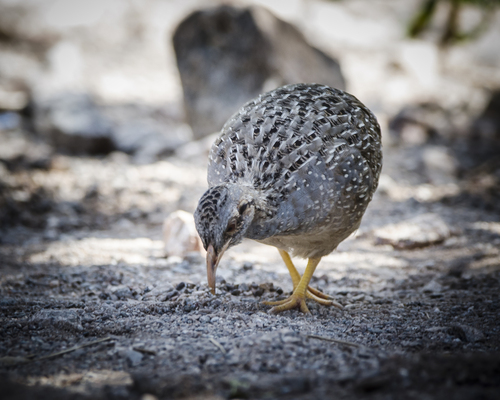 Andean Tinamou
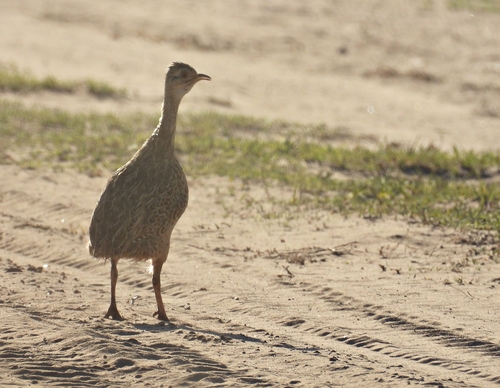 Spotted Nothura
In short
To separate Andean Tinamou from Spotted Nothura, focus first on overall color and barring patterns: Andean Tinamou is a larger, greyer bird with a distinctly barred back and a black crown, while Spotted Nothura is smaller, browner, and more streaked above, with a black crown streaked buff and a white throat. The Andean Tinamou’s breast is grey with white or buff spots, contrasting with the Spotted Nothura’s buff underparts heavily streaked and barred. Habitat is a strong clue: Andean Tinamou is a high-altitude Andean shrubland bird, while Spotted Nothura is found in lowland grasslands of eastern South America. Leg color also differs, with Andean Tinamou showing yellow legs and Spotted Nothura dull yellowish-grey or brown.
Identification tips
- Check the habitat and elevation: If you are in high-altitude Andean shrubland (800–4,100 m), you are likely seeing Andean Tinamou. In lowland grasslands or pampas, especially east of the Andes, Spotted Nothura is expected.
- Assess overall size: Andean Tinamou is larger and bulkier (27 cm, 293 g) compared to the smaller Spotted Nothura (24–25.5 cm, lighter build). This is most useful if you have direct comparison or experience with both.
- Examine upperpart pattern: Andean Tinamou has greyish-brown to olive-brown upperparts with bold black and white barring. Spotted Nothura is brown above with buff streaks, not bars.
- Look at the crown: Andean Tinamou has a solid black crown. Spotted Nothura’s crown is black but streaked with buff.
- Throat color: Andean Tinamou’s throat is mottled grey. Spotted Nothura’s throat is white and stands out clearly.
- Breast and belly: Andean Tinamou has a grey breast with white or buff spots and a buff/whitish belly. Spotted Nothura’s underparts are buff with heavy black and brown streaks on the breast and barring on the flanks.
- Leg color: Andean Tinamou has yellow legs, while Spotted Nothura’s are dull yellowish-grey or brown. This can be a clincher at close range.
- Primary barring: Spotted Nothura (and Chaco Nothura) are unique among nothuras in having barring on both webs of the primaries, but this is rarely visible except in hand or very close flight views.
- General coloration: Andean Tinamou appears greyer and colder overall, while Spotted Nothura is warmer brown and more streaked.
- Behavior when flushed: Andean Tinamou is heavier and slower in flight; Spotted Nothura is lighter and more agile.
- Head and face pattern: Andean Tinamou has mottled grey sides of the head; Spotted Nothura’s face is less contrasting, but the white throat is distinctive.
- Flank pattern: Spotted Nothura shows barring on the flanks; Andean Tinamou’s flanks are less distinctly marked.
- Seasonal variation: Both species show some color variation across their ranges, but the main field marks above are consistent.
- Sex and age: No strong sexual dimorphism is described; juvenile/immature plumages are not detailed in the sources, so focus on adult field marks.
- When in doubt: Use a combination of habitat, size, upperpart pattern, and throat/crown color for the most reliable separation.
Size
Andean Tinamou is noticeably larger, averaging about 27 cm in length and 293 g in mass [wikipedia][wikidata]. Spotted Nothura is smaller, at 24–25.5 cm in length (mass not specified, but consistently lighter in the field) [wikipedia]. This size difference is often apparent when both species are seen in similar contexts, but can be hard to judge in isolation.
Plumage
Adult Andean Tinamou shows greyish-brown to olive-brown upperparts with bold black and white barring, a black crown, and a grey breast with white or buff spots. The belly is buff or whitish, and the sides of the head and throat are mottled grey. In contrast, Spotted Nothura is brown above with buff streaks (not bars), a black crown streaked with buff, and a white throat. Its underparts are buff with heavy black and brown streaks on the breast and barring on the flanks. Both species have some barring, but Andean Tinamou’s is more regular and bold on the upperparts, while Spotted Nothura’s is more streaked and limited to the flanks and breast. Notably, Spotted Nothura (and Chaco Nothura) are unique among nothuras in having barring on both webs of the primaries, which can be checked on birds in hand or close flight views, but this is rarely diagnostic in field conditions. Leg color is also useful: Andean Tinamou has yellow legs, Spotted Nothura’s are dull yellowish-grey or brown.
Behaviour
Both species are ground-dwelling and secretive, preferring to walk or run rather than fly. When flushed, both fly low and quickly, but Andean Tinamou may appear bulkier and heavier in flight, while Spotted Nothura is more agile and lighter. Andean Tinamou is more likely to be found in shrubby or rocky terrain, often among bushes or grasses at high elevations, while Spotted Nothura prefers open grasslands and pampas, sometimes venturing into agricultural fields.
Habitat
Andean Tinamou is restricted to high-altitude shrubland and grassland in the Andes, from southern Ecuador to central Chile and parts of Argentina, at elevations from 800 to 4,100 m [wikipedia]. Spotted Nothura is a lowland species of grassy habitats in eastern and southern Brazil, Paraguay, Bolivia, Uruguay, and eastern/northern Argentina [wikipedia]. If you are in the Andes above 800 m, Andean Tinamou is expected; in lowland grasslands or pampas, especially east of the Andes, Spotted Nothura is the likely candidate.