

Motmot

アンデスシギダチョウ 対 マダラシギダチョウ

Nothoprocta pentlandii 対 Nothura maculosa

アンデスシギダチョウとマダラシギダチョウのクイズ
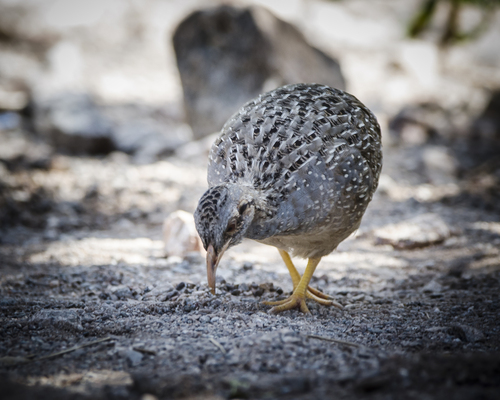
アンデスシギダチョウ (Nothoprocta pentlandii) アンデスシギダチョウ
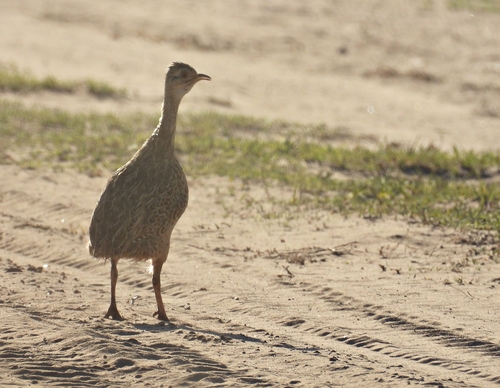
マダラシギダチョウ (Nothura maculosa) マダラシギダチョウ

メディア

読み込み中…

要点

アンデスシギダチョウとマダラシギダチョウを区別するには、まず全体の色と縞模様に注目してください:アンデスシギダチョウは、明確に縞模様のある背中と黒い冠を持つ、より大きく灰色の鳥であり、一方マダラシギダチョウは、より小さく、茶色で、上面により縞模様があります。黒い冠にはバフの縞模様があり、喉は白です。アンデスシギダチョウの胸は灰色で、白またはバフの斑点があり、マダラシギダチョウのバフの腹部は重く縞模様と縞模様があります。生息地は強い手がかりです:アンデスシギダチョウは高地のアンデスの低木地に生息し、マダラシギダチョウは南アメリカ東部の低地の草原に見られます。脚の色も異なり、アンデスシギダチョウは黄色の脚を示し、マダラシギダチョウは鈍い黄色がかった灰色または茶色です。

識別のコツ

  1. 生息地と標高を確認する: 高地のアンデスの低木地(800–4,100 m)にいる場合、アンデスシギダチョウを見ている可能性が高いです。低地の草原やパンパス、特にアンデスの東側では、マダラシギダチョウが予想されます。
  2. 全体のサイズを評価する: アンデスシギダチョウは、より小さなマダラシギダチョウ(24–25.5 cm、軽い体型)と比較して、より大きくてずっしりとしています(27 cm、293 g)。これは、両方を直接比較するか、経験がある場合に最も役立ちます。
  3. 上面の模様を調べる: アンデスシギダチョウは、太い黒と白の縞模様のある灰褐色からオリーブ褐色の上面を持っています。マダラシギダチョウは、縞模様ではなくバフの縞模様のある茶色の上面です。
  4. 冠を見てください: アンデスシギダチョウは、無地の黒い冠を持っています。マダラシギダチョウの冠は黒ですが、バフの縞模様があります。
  5. 喉の色: アンデスシギダチョウの喉はまだらの灰色です。マダラシギダチョウの喉は白で、はっきりと目立ちます。
  6. 胸と腹: アンデスシギダチョウは、白またはバフの斑点のある灰色の胸と、バフまたは白っぽい腹を持っています。マダラシギダチョウの腹部はバフで、胸には重い黒と茶色の縞模様があり、側面には縞模様があります。
  7. 脚の色: アンデスシギダチョウは黄色の脚を持っていますが、マダラシギダチョウの脚は鈍い黄色がかった灰色または茶色です。これは近距離での決定的な要素になることがあります。
  8. 主な縞模様: マダラシギダチョウ(およびチャコシギダチョウ)は、主翼の両側に縞模様があることで、ノトゥーラの中でユニークですが、これは手に持ったり非常に近い飛行の視点でしか見ることができません。
  9. 一般的な色合い: アンデスシギダチョウは全体的に灰色で冷たい印象を与え、マダラシギダチョウは暖かい茶色でより縞模様があります。
  10. 飛び立ったときの行動: アンデスシギダチョウは、飛行中にずっしりとして遅く見えることがありますが、マダラシギダチョウはより軽快で敏捷です。
  11. 頭と顔の模様: アンデスシギダチョウは頭の側面がまだらの灰色です。マダラシギダチョウの顔はコントラストが少なく、白い喉が特徴的です。
  12. 側面の模様: マダラシギダチョウは側面に縞模様を示しますが、アンデスシギダチョウの側面はあまり明確にマークされていません。
  13. 季節的変化: 両種はその分布域でいくつかの色の変化を示しますが、上記の主なフィールドマークは一貫しています。
  14. 性別と年齢: 強い性的二形性は記載されていません。幼鳥や未成熟の羽毛は資料に詳しく記載されていないため、成鳥のフィールドマークに注目してください。
  15. 疑問がある場合: 最も信頼できる区別のために、生息地、サイズ、上面の模様、喉/冠の色の組み合わせを使用してください。

大きさ

アンデスシギダチョウは明らかに大きく、平均して約27 cmの長さと293 gの質量です [wikipedia][wikidata]。マダラシギダチョウは小さく、長さは24–25.5 cm(質量は指定されていませんが、フィールドでは一貫して軽いです)です [wikipedia]。このサイズの違いは、両種が同様の文脈で見られるときにしばしば明らかですが、単独で判断するのは難しいことがあります。

羽色

成鳥のアンデスシギダチョウは、太い黒と白の縞模様のある灰褐色からオリーブ褐色の上面、黒い冠、白またはバフの斑点のある灰色の胸を示します。腹はバフまたは白っぽく、頭と喉の側面はまだらの灰色です。対照的に、マダラシギダチョウは、バフの縞模様(縞模様ではなく)のある茶色の上面、バフの縞模様のある黒い冠、白い喉を持っています。下部はバフで、胸には重い黒と茶色の縞模様があり、側面には縞模様があります。両種にはいくつかの縞模様がありますが、アンデスシギダチョウのものは上面でより規則的で大胆であり、マダラシギダチョウのものはより縞模様で、側面と胸に限られています。特に、マダラシギダチョウ(およびチャコシギダチョウ)は、主翼の両側に縞模様があることで、ノトゥーラの中でユニークですが、これは手に持ったり非常に近い飛行の視点で確認できますが、フィールド条件では診断的であることは稀です。脚の色も役立ちます:アンデスシギダチョウは黄色の脚を持ち、マダラシギダチョウの脚は鈍い黄色がかった灰色または茶色です。

行動

両種は地上に生息し、秘密主義的で、飛ぶよりも歩いたり走ったりすることを好みます。飛び立つと、両方とも低く迅速に飛びますが、アンデスシギダチョウは飛行中にずっしりとして重く見えることがあり、マダラシギダチョウはより敏捷で軽快です。アンデスシギダチョウは、しばしば高地の低木や岩の多い地形に見られる可能性が高く、マダラシギダチョウは開けた草原やパンパスを好み、時には農地に足を踏み入れることもあります。

生息環境

アンデスシギダチョウは、南エクアドルから中央チリ、アルゼンチンの一部まで、800 mから4,100 mの標高のアンデスの高地の低木地と草原に制限されています [wikipedia]。マダラシギダチョウは、ブラジル東部と南部、パラグアイ、ボリビア、ウルグアイ、アルゼンチン東部/北部の草地の低地種です [wikipedia]。もしあなたが800 m以上のアンデスにいるなら、アンデスシギダチョウが予想されます;低地の草原やパンパス、特にアンデスの東側では、マダラシギダチョウが候補となります。

より良い説明を送る

比較と同じ項目を使ってください。文章はすぐに公開されます。

To separate Andean Tinamou from Spotted Nothura, focus first on overall color and barring patterns: Andean Tinamou is a larger, greyer bird with a distinctly barred back and a black crown, while Spotted Nothura is smaller, browner, and more streaked above, with a black crown streaked buff and a white throat. The Andean Tinamou’s breast is grey with white or buff spots, contrasting with the Spotted Nothura’s buff underparts heavily streaked and barred. Habitat is a strong clue: Andean Tinamou is a high-altitude Andean shrubland bird, while Spotted Nothura is found in lowland grasslands of eastern South America. Leg color also differs, with Andean Tinamou showing yellow legs and Spotted Nothura dull yellowish-grey or brown.

  1. Check the habitat and elevation: If you are in high-altitude Andean shrubland (800–4,100 m), you are likely seeing Andean Tinamou. In lowland grasslands or pampas, especially east of the Andes, Spotted Nothura is expected.
  2. Assess overall size: Andean Tinamou is larger and bulkier (27 cm, 293 g) compared to the smaller Spotted Nothura (24–25.5 cm, lighter build). This is most useful if you have direct comparison or experience with both.
  3. Examine upperpart pattern: Andean Tinamou has greyish-brown to olive-brown upperparts with bold black and white barring. Spotted Nothura is brown above with buff streaks, not bars.
  4. Look at the crown: Andean Tinamou has a solid black crown. Spotted Nothura’s crown is black but streaked with buff.
  5. Throat color: Andean Tinamou’s throat is mottled grey. Spotted Nothura’s throat is white and stands out clearly.
  6. Breast and belly: Andean Tinamou has a grey breast with white or buff spots and a buff/whitish belly. Spotted Nothura’s underparts are buff with heavy black and brown streaks on the breast and barring on the flanks.
  7. Leg color: Andean Tinamou has yellow legs, while Spotted Nothura’s are dull yellowish-grey or brown. This can be a clincher at close range.
  8. Primary barring: Spotted Nothura (and Chaco Nothura) are unique among nothuras in having barring on both webs of the primaries, but this is rarely visible except in hand or very close flight views.
  9. General coloration: Andean Tinamou appears greyer and colder overall, while Spotted Nothura is warmer brown and more streaked.
  10. Behavior when flushed: Andean Tinamou is heavier and slower in flight; Spotted Nothura is lighter and more agile.
  11. Head and face pattern: Andean Tinamou has mottled grey sides of the head; Spotted Nothura’s face is less contrasting, but the white throat is distinctive.
  12. Flank pattern: Spotted Nothura shows barring on the flanks; Andean Tinamou’s flanks are less distinctly marked.
  13. Seasonal variation: Both species show some color variation across their ranges, but the main field marks above are consistent.
  14. Sex and age: No strong sexual dimorphism is described; juvenile/immature plumages are not detailed in the sources, so focus on adult field marks.
  15. When in doubt: Use a combination of habitat, size, upperpart pattern, and throat/crown color for the most reliable separation.

Andean Tinamou is noticeably larger, averaging about 27 cm in length and 293 g in mass [wikipedia][wikidata]. Spotted Nothura is smaller, at 24–25.5 cm in length (mass not specified, but consistently lighter in the field) [wikipedia]. This size difference is often apparent when both species are seen in similar contexts, but can be hard to judge in isolation.

Adult Andean Tinamou shows greyish-brown to olive-brown upperparts with bold black and white barring, a black crown, and a grey breast with white or buff spots. The belly is buff or whitish, and the sides of the head and throat are mottled grey. In contrast, Spotted Nothura is brown above with buff streaks (not bars), a black crown streaked with buff, and a white throat. Its underparts are buff with heavy black and brown streaks on the breast and barring on the flanks. Both species have some barring, but Andean Tinamou’s is more regular and bold on the upperparts, while Spotted Nothura’s is more streaked and limited to the flanks and breast. Notably, Spotted Nothura (and Chaco Nothura) are unique among nothuras in having barring on both webs of the primaries, which can be checked on birds in hand or close flight views, but this is rarely diagnostic in field conditions. Leg color is also useful: Andean Tinamou has yellow legs, Spotted Nothura’s are dull yellowish-grey or brown.

Both species are ground-dwelling and secretive, preferring to walk or run rather than fly. When flushed, both fly low and quickly, but Andean Tinamou may appear bulkier and heavier in flight, while Spotted Nothura is more agile and lighter. Andean Tinamou is more likely to be found in shrubby or rocky terrain, often among bushes or grasses at high elevations, while Spotted Nothura prefers open grasslands and pampas, sometimes venturing into agricultural fields.

Andean Tinamou is restricted to high-altitude shrubland and grassland in the Andes, from southern Ecuador to central Chile and parts of Argentina, at elevations from 800 to 4,100 m [wikipedia]. Spotted Nothura is a lowland species of grassy habitats in eastern and southern Brazil, Paraguay, Bolivia, Uruguay, and eastern/northern Argentina [wikipedia]. If you are in the Andes above 800 m, Andean Tinamou is expected; in lowland grasslands or pampas, especially east of the Andes, Spotted Nothura is the likely candidate.

変更を破棄しますか?

保存していない編集があります。今離れると失われます。

アンデスシギダチョウ · マダラシギダチョウ · 苦手な鳥