

Motmot

American Oystercatcher vs Semipalmated Plover

Haematopus palliatus versus Charadrius semipalmatus

Play a quiz with American Oystercatcher and Semipalmated Plover
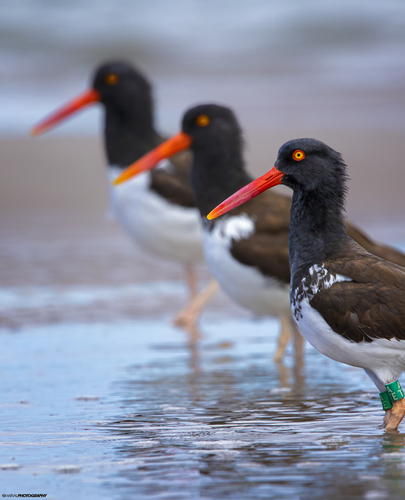
American Oystercatcher (Haematopus palliatus) American Oystercatcher
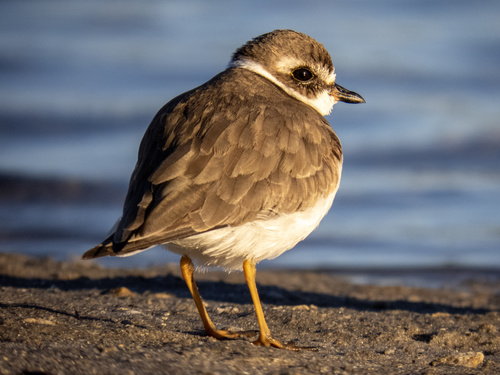
Semipalmated Plover (Charadrius semipalmatus) Semipalmated Plover

Media

Loading…

In short

The most reliable way to separate American Oystercatcher from Semipalmated Plover is by size and bill: oystercatchers are much larger, with a long, thick, bright orange bill, while Semipalmated Plovers are small and have a short, orange-and-black bill. In flight, American Oystercatchers show bold black-and-white wing and tail patterns, whereas Semipalmated Plovers have more subdued, brown-and-white upperparts with a single dark breast band. Even at a distance, the oystercatcher’s striking contrast and bulk stand out against the plover’s delicate, compact look. Both species may be seen along beaches and tidal flats, but their structure and plumage are unmistakably different with careful observation.

Identification tips

  1. Size is the most immediate clue: American Oystercatcher is more than twice the length of Semipalmated Plover. If you see both together, the oystercatcher will dwarf the plover.
  2. Bill shape and color: Oystercatcher has a long, thick, bright orange bill; plover’s bill is short, thin, and orange with a black tip. Even at a distance, the oystercatcher’s bill is obvious.
  3. Head and breast pattern: Oystercatcher has a solid black head and breast, sharply contrasting with its white belly. Semipalmated Plover has a brown cap, white forehead, black mask, and a single black breast band on otherwise white underparts.
  4. Leg color: Oystercatcher’s legs are pink; plover’s legs are duller and less conspicuous.
  5. Wing pattern in flight: Oystercatcher shows a bold white patch on the inner wing and a strong black-and-white tail pattern. Plovers have more uniform brown wings with no bold white panel.
  6. Eye color and facial features: Oystercatcher has a yellow iris with an orange orbital ring; plover’s eye is dark, surrounded by a black mask.
  7. Body shape and posture: Oystercatcher is long-legged, heavy-bodied, and stands tall. Plovers are compact, short-legged, and squat.
  8. Feeding behavior: Oystercatchers are often seen prying or hammering at shellfish; plovers run, pause, and pick at small prey.
  9. Habitat context: If seen inland or in grassy fields, it is almost certainly a plover. Oystercatchers are rarely away from marine coasts.
  10. Plumage confusion: Plovers never show a solid black head and breast or a long orange bill. Oystercatchers never show a single black breast band or brown cap.
  11. Juvenile confusion: No age-specific upperwing marks are described for either species, so focus on size and structure for immatures.
  12. Group context: Oystercatchers are often solitary or in small groups; plovers may be in larger mixed flocks with other small shorebirds.
  13. Voice: Not described in the notes, so do not rely on vocalization for separation here.
  14. Seasonal confusion: Both species can occur together on migration along coasts, but the oystercatcher’s size and bill remain diagnostic year-round.
  15. At a distance: Even when plumage details are hard to see, the oystercatcher’s size, long bill, and bold black-and-white pattern in flight are unmistakable compared to the small, neat, brown-and-white plover.

Size

American Oystercatcher is dramatically larger, measuring 42–52 cm (17–20 in) in length [wikipedia], while Semipalmated Plover is only 17–19 cm (6.7–7.5 in) long [wikipedia]. Oystercatchers are heavy, long-legged shorebirds with a robust build, whereas Semipalmated Plovers are small, lightweight, and compact. The oystercatcher’s bill alone is nearly as long as the plover’s entire head, making size the most immediate and reliable field mark when both are visible.

Plumage

No age-specific upperwing pattern is described for either species, but overall flight and perched plumage are distinctive. Adult American Oystercatchers have a black head and breast, dark greyish-black upperparts, white underparts, and a bold white patch on the inner wing visible in flight. Their long, bright orange bill and pink legs are diagnostic. Semipalmated Plovers, by contrast, have a brown cap and upperparts, white underparts, and a single black breast band. Their face shows a black mask and white forehead, with a short orange-and-black bill. In flight, plovers lack the oystercatcher’s bold white wing panels and instead show a more uniform brown-and-white pattern. Juvenile or immature-specific upperwing marks are not described for either species in the provided notes.

Behaviour

American Oystercatchers forage by probing or hammering at shellfish with their strong bill, often seen walking slowly over shellfish beds. Semipalmated Plovers forage by sight, running and pausing to pick at small invertebrates on mudflats or beaches. Oystercatchers are more deliberate and powerful in their movements, while plovers are quick, agile, and dainty. Oystercatchers may be seen carrying or manipulating large shellfish, a behavior not shown by plovers.

Habitat

Both species frequent beaches and tidal flats, but American Oystercatchers are more strictly coastal, often found on shellfish beds and rocky shores. Semipalmated Plovers use a wider range of open ground, including beaches, tidal flats, and even fields during migration. Plovers nest on open ground with little vegetation, while oystercatchers are more tied to marine habitats year-round.

Submit a better description

Use the same sections as the comparison. Your text is published immediately.

The most reliable way to separate American Oystercatcher from Semipalmated Plover is by size and bill: oystercatchers are much larger, with a long, thick, bright orange bill, while Semipalmated Plovers are small and have a short, orange-and-black bill. In flight, American Oystercatchers show bold black-and-white wing and tail patterns, whereas Semipalmated Plovers have more subdued, brown-and-white upperparts with a single dark breast band. Even at a distance, the oystercatcher’s striking contrast and bulk stand out against the plover’s delicate, compact look. Both species may be seen along beaches and tidal flats, but their structure and plumage are unmistakably different with careful observation.

  1. Size is the most immediate clue: American Oystercatcher is more than twice the length of Semipalmated Plover. If you see both together, the oystercatcher will dwarf the plover.
  2. Bill shape and color: Oystercatcher has a long, thick, bright orange bill; plover’s bill is short, thin, and orange with a black tip. Even at a distance, the oystercatcher’s bill is obvious.
  3. Head and breast pattern: Oystercatcher has a solid black head and breast, sharply contrasting with its white belly. Semipalmated Plover has a brown cap, white forehead, black mask, and a single black breast band on otherwise white underparts.
  4. Leg color: Oystercatcher’s legs are pink; plover’s legs are duller and less conspicuous.
  5. Wing pattern in flight: Oystercatcher shows a bold white patch on the inner wing and a strong black-and-white tail pattern. Plovers have more uniform brown wings with no bold white panel.
  6. Eye color and facial features: Oystercatcher has a yellow iris with an orange orbital ring; plover’s eye is dark, surrounded by a black mask.
  7. Body shape and posture: Oystercatcher is long-legged, heavy-bodied, and stands tall. Plovers are compact, short-legged, and squat.
  8. Feeding behavior: Oystercatchers are often seen prying or hammering at shellfish; plovers run, pause, and pick at small prey.
  9. Habitat context: If seen inland or in grassy fields, it is almost certainly a plover. Oystercatchers are rarely away from marine coasts.
  10. Plumage confusion: Plovers never show a solid black head and breast or a long orange bill. Oystercatchers never show a single black breast band or brown cap.
  11. Juvenile confusion: No age-specific upperwing marks are described for either species, so focus on size and structure for immatures.
  12. Group context: Oystercatchers are often solitary or in small groups; plovers may be in larger mixed flocks with other small shorebirds.
  13. Voice: Not described in the notes, so do not rely on vocalization for separation here.
  14. Seasonal confusion: Both species can occur together on migration along coasts, but the oystercatcher’s size and bill remain diagnostic year-round.
  15. At a distance: Even when plumage details are hard to see, the oystercatcher’s size, long bill, and bold black-and-white pattern in flight are unmistakable compared to the small, neat, brown-and-white plover.

American Oystercatcher is dramatically larger, measuring 42–52 cm (17–20 in) in length [wikipedia], while Semipalmated Plover is only 17–19 cm (6.7–7.5 in) long [wikipedia]. Oystercatchers are heavy, long-legged shorebirds with a robust build, whereas Semipalmated Plovers are small, lightweight, and compact. The oystercatcher’s bill alone is nearly as long as the plover’s entire head, making size the most immediate and reliable field mark when both are visible.

No age-specific upperwing pattern is described for either species, but overall flight and perched plumage are distinctive. Adult American Oystercatchers have a black head and breast, dark greyish-black upperparts, white underparts, and a bold white patch on the inner wing visible in flight. Their long, bright orange bill and pink legs are diagnostic. Semipalmated Plovers, by contrast, have a brown cap and upperparts, white underparts, and a single black breast band. Their face shows a black mask and white forehead, with a short orange-and-black bill. In flight, plovers lack the oystercatcher’s bold white wing panels and instead show a more uniform brown-and-white pattern. Juvenile or immature-specific upperwing marks are not described for either species in the provided notes.

American Oystercatchers forage by probing or hammering at shellfish with their strong bill, often seen walking slowly over shellfish beds. Semipalmated Plovers forage by sight, running and pausing to pick at small invertebrates on mudflats or beaches. Oystercatchers are more deliberate and powerful in their movements, while plovers are quick, agile, and dainty. Oystercatchers may be seen carrying or manipulating large shellfish, a behavior not shown by plovers.

Both species frequent beaches and tidal flats, but American Oystercatchers are more strictly coastal, often found on shellfish beds and rocky shores. Semipalmated Plovers use a wider range of open ground, including beaches, tidal flats, and even fields during migration. Plovers nest on open ground with little vegetation, while oystercatchers are more tied to marine habitats year-round.

Discard your changes?

You have unsaved edits. If you leave now, those changes will be lost.

American Oystercatcher · Semipalmated Plover · My Tricky Birds