

Motmot

African Grey Hornbill vs Southern Yellow-billed Hornbill

Lophoceros nasutus versus Tockus leucomelas

Play a quiz with African Grey Hornbill and Southern Yellow-billed Hornbill
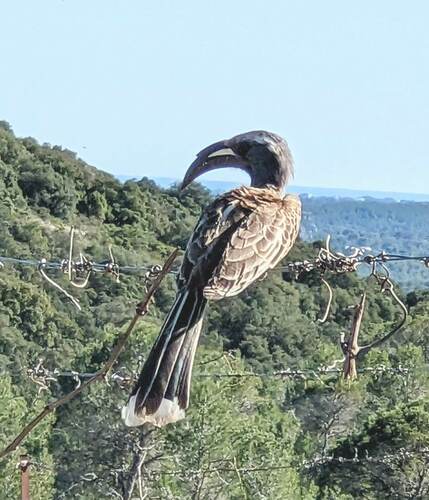
African Grey Hornbill (Lophoceros nasutus) African Grey Hornbill
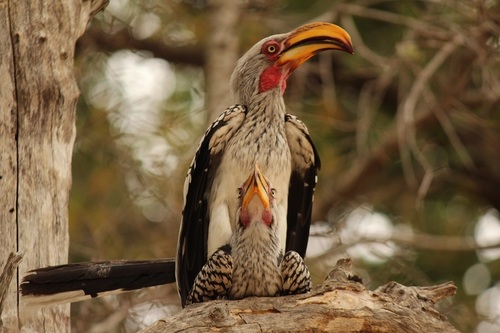
Southern Yellow-billed Hornbill (Tockus leucomelas) Southern Yellow-billed Hornbill

Media

Loading…

In short

The most reliable field mark between African Grey Hornbill and Southern Yellow-billed Hornbill is the bill: African Grey has a dark, slender, slightly decurved bill with a small casque and pale markings (males), while Southern Yellow-billed has a massive, bright yellow bill with a longer, more prominent casque in males. In flight, African Grey shows a white line down the back visible only when airborne, while Southern Yellow-billed is boldly pied above and below with abundant white spots and stripes. Juveniles of African Grey have all-dark bills, which can cause confusion. Both are similar in size, but Southern Yellow-billed appears heavier and more robust. Habitat overlap is possible, but Southern Yellow-billed is more ground-oriented, while African Grey feeds mainly in trees.

Identification tips

  1. Bill color and shape: African Grey Hornbill has a dark, slender, slightly decurved bill with a small casque; males show a creamy-yellow mark or stripe, females have tricolored, red-tipped mandibles. Southern Yellow-billed Hornbill has a massive, bright yellow, down-curved bill with a longer casque in males. This is the single most reliable field mark for adults.
  2. Juvenile bill: Juvenile African Grey Hornbills have all-dark bills, lacking the pale or tricolored marks of adults. This can cause confusion with other hornbills, but the overall slim, grey appearance still helps.
  3. Plumage pattern: Southern Yellow-billed Hornbill is boldly pied, with a white belly, black back, and abundant white spots and stripes on wings and tail. African Grey is plainer grey-brown, with a white line down each side of the crown and a white line down the back (visible in flight).
  4. Flight view: In flight, African Grey Hornbill may show the white back line, but otherwise looks plain. Southern Yellow-billed Hornbill appears strikingly pied above and below, with contrasting white and black.
  5. Facial skin and eye: Southern Yellow-billed Hornbill has yellow eyes and pinkish skin around the eyes and malar stripe; African Grey's face is less colorful.
  6. Body structure: Southern Yellow-billed Hornbill is bulkier and heavier, with a bill that can be up to 1/6th of its body length. African Grey is more slender and less robust.
  7. Behavior: Southern Yellow-billed Hornbill is often seen foraging on the ground, walking or hopping, while African Grey Hornbill feeds mainly in trees and is more arboreal.
  8. Habitat: Southern Yellow-billed is more associated with dry thornveld and arid woodlands; African Grey prefers open woodland and savannah, often in the canopy.
  9. Flight style: African Grey flies with undulating flight; Southern Yellow-billed alternates powerful wingbeats with short glides.
  10. Underwing pattern: Southern Yellow-billed lacks underwing coverts, which may make the underwing appear more open or less patterned in flight, but this is subtle.
  11. Tail: Both have long tails, but Southern Yellow-billed's is more contrasting due to the pied pattern.
  12. Sex differences: In both species, males have larger bills and more prominent casques, but there is overlap. Bill color is a more reliable sex indicator in African Grey (males with creamy-yellow mark, females tricolored with red tip).
  13. Vocalization: If you hear a piping 'pee-o pee-o pee-o' call, it's African Grey Hornbill.
  14. Context: If the bird is seen feeding in the canopy, especially in a mixed woodland, African Grey is more likely; if on the ground in arid thornveld, Southern Yellow-billed is more likely.
  15. Pitfalls: Immature African Grey Hornbills with all-dark bills can be misidentified, but look for the overall plain grey plumage and arboreal habits to separate from the boldly pied, ground-foraging Southern Yellow-billed.

Size

Both species are similar in length (African Grey Hornbill: 45–51 cm; Southern Yellow-billed Hornbill: 48–60 cm), but Southern Yellow-billed is heavier (mean adult mass ~190 g) and appears bulkier, especially due to its massive bill. African Grey is one of the smaller hornbills, appearing more slender and less robust overall. Bill size exaggerates the difference: Southern Yellow-billed's bill can be up to 1/6th of its body length, while African Grey's is proportionally smaller and slimmer.

Plumage

Juvenile African Grey Hornbills have uniformly dark bills, lacking the pale or tricolored marks of adults, which can make them superficially resemble other hornbills at a distance. Adults of both sexes are mostly grey-brown, but African Grey is plainer overall, with a white line down each side of the crown and another down the back (the latter visible only in flight). Southern Yellow-billed Hornbill is much more strikingly pied: white belly, grey neck, black back, and abundant white spots and stripes, especially on the wings and tail. The Southern Yellow-billed lacks underwing coverts, which may make the underwing appear more open or less patterned in flight. Both have long tails, but Southern Yellow-billed's is often more contrasting due to the pied pattern. Eye color is usually yellow in Southern Yellow-billed, with pinkish skin around the eyes and malar stripe; African Grey's facial skin is less colorful.

Behaviour

African Grey Hornbill feeds mainly in trees, moving with undulating flight and often perching high. Southern Yellow-billed Hornbill is more terrestrial, foraging mostly on the ground for seeds and invertebrates, and flies with powerful wingbeats alternating with short glides. Both species nest in tree cavities, with females sealing themselves inside, but Southern Yellow-billed may also use cliffs or earth banks. Southern Yellow-billed is often seen walking or hopping on the ground, while African Grey is more arboreal.

Habitat

African Grey Hornbill prefers open woodland and savannah across much of sub-Saharan Africa, often staying in the canopy or subcanopy. Southern Yellow-billed Hornbill is a common resident of dry thornveld and broad-leafed woodlands in southern Africa, and is more likely to be seen in drier, more open habitats, especially on the ground. While ranges can overlap, Southern Yellow-billed is generally more associated with arid and semi-arid regions.

Voice

African Grey Hornbill advertises its presence with a piping 'pee-o pee-o pee-o' call, which is distinctive and often repeated. No specific vocalization is described for Southern Yellow-billed Hornbill in the provided notes, so call is not a reliable separator unless African Grey's piping call is heard.

Submit a better description

Use the same sections as the comparison. Your text is published immediately.

The most reliable field mark between African Grey Hornbill and Southern Yellow-billed Hornbill is the bill: African Grey has a dark, slender, slightly decurved bill with a small casque and pale markings (males), while Southern Yellow-billed has a massive, bright yellow bill with a longer, more prominent casque in males. In flight, African Grey shows a white line down the back visible only when airborne, while Southern Yellow-billed is boldly pied above and below with abundant white spots and stripes. Juveniles of African Grey have all-dark bills, which can cause confusion. Both are similar in size, but Southern Yellow-billed appears heavier and more robust. Habitat overlap is possible, but Southern Yellow-billed is more ground-oriented, while African Grey feeds mainly in trees.

  1. Bill color and shape: African Grey Hornbill has a dark, slender, slightly decurved bill with a small casque; males show a creamy-yellow mark or stripe, females have tricolored, red-tipped mandibles. Southern Yellow-billed Hornbill has a massive, bright yellow, down-curved bill with a longer casque in males. This is the single most reliable field mark for adults.
  2. Juvenile bill: Juvenile African Grey Hornbills have all-dark bills, lacking the pale or tricolored marks of adults. This can cause confusion with other hornbills, but the overall slim, grey appearance still helps.
  3. Plumage pattern: Southern Yellow-billed Hornbill is boldly pied, with a white belly, black back, and abundant white spots and stripes on wings and tail. African Grey is plainer grey-brown, with a white line down each side of the crown and a white line down the back (visible in flight).
  4. Flight view: In flight, African Grey Hornbill may show the white back line, but otherwise looks plain. Southern Yellow-billed Hornbill appears strikingly pied above and below, with contrasting white and black.
  5. Facial skin and eye: Southern Yellow-billed Hornbill has yellow eyes and pinkish skin around the eyes and malar stripe; African Grey's face is less colorful.
  6. Body structure: Southern Yellow-billed Hornbill is bulkier and heavier, with a bill that can be up to 1/6th of its body length. African Grey is more slender and less robust.
  7. Behavior: Southern Yellow-billed Hornbill is often seen foraging on the ground, walking or hopping, while African Grey Hornbill feeds mainly in trees and is more arboreal.
  8. Habitat: Southern Yellow-billed is more associated with dry thornveld and arid woodlands; African Grey prefers open woodland and savannah, often in the canopy.
  9. Flight style: African Grey flies with undulating flight; Southern Yellow-billed alternates powerful wingbeats with short glides.
  10. Underwing pattern: Southern Yellow-billed lacks underwing coverts, which may make the underwing appear more open or less patterned in flight, but this is subtle.
  11. Tail: Both have long tails, but Southern Yellow-billed's is more contrasting due to the pied pattern.
  12. Sex differences: In both species, males have larger bills and more prominent casques, but there is overlap. Bill color is a more reliable sex indicator in African Grey (males with creamy-yellow mark, females tricolored with red tip).
  13. Vocalization: If you hear a piping 'pee-o pee-o pee-o' call, it's African Grey Hornbill.
  14. Context: If the bird is seen feeding in the canopy, especially in a mixed woodland, African Grey is more likely; if on the ground in arid thornveld, Southern Yellow-billed is more likely.
  15. Pitfalls: Immature African Grey Hornbills with all-dark bills can be misidentified, but look for the overall plain grey plumage and arboreal habits to separate from the boldly pied, ground-foraging Southern Yellow-billed.

Both species are similar in length (African Grey Hornbill: 45–51 cm; Southern Yellow-billed Hornbill: 48–60 cm), but Southern Yellow-billed is heavier (mean adult mass ~190 g) and appears bulkier, especially due to its massive bill. African Grey is one of the smaller hornbills, appearing more slender and less robust overall. Bill size exaggerates the difference: Southern Yellow-billed's bill can be up to 1/6th of its body length, while African Grey's is proportionally smaller and slimmer.

Juvenile African Grey Hornbills have uniformly dark bills, lacking the pale or tricolored marks of adults, which can make them superficially resemble other hornbills at a distance. Adults of both sexes are mostly grey-brown, but African Grey is plainer overall, with a white line down each side of the crown and another down the back (the latter visible only in flight). Southern Yellow-billed Hornbill is much more strikingly pied: white belly, grey neck, black back, and abundant white spots and stripes, especially on the wings and tail. The Southern Yellow-billed lacks underwing coverts, which may make the underwing appear more open or less patterned in flight. Both have long tails, but Southern Yellow-billed's is often more contrasting due to the pied pattern. Eye color is usually yellow in Southern Yellow-billed, with pinkish skin around the eyes and malar stripe; African Grey's facial skin is less colorful.

African Grey Hornbill feeds mainly in trees, moving with undulating flight and often perching high. Southern Yellow-billed Hornbill is more terrestrial, foraging mostly on the ground for seeds and invertebrates, and flies with powerful wingbeats alternating with short glides. Both species nest in tree cavities, with females sealing themselves inside, but Southern Yellow-billed may also use cliffs or earth banks. Southern Yellow-billed is often seen walking or hopping on the ground, while African Grey is more arboreal.

African Grey Hornbill prefers open woodland and savannah across much of sub-Saharan Africa, often staying in the canopy or subcanopy. Southern Yellow-billed Hornbill is a common resident of dry thornveld and broad-leafed woodlands in southern Africa, and is more likely to be seen in drier, more open habitats, especially on the ground. While ranges can overlap, Southern Yellow-billed is generally more associated with arid and semi-arid regions.

African Grey Hornbill advertises its presence with a piping 'pee-o pee-o pee-o' call, which is distinctive and often repeated. No specific vocalization is described for Southern Yellow-billed Hornbill in the provided notes, so call is not a reliable separator unless African Grey's piping call is heard.

Discard your changes?

You have unsaved edits. If you leave now, those changes will be lost.

African Grey Hornbill · Southern Yellow-billed Hornbill · My Tricky Birds