

African Gray Hornbill vs Southern Yellow-billed Hornbill
Lophoceros nasutus contro Tockus leucomelas
Fai un quiz con African Gray Hornbill e Southern Yellow-billed Hornbill
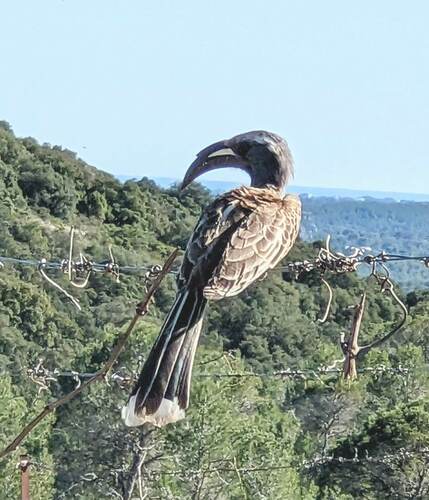 African Gray Hornbill
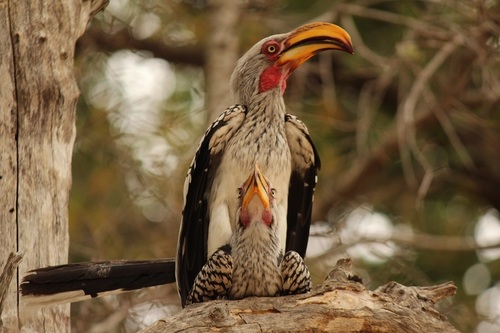 Southern Yellow-billed Hornbill
In breve
Il segno distintivo più affidabile tra l'African Gray Hornbill e il Southern Yellow-billed Hornbill è il becco: l'African Gray ha un becco scuro, sottile, leggermente ricurvo con un piccolo casco e segni chiari (maschi), mentre il Southern Yellow-billed ha un becco massiccio, di un giallo brillante, con un casco più lungo e prominente nei maschi. In volo, l'African Gray mostra una linea bianca lungo la schiena visibile solo quando è in volo, mentre il Southern Yellow-billed è audacemente maculato sopra e sotto con abbondanti macchie e strisce bianche. I giovani dell'African Gray hanno becco completamente scuri, il che può causare confusione. Entrambi sono simili in dimensioni, ma il Southern Yellow-billed appare più pesante e robusto. È possibile una sovrapposizione degli habitat, ma il Southern Yellow-billed è più orientato al suolo, mentre l'African Gray si nutre principalmente sugli alberi.
Consigli di identificazione
- Colore e forma del becco: L'African Gray Hornbill ha un becco scuro, sottile, leggermente ricurvo con un piccolo casco; i maschi mostrano un segno o una striscia di colore crema-giallo, le femmine hanno mandibole tricolori con punte rosse. Il Southern Yellow-billed Hornbill ha un becco massiccio, di un giallo brillante, ricurvo verso il basso con un casco più lungo nei maschi. Questo è il segno distintivo più affidabile per gli adulti.
- Becco giovanile: I giovani dell'African Gray Hornbill hanno becco completamente scuri, privi dei segni chiari o tricolori degli adulti. Questo può causare confusione con altri hornbill, ma l'aspetto complessivo snello e grigio aiuta ancora.
- Schema del piumaggio: Il Southern Yellow-billed Hornbill è audacemente maculato, con un ventre bianco, schiena nera e abbondanti macchie e strisce bianche sulle ali e sulla coda. L'African Gray è di un grigio-marrone più semplice, con una linea bianca lungo ciascun lato della corona e una linea bianca lungo la schiena (visibile in volo).
- Vista in volo: In volo, l'African Gray Hornbill può mostrare la linea bianca sulla schiena, ma altrimenti appare semplice. Il Southern Yellow-billed Hornbill appare audacemente maculato sopra e sotto, con un contrasto di bianco e nero.
- Pelle facciale e occhio: Il Southern Yellow-billed Hornbill ha occhi gialli e pelle rosa attorno agli occhi e alla striscia malare; il viso dell'African Gray è meno colorato.
- Struttura corporea: Il Southern Yellow-billed Hornbill è più massiccio e pesante, con un becco che può essere fino a 1/6 della sua lunghezza corporea. L'African Gray è più snello e meno robusto.
- Comportamento: Il Southern Yellow-billed Hornbill è spesso visto cercare cibo a terra, camminando o saltellando, mentre l'African Gray Hornbill si nutre principalmente sugli alberi ed è più arboricolo.
- Habitat: Il Southern Yellow-billed è più associato a vegetazione spinosa secca e boschi aridi; l'African Gray preferisce boschi aperti e savane, spesso nella chioma.
- Stile di volo: L'African Gray vola con un volo ondulato; il Southern Yellow-billed alterna battiti d'ala potenti con brevi planate.
- Schema dell'ala inferiore: Il Southern Yellow-billed manca di copritrici dell'ala inferiore, il che può far apparire l'ala inferiore più aperta o meno decorata in volo, ma questo è sottile.
- Coda: Entrambi hanno code lunghe, ma quella del Southern Yellow-billed è più contrastante a causa del motivo maculato.
- Differenze sessuali: In entrambe le specie, i maschi hanno becchi più grandi e caschi più prominenti, ma c'è sovrapposizione. Il colore del becco è un indicatore sessuale più affidabile nell'African Gray (maschi con segno crema-giallo, femmine tricolori con punta rossa).
- Vocalizzazione: Se senti un richiamo 'pee-o pee-o pee-o', è l'African Gray Hornbill.
- Contesto: Se l'uccello viene visto nutrirsi nella chioma, specialmente in un bosco misto, è più probabile che sia l'African Gray; se a terra in vegetazione spinosa arida, è più probabile che sia il Southern Yellow-billed.
- Trappole: Gli immature African Gray Hornbills con becco completamente scuri possono essere identificati erroneamente, ma cerca l'aspetto grigio semplice e le abitudini arboricole per separarlo dal Southern Yellow-billed, audacemente maculato e che cerca cibo a terra.
Taglia
Entrambe le specie sono simili in lunghezza (African Gray Hornbill: 45–51 cm; Southern Yellow-billed Hornbill: 48–60 cm), ma il Southern Yellow-billed è più pesante (massa media adulta ~190 g) e appare più massiccio, soprattutto a causa del suo becco massiccio. L'African Gray è uno dei hornbill più piccoli, apparendo più snello e meno robusto nel complesso. La dimensione del becco esagera la differenza: il becco del Southern Yellow-billed può essere fino a 1/6 della sua lunghezza corporea, mentre quello dell'African Gray è proporzionalmente più piccolo e più snello.
Piumaggio
I giovani dell'African Gray Hornbill hanno becchi uniformemente scuri, privi dei segni chiari o tricolori degli adulti, il che può farli sembrare superficialmente simili ad altri hornbill a distanza. Gli adulti di entrambi i sessi sono per lo più grigio-marrone, ma l'African Gray è più semplice nel complesso, con una linea bianca lungo ciascun lato della corona e un'altra lungo la schiena (quest'ultima visibile solo in volo). Il Southern Yellow-billed Hornbill è molto più audacemente maculato: ventre bianco, collo grigio, schiena nera e abbondanti macchie e strisce bianche, specialmente sulle ali e sulla coda. Il Southern Yellow-billed manca di copritrici dell'ala inferiore, il che può far apparire l'ala inferiore più aperta o meno decorata in volo. Entrambi hanno code lunghe, ma quella del Southern Yellow-billed è spesso più contrastante a causa del motivo maculato. Il colore degli occhi è solitamente giallo nel Southern Yellow-billed, con pelle rosa attorno agli occhi e alla striscia malare; la pelle facciale dell'African Gray è meno colorata.
Comportamento
L'African Gray Hornbill si nutre principalmente sugli alberi, muovendosi con un volo ondulato e spesso posandosi in alto. Il Southern Yellow-billed Hornbill è più terrestre, cercando cibo principalmente a terra per semi e invertebrati, e vola con battiti d'ala potenti alternati a brevi planate. Entrambe le specie nidificano in cavità degli alberi, con le femmine che si sigillano all'interno, ma il Southern Yellow-billed può anche utilizzare scogliere o banchi di terra. Il Southern Yellow-billed è spesso visto camminare o saltellare a terra, mentre l'African Gray è più arboricolo.
Habitat
L'African Gray Hornbill preferisce boschi aperti e savane in gran parte dell'Africa sub-sahariana, spesso rimanendo nella chioma o nel sottobosco. Il Southern Yellow-billed Hornbill è un residente comune di vegetazione spinosa secca e boschi a foglia larga nel sud Africa, ed è più probabile che venga visto in habitat più secchi e aperti, specialmente a terra. Anche se gli areali possono sovrapporsi, il Southern Yellow-billed è generalmente più associato a regioni aride e semi-aride.
Voce
L'African Gray Hornbill pubblicizza la sua presenza con un richiamo 'pee-o pee-o pee-o', che è distintivo e spesso ripetuto. Non è stata descritta alcuna vocalizzazione specifica per il Southern Yellow-billed Hornbill nelle note fornite, quindi il richiamo non è un separatore affidabile a meno che non venga udito il richiamo fischiante dell'African Gray.
African Gray Hornbill · Southern Yellow-billed Hornbill · I miei uccelli difficili