

Motmot

African Darter vs Great Cormorant

Anhinga rufa versus Phalacrocorax carbo

Play a quiz with African Darter and Great Cormorant
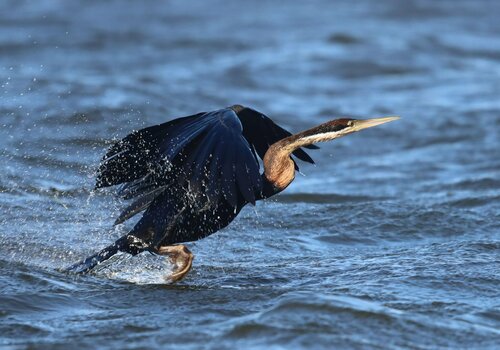
African Darter (Anhinga rufa) African Darter
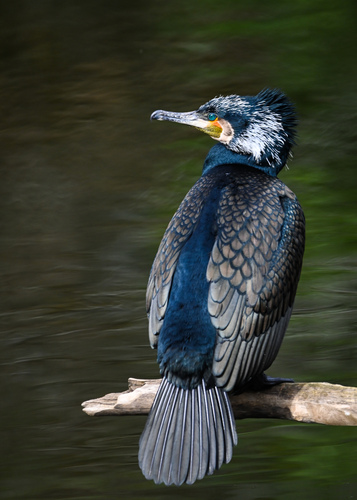
Great Cormorant (Phalacrocorax carbo) Great Cormorant

Media

Loading…

In short

The most reliable field mark between African Darter and Great Cormorant is the African Darter’s extremely long, thin neck with a sharp, pointed bill and a bold white stripe running down the side of the neck, set against a rufous background—especially visible in all plumages. In contrast, Great Cormorant is a stockier, heavier bird with a thick, hooked bill, a shorter neck, and a yellow or red gular patch at the bill base. Immature cormorants can be confusing, but the darter’s neck shape and stripe, as well as its habit of swimming with just the neck above water, are distinctive. Both species may be seen perched with wings spread, but their structure and bill shape remain clear separators.

Identification tips

  1. Neck shape and length: African Darter has a strikingly long, thin neck—much longer and slimmer than the cormorant’s. This is visible in all postures and ages.
  2. Neck stripe: Darter shows a thin, bright white stripe down the side of the neck on a rufous background (all ages/sexes). Cormorant never shows this mark.
  3. Bill shape: Darter’s bill is thin, straight, and sharply pointed; cormorant’s is thick, heavy, and hooked at the tip, with a yellow or red gular patch at the base.
  4. Swimming posture: Darter often swims with only its neck above water, resembling a ‘snake’; cormorant swims with more of the body exposed.
  5. Wing drying posture: Both spread wings to dry, but darter’s wings and body are slimmer, and the neck remains long and thin; cormorant looks bulkier, with a shorter, thicker neck.
  6. Tail shape: Darter’s tail is longer and more wedge-shaped; cormorant’s is shorter and more rounded, with 14 tail feathers (not usually countable in the field, but tail shape is visible).
  7. Plumage gloss: Cormorant adults show bronze to green iridescence on wings and tail, and purple gloss on the body, especially in good light; darter is glossy black with white streaks (male) or brownish (female/immature).
  8. Underparts in juveniles: Young cormorants have pale to whitish underparts, browner in second year, but never show a neck stripe. Darter immatures are browner but always with the neck stripe.
  9. Gular patch: Cormorant has a yellow or red bare patch at the base of the bill (gular skin), visible at close range; darter lacks this feature.
  10. Eye color: Adult cormorants have deep sea-green eyes; juveniles are duller grey. Darter eye color is not a strong field mark.
  11. Bill color: Cormorant’s bill is dark grey at the tip, paler at the base; darter’s is uniformly pale and sharply pointed.
  12. Flight silhouette: Darter in flight looks long-necked, with a thin, pointed bill and long tail; cormorant is bulkier, with a shorter neck and thick bill.
  13. Size impression: Cormorant is much heavier and bulkier; darter is lighter and more slender, though similar in length.
  14. Group size: Cormorants are often in large flocks; darters are more solitary or in small groups.
  15. Habitat overlap: Both occur together at freshwater sites, but cormorant is more likely in brackish/coastal waters as well.

Size

Great Cormorant is substantially heavier (adult body mass ~2200g [wikidata]) and bulkier than African Darter, which is long but much lighter and more slender overall. Cormorant’s body is robust, with a thick neck and heavy chest, while the darter is more elongated and graceful, with a noticeably thinner neck and body. In direct comparison, the cormorant appears almost double the mass, despite similar overall length.

Plumage

Juvenile and immature plumages can cause confusion, but the African Darter (all ages) shows a thin, bright white stripe down the side of the neck on a rufous background, lacking in Great Cormorant. Darter males are glossy black with white streaks; females and immatures are browner but still show the neck stripe. Great Cormorant adults are black with bronze to green iridescence on wings and tail, and purple gloss on the body, with a white patch on the thigh and head/neck in breeding season. Juvenile cormorants have pale or whitish underparts and duller dark grey eyes, lacking any neck stripe. The cormorant’s bill is always thick and hooked with a yellow or red gular patch, while the darter’s is thin, straight, and pointed. In flight, both show dark wings, but the cormorant’s wings are broader and the tail is shorter and more rounded; the darter’s wings are narrower, and the tail is longer and more wedge-shaped.

Behaviour

Both species are often seen perched with wings spread to dry, but the African Darter frequently swims with only its neck above water, giving a ‘snake-like’ appearance. Cormorants swim with more of the body visible. Darter’s diving is aided by waterlogged feathers, making it less buoyant and able to submerge more completely. Cormorants are more gregarious, often seen in large flocks, while darters are usually solitary or in small groups. Both nest in trees near water, sometimes together, but cormorants are more likely to be found in larger colonies.

Habitat

Both species occur around freshwater lakes, rivers, and wetlands, and may be seen together. African Darter is mostly restricted to sub-Saharan Africa and parts of Iraq, while Great Cormorant is widespread across the Old World and into the Atlantic coast of North America. In Africa, both can be found in the same habitats, but cormorants are more likely in coastal and brackish waters as well as inland, while darters are more strictly freshwater.

Voice

Great Cormorant is mostly silent but produces guttural noises at breeding colonies. No distinctive vocal field marks are described for African Darter, and voice is not a reliable separator in the field.

Submit a better description

Use the same sections as the comparison. Your text is published immediately.

The most reliable field mark between African Darter and Great Cormorant is the African Darter’s extremely long, thin neck with a sharp, pointed bill and a bold white stripe running down the side of the neck, set against a rufous background—especially visible in all plumages. In contrast, Great Cormorant is a stockier, heavier bird with a thick, hooked bill, a shorter neck, and a yellow or red gular patch at the bill base. Immature cormorants can be confusing, but the darter’s neck shape and stripe, as well as its habit of swimming with just the neck above water, are distinctive. Both species may be seen perched with wings spread, but their structure and bill shape remain clear separators.

  1. Neck shape and length: African Darter has a strikingly long, thin neck—much longer and slimmer than the cormorant’s. This is visible in all postures and ages.
  2. Neck stripe: Darter shows a thin, bright white stripe down the side of the neck on a rufous background (all ages/sexes). Cormorant never shows this mark.
  3. Bill shape: Darter’s bill is thin, straight, and sharply pointed; cormorant’s is thick, heavy, and hooked at the tip, with a yellow or red gular patch at the base.
  4. Swimming posture: Darter often swims with only its neck above water, resembling a ‘snake’; cormorant swims with more of the body exposed.
  5. Wing drying posture: Both spread wings to dry, but darter’s wings and body are slimmer, and the neck remains long and thin; cormorant looks bulkier, with a shorter, thicker neck.
  6. Tail shape: Darter’s tail is longer and more wedge-shaped; cormorant’s is shorter and more rounded, with 14 tail feathers (not usually countable in the field, but tail shape is visible).
  7. Plumage gloss: Cormorant adults show bronze to green iridescence on wings and tail, and purple gloss on the body, especially in good light; darter is glossy black with white streaks (male) or brownish (female/immature).
  8. Underparts in juveniles: Young cormorants have pale to whitish underparts, browner in second year, but never show a neck stripe. Darter immatures are browner but always with the neck stripe.
  9. Gular patch: Cormorant has a yellow or red bare patch at the base of the bill (gular skin), visible at close range; darter lacks this feature.
  10. Eye color: Adult cormorants have deep sea-green eyes; juveniles are duller grey. Darter eye color is not a strong field mark.
  11. Bill color: Cormorant’s bill is dark grey at the tip, paler at the base; darter’s is uniformly pale and sharply pointed.
  12. Flight silhouette: Darter in flight looks long-necked, with a thin, pointed bill and long tail; cormorant is bulkier, with a shorter neck and thick bill.
  13. Size impression: Cormorant is much heavier and bulkier; darter is lighter and more slender, though similar in length.
  14. Group size: Cormorants are often in large flocks; darters are more solitary or in small groups.
  15. Habitat overlap: Both occur together at freshwater sites, but cormorant is more likely in brackish/coastal waters as well.

Great Cormorant is substantially heavier (adult body mass ~2200g [wikidata]) and bulkier than African Darter, which is long but much lighter and more slender overall. Cormorant’s body is robust, with a thick neck and heavy chest, while the darter is more elongated and graceful, with a noticeably thinner neck and body. In direct comparison, the cormorant appears almost double the mass, despite similar overall length.

Juvenile and immature plumages can cause confusion, but the African Darter (all ages) shows a thin, bright white stripe down the side of the neck on a rufous background, lacking in Great Cormorant. Darter males are glossy black with white streaks; females and immatures are browner but still show the neck stripe. Great Cormorant adults are black with bronze to green iridescence on wings and tail, and purple gloss on the body, with a white patch on the thigh and head/neck in breeding season. Juvenile cormorants have pale or whitish underparts and duller dark grey eyes, lacking any neck stripe. The cormorant’s bill is always thick and hooked with a yellow or red gular patch, while the darter’s is thin, straight, and pointed. In flight, both show dark wings, but the cormorant’s wings are broader and the tail is shorter and more rounded; the darter’s wings are narrower, and the tail is longer and more wedge-shaped.

Both species are often seen perched with wings spread to dry, but the African Darter frequently swims with only its neck above water, giving a ‘snake-like’ appearance. Cormorants swim with more of the body visible. Darter’s diving is aided by waterlogged feathers, making it less buoyant and able to submerge more completely. Cormorants are more gregarious, often seen in large flocks, while darters are usually solitary or in small groups. Both nest in trees near water, sometimes together, but cormorants are more likely to be found in larger colonies.

Both species occur around freshwater lakes, rivers, and wetlands, and may be seen together. African Darter is mostly restricted to sub-Saharan Africa and parts of Iraq, while Great Cormorant is widespread across the Old World and into the Atlantic coast of North America. In Africa, both can be found in the same habitats, but cormorants are more likely in coastal and brackish waters as well as inland, while darters are more strictly freshwater.

Great Cormorant is mostly silent but produces guttural noises at breeding colonies. No distinctive vocal field marks are described for African Darter, and voice is not a reliable separator in the field.

Discard your changes?

You have unsaved edits. If you leave now, those changes will be lost.

African Darter · Great Cormorant · My Tricky Birds