
Marsh Warbler
Acrocephalus palustris
Reed Warblers and Allies (Acrocephalidae) · Passeriformes · Reed Warblers and Allies
Play a quiz with Marsh Warbler and similar species
View all photos, video and sound
Reviewed
How to identify Marsh Warbler
Best identified by its highly imitative song, with plain plumage and preference for tall, damp herbaceous vegetation. Marsh Warbler
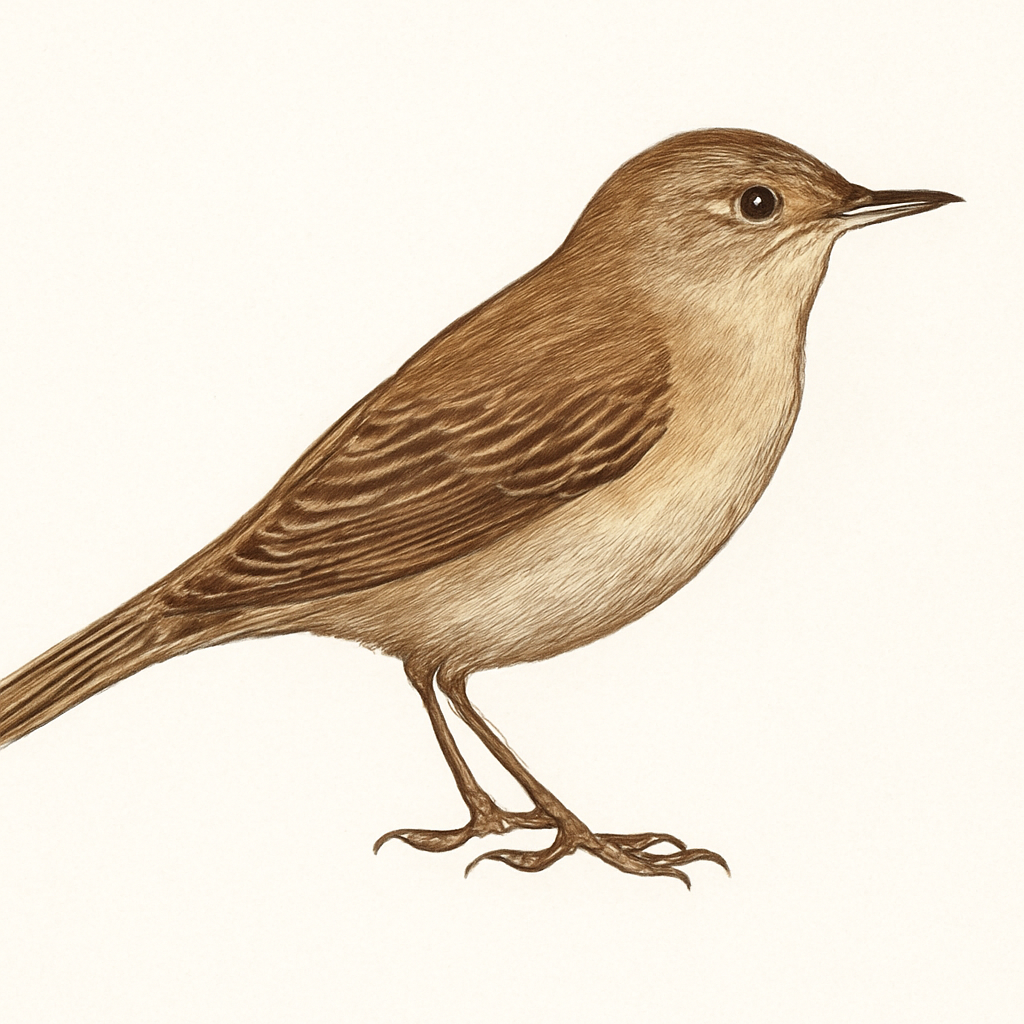
The Marsh Warbler is a medium-sized, plain-looking warbler with no strong facial markings, and sexes are alike. Its upperparts are generally brownish-olive, while the underparts are pale and unmarked, lacking the strong streaking or bold supercilium seen in some similar species. The bill is fine and legs are pale. It typically inhabits tall, dense, damp herbaceous vegetation—such as nettles and meadowsweet—often away from pure reedbeds.
The most distinctive feature of Marsh Warbler is its remarkable song: males deliver a continuous, varied stream of imitations of other birds, often incorporating calls of dozens of species, including many African birds. This highly imitative, mimic-rich song is unique among its genus and is the most reliable way to identify the species, especially in breeding season.
In the field, look for a rather plain, medium-sized warbler in lush, non-reed wetland vegetation, and listen for the extraordinary, varied, and imitative song. Plumage differences from closely related species are subtle, so voice and habitat are often key.
Similar species
- Common Reed Warbler: Lacks the extensive mimicry in its song; prefers pure reedbeds, and has warmer brown upperparts with less contrast between upper- and underparts. → How to tell them apart
- Blyth's Reed Warbler: Song lacks mimicry and is more monotonous; plumage is even plainer and greyer, with a shorter primary projection. → How to tell them apart
- Sedge Warbler: Shows a bold pale supercilium and streaked upperparts, unlike the plain-faced Marsh Warbler. → How to tell them apart
- Great Reed Warbler: Much larger and bulkier, with a heavier bill and a much louder, harsher song. → How to tell them apart
- Aquatic Warbler: Has a distinct pale crown stripe and more streaked upperparts, unlike the plain Marsh Warbler. → How to tell them apart
- Icterine Warbler: Brighter yellowish underparts, blue-grey legs, and a longer, more pointed bill. → How to tell them apart
Often mixed up with
In quizzes, players most often confuse Marsh Warbler with these birds—either this species was picked by mistake, or the other way around.
| Species | Mix-ups |
|---|---|
| Common Reed Warbler Acrocephalus scirpaceus | 913 |
| Blyth's Reed Warbler Acrocephalus dumetorum | 305 |
| Great Reed Warbler Acrocephalus arundinaceus | 229 |
| Sedge Warbler Acrocephalus schoenobaenus | 224 |
| Icterine Warbler Hippolais icterina | 141 |
Family
The Acrocephalidae (the reed warblers, marsh- and tree-warblers, or acrocephalid warblers) are a family of oscine passerine birds, in the superfamily Sylvioidea. The species in this family are usually rather large "warblers". Most are rather plain olivaceous brown above with much yellow to beige below.
Order
A passerine () is any bird of the order Passeriformes (; from Latin passer 'sparrow' and formis '-shaped'), which includes more than half of all bird species. Sometimes known as perching birds, passerines generally have an anisodactyl arrangement of their toes (three pointing forward and one back), which facilitates perching. With more than 140 families and some 6,500 identified species, Passeriformes is the largest order of birds and one of the most diverse clades of terrestrial vertebrates, representing 60% of …