

yellowhead vs new zealand pipit
Mohoua ochrocephala versus Anthus novaeseelandiae
Jogue um quiz com yellowhead e new zealand pipit
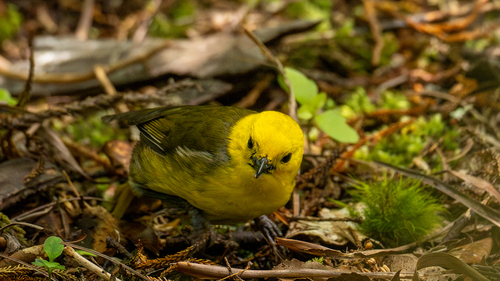 yellowhead
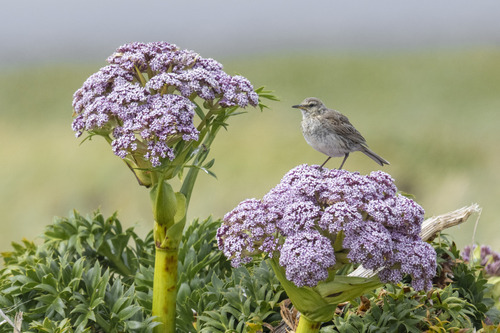 new zealand pipit
Em resumo
The most reliable way to separate Yellowhead from New Zealand Pipit is by overall structure and plumage: Yellowhead is a compact, bright yellow forest bird with a short bill and tail, while New Zealand Pipit is a slender, streaky brown bird of open country with a long tail it often wags. In flight or perched, the pipit’s pale supercilium, streaked breast, and white-edged tail are distinctive, whereas Yellowhead shows uniform yellow to olive-yellow plumage without strong streaking or facial stripes. Both species are similar in size, but their shape, coloration, and habitat preferences make confusion unlikely with good views.
Dicas de identificação
- Habitat is often decisive: Yellowhead is found in native forest canopies; New Zealand Pipit is in open country. If you see a bird on the ground in grassland, dunes, or farmland, it is almost certainly a pipit.
- Overall color: Yellowhead is bright yellow on the head and underparts, with olive-yellow upperparts; pipit is brown above with dark streaks and pale below with streaked breast.
- Facial pattern: Pipit shows a strong pale supercilium (eyebrow) and dark malar/moustachial stripes; Yellowhead’s face is plain yellow with no strong markings.
- Tail: Pipit has a long, narrow tail with white outer feathers, often wagged up and down; Yellowhead’s tail is shorter, plain, and not wagged.
- Bill and legs: Pipit has a slender, pointed bill and long, pinkish-brown legs; Yellowhead’s bill is short and stubby, legs are not notably long.
- Behavior: Pipit walks or runs on the ground, often pausing to wag its tail; Yellowhead forages actively in trees, rarely on the ground, and may join mixed-species flocks.
- Flight: Pipit’s white outer tail feathers are visible in flight; Yellowhead shows no white in the tail or wings.
- Breast pattern: Pipit’s breast is streaked; Yellowhead’s underparts are plain yellow.
- Jizz: Pipit looks slim, elongated, and upright; Yellowhead appears compact and rounded.
- Group size: Yellowhead may be seen in noisy flocks in forest; pipits are usually single or in loose groups in open areas.
- Seasonality: No strong seasonal plumage differences for either species; these marks work year-round.
- Age/sex: No major age or sex differences in field marks for either species; all ages show the same key contrasts.
- Pitfalls: In poor light, pipit’s streaking and supercilium may be hard to see, but the long tail and ground-foraging behavior remain good clues. Yellowhead’s bright yellow is distinctive except in very dull light.
- Sympatry: Overlap is minimal due to habitat; confusion is most likely at forest edges, but behavior and structure remain reliable.
- Size: Both are similar in mass, but pipit’s longer tail and legs make it look larger and more elongated in the field.
Tamanho
Both species are small passerines, but New Zealand Pipit is slightly heavier (body mass ~32g vs. Yellowhead’s ~28g [wikidata]). Pipit is also longer (16–19 cm), appearing more elongated due to its long tail and legs, while Yellowhead is more compact and rounded. In the field, the pipit’s longer tail and legs are more obvious than the small difference in body mass.
Plumagem
No age-specific wing or flight patterns are described for either species, so focus on overall coloration and markings. Yellowhead (all ages and sexes) is bright yellow on the head and underparts, with olive-yellow upperparts and no strong streaking or facial markings. In contrast, New Zealand Pipit of all ages is pale brown above with dark streaks, a pale underpart with streaked breast, a bold pale stripe over the eye (supercilium), and dark malar/moustachial stripes. Pipit’s tail is long with white outer feathers, often wagged and flashed in flight or when perched. Yellowhead lacks any white in the tail and has a plain, unmarked face. These differences are consistent year-round and across age classes.
Comportamento
Yellowhead often forages in noisy, mixed-species flocks in forest canopies, moving actively through trees and rarely seen on the ground. New Zealand Pipit is a solitary or loosely associated bird, typically seen walking or running on open ground, frequently wagging its tail. Pipit’s ground-foraging, tail-wagging behavior is a strong behavioral clue, while Yellowhead’s arboreal, flocking habits are distinctive in forest settings.
Habitat
Habitat is a major separator: Yellowhead is strictly a forest bird, found in mature native forests (especially beech), usually in the South Island. New Zealand Pipit prefers open country—grasslands, coastal dunes, farmland, and alpine meadows—and avoids dense forest. If you see a small bird in open, grassy or shrubby areas, it is almost certainly a pipit; a bright yellow bird in the forest canopy is a Yellowhead.