

yellow-throated sandgrouse vs white-winged flufftail
Pterocles gutturalis versus Sarothrura ayresi
Jogue um quiz com yellow-throated sandgrouse e white-winged flufftail
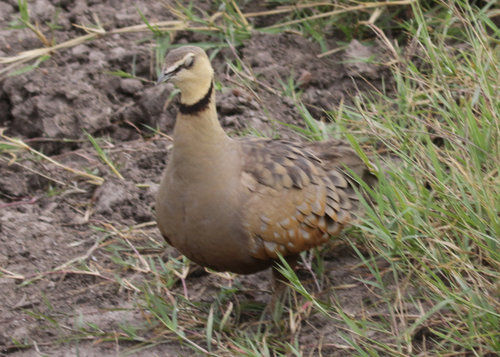 yellow-throated sandgrouse
 white-winged flufftail
Em resumo
A marca de campo mais confiável entre esses dois é a presença de penas secundárias brancas distintas em voo em ambos os sexos do white-winged flufftail, que estão ausentes no yellow-throated sandgrouse. Machos de sandgrouse apresentam uma garganta amarela brilhante e coberturas de asas pretas, enquanto fêmeas e juvenis são mais crípticos, mas ainda assim não possuem painéis brancos nas asas. Estruturalmente, o yellow-throated sandgrouse é muito maior, mais pesado e com asas mais longas, com uma aparência forte de sandgrouse, enquanto o white-winged flufftail é um pequeno pássaro semelhante a uma rã secreta. Seus habitats raramente se sobrepõem: sandgrouse são encontrados em áreas abertas e áridas, enquanto flufftails estão restritos a pântanos densos e úmidos de junco. Se você ver um pássaro com branco piscando nas asas sobre uma área úmida, é o flufftail; um grande pássaro em bandos, com asas longas em um bebedouro em uma área seca é o sandgrouse.
Dicas de identificação
- Penas secundárias brancas em voo: Se você ver um pequeno pássaro sair da vegetação do pântano e mostrar um forte painel branco nas asas, é o white-winged flufftail. Sandgrouse nunca mostram branco na asa em qualquer idade ou sexo.
- Garganta amarela e subasa preta (macho sandgrouse): Uma garganta amarela brilhante e coberturas de asas pretas são exclusivas do macho adulto do yellow-throated sandgrouse. O flufftail nunca mostra essas características.
- Plumagem críptica e opaca com coroa escura (flufftail): Ambos os sexos e todas as idades do white-winged flufftail são de cor marrom opaca com uma coroa escura, sem marcas brilhantes ou contrastantes, exceto o branco na asa.
- Dimorfismo sexual (sandgrouse): Sandgrouse mostram forte dimorfismo sexual: machos são mais brilhantes com amarelo e preto, fêmeas e juvenis são mais pálidos e mais manchados. O flufftail mostra pouco dimorfismo sexual; ambos os sexos são opacos.
- Tamanho e estrutura: Sandgrouse são muito maiores e mais robustos, com asas longas e pontudas e uma aparência semelhante a pombos. O flufftail é pequeno, com corpo arredondado e cauda curta, mais parecido com uma pequena rã.
- Bando vs. solitário: Sandgrouse são frequentemente vistos em grandes bandos, especialmente em bebedouros. Flufftails são solitários ou em pares, nunca formando bandos.
- Habitat: Sandgrouse são encontrados em áreas abertas e secas e em bebedouros; flufftails estão restritos a pântanos densos e úmidos de junco. Se você estiver em uma área úmida, espere ver o flufftail; em uma área seca e aberta, espere ver o sandgrouse.
- Comportamento na água: Sandgrouse caminham em água rasa para beber, muitas vezes em grupos. O flufftail permanece escondido na vegetação do pântano e raramente aparece em aberto.
- Estilo de voo: Sandgrouse voam de forma forte e direta, muitas vezes cobrindo longas distâncias. O flufftail voa de forma fraca e apenas brevemente, geralmente voltando para a cobertura.
- Confusão juvenil: Juvenis de sandgrouse podem ser confundidos com pássaros de pântano opacos devido à sua plumagem críptica, mas nunca mostram branco na asa. O juvenil flufftail sempre mostra as secundárias brancas em voo.
- Cor da subasa: Apenas machos de sandgrouse mostram coberturas de subasa pretas; a subasa do flufftail não é descrita como contrastante.
- Cor da coroa: O flufftail tem uma coroa escura; sandgrouse não têm uma coroa contrastante.
- Comportamento de beber: Sandgrouse imergem seus bicos e sugam água, muitas vezes levantando suas cabeças para engolir; flufftails raramente são vistos bebendo.
- Contexto geográfico: Ambas as espécies podem ocorrer na Etiópia e na África do Sul, mas seus habitats não se sobrepõem localmente.
- Vocalização: Não é diagnóstico a partir das notas, mas o flufftail pode chamar ao amanhecer/anoitecer em pântanos; sandgrouse são geralmente silenciosos em bebedouros.
Tamanho
O yellow-throated sandgrouse é um pássaro muito maior, com uma média de 339 g de massa e cerca de 30 cm de comprimento [wikidata, wikipedia]. É robusto, com asas longas e pontudas e uma construção forte, semelhante a um pombo. O white-winged flufftail é muito menor (massa exata não fornecida, mas todos os flufftails são rãs pequenas), com uma aparência compacta, de cauda curta e corpo arredondado. No campo, a diferença de tamanho é dramática: sandgrouse são quase do tamanho de um pombo, enquanto flufftails são do tamanho de um pardal e muito mais delicados.
Plumagem
- Pássaros Juvenis/Imaturos/Não reprodutores:
- White-winged Flufftail: Ambos os sexos e todas as idades mostram penas secundárias brancas distintas na asa, visíveis em voo como um forte painel branco; caso contrário, a plumagem é opaca e críptica, com uma coroa escura.
- Yellow-throated Sandgrouse: Juvenis se assemelham a fêmeas, com plumagem críptica mais clara e finamente manchada e sem branco na asa. Ambos os sexos não possuem nenhum painel branco em todas as idades. Machos são mais brilhantes no geral, com uma garganta amarela e coberturas de subasa pretas; fêmeas são mais suaves e camufladas.
- Machos adultos:
- Machos de sandgrouse têm uma garganta amarela marcante, lore pretos e coberturas de subasa pretas, mas sem branco na asa.
- Adultos de flufftail permanecem opacos, sem garganta ou subasa brilhantes, mas sempre mostram as secundárias brancas em voo.
- Fêmeas adultas:
- Fêmeas de sandgrouse são crípticas, arenosas e finamente padronizadas, mas ainda assim não possuem branco na asa.
- Fêmeas de flufftail são igualmente opacas, mas novamente mostram secundárias brancas em voo.
Em resumo, o branco na asa é diagnóstico para flufftail em todas as idades e sexos; garganta amarela e subasa preta apenas para machos de sandgrouse.
Comportamento
O yellow-throated sandgrouse é altamente gregário, frequentemente visto em grandes bandos, especialmente em bebedouros ao amanhecer ou anoitecer. Eles voam de forma forte e direta, com asas longas e pontudas, e caminham em água rasa para beber. Em contraste, o white-winged flufftail é extremamente secreto e solitário ou em pares, escondendo-se na densa vegetação do pântano e raramente visto em aberto. Flufftails são relutantes em voar, geralmente correndo pela cobertura, e apenas saem brevemente quando perturbados, mostrando seus painéis brancos nas asas. Sandgrouse são bebedores obrigatórios e percorrem longas distâncias; flufftails estão ligados a pequenos locais úmidos e não formam bandos.
Habitat
O yellow-throated sandgrouse habita áreas abertas áridas e semiáridas, muitas vezes longe da vegetação densa, e é visto em bebedouros ou poças abertas em savanas secas ou campos. O white-winged flufftail está restrito a pântanos densos e úmidos de junco e áreas úmidas de alta altitude, muitas vezes com cobertura espessa e água parada. As duas espécies quase nunca se sobrepõem em habitat: sandgrouse evitam pântanos, e flufftails evitam terrenos abertos e secos.
Voz
Nenhuma comparação direta é possível a partir das notas. O white-winged flufftail é notado por chamar ao amanhecer e ao anoitecer, às vezes em dueto, mas os detalhes estão faltando. Sandgrouse são geralmente silenciosos em bebedouros, e nenhuma marca vocal de campo é descrita aqui.
yellow-throated sandgrouse · white-winged flufftail · Minhas aves difíceis