

Motmot

キノドサケイ 対 アフリカシマクイナ

Pterocles gutturalis 対 Sarothrura ayresi

キノドサケイとアフリカシマクイナのクイズ
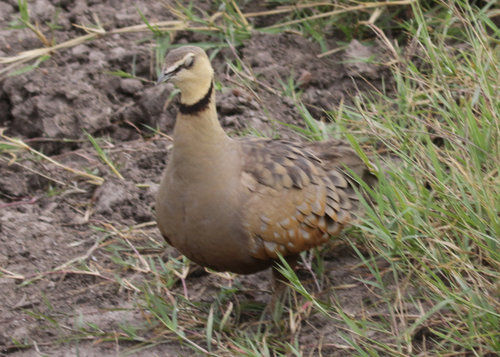
キノドサケイ (Pterocles gutturalis) キノドサケイ
アフリカシマクイナ (Sarothrura ayresi) アフリカシマクイナ

メディア

読み込み中…

要点

これら二種の最も信頼できるフィールドマークは、アフリカシマクイナの両性において飛行中に見られる特徴的な白い二次羽毛の存在であり、これはキノドサケイには見られません。サケイのオスは明るい黄色の喉と黒い翼の下の覆い羽を示し、メスと幼鳥はより隠れた色合いですが、依然として白い翼のパネルは欠けています。構造的に、キノドサケイははるかに大きく、重く、長い翼を持ち、強いサケイの特徴を持っていますが、アフリカシマクイナは小さく、秘密主義的なレイルのような鳥です。彼らの生息地はほとんど重ならず、サケイは開けた乾燥した地域に見られ、フラフタイルは密な湿地のセジマシュに制限されています。湿地で翼に白いフラッシュを持つ鳥を見たら、それはフラフタイルです; 乾燥した国の水たまりで大きく群れを成す長い翼の鳥はサケイです。

識別のコツ

  1. 飛行中の白い二次羽毛: 湿地の植生から小さな鳥が飛び立ち、翼に強い白いパネルを示すのを見たら、それはアフリカシマクイナです。サケイは年齢や性別に関係なく翼に白を示すことはありません。
  2. 黄色の喉と黒い翼の下(オスのサケイ): 明るい黄色の喉と黒い翼の下の覆い羽は成鳥のオスのキノドサケイに特有です。フラフタイルはこれらの特徴を示すことはありません。
  3. 暗い冠を持つ隠れた鈍い羽色(フラフタイル): アフリカシマクイナの両性とすべての年齢は鈍い茶色で、暗い冠を持ち、翼の白を除いて明るいまたは対照的なマークは欠けています。
  4. 性的二形性(サケイ): サケイは強い性的二形性を示します: オスは黄色と黒で明るく、メスと幼鳥はより淡く、斑点模様です。フラフタイルはあまり性的二形性を示さず、両性とも鈍いです。
  5. サイズと構造: サケイははるかに大きく、がっしりしており、長く尖った翼と鳩のような特徴を持っています。フラフタイルは小さく、丸い体形で、短い尾を持ち、小さなレイルのようです。
  6. 群れを成すか孤独か: サケイは特に水たまりで大きな群れで見られることが多いです。フラフタイルは孤独またはペアで、決して群れを成しません。
  7. 生息地: サケイは開けた乾燥した地域や水たまりで見られ、フラフタイルは密な湿地のセジマシュに制限されています。湿地にいる場合はフラフタイルを期待し、乾燥した開けた地域ではサケイを期待してください。
  8. 水での行動: サケイは浅い水に歩いて飲み、しばしば群れで行動します。フラフタイルは湿地の植生に隠れ、めったに開けた場所に出てきません。
  9. 飛行スタイル: サケイは強く直接的に飛び、しばしば長距離をカバーします。フラフタイルは弱く、短時間しか飛ばず、通常はカバーに戻ります。
  10. 幼鳥の混乱: 幼鳥のサケイはその隠れた羽色のために鈍い湿地の鳥と間違えられることがありますが、翼に白を示すことはありません。幼鳥のフラフタイルは常に飛行中に白い二次羽毛を示します。
  11. 翼の下の色: オスのサケイだけが黒い翼の下の覆い羽を示します; フラフタイルの翼の下は対照的とは記述されていません。
  12. 冠の色: フラフタイルは暗い冠を持っています; サケイには対照的な冠はありません。
  13. 飲水行動: サケイはくちばしを水に浸し、水を吸い上げ、しばしば頭を持ち上げて飲み込みます; フラフタイルは飲んでいるところはめったに見られません。
  14. 地理的文脈: 両種はエチオピアと南アフリカに生息することがありますが、彼らの生息地は地域的に重なりません。
  15. 鳴き声: メモからの直接的な比較は不可能ですが、フラフタイルは湿地で夜明けや夕暮れに鳴くことがあると記載されています; サケイは一般的に水たまりでは静かです。

大きさ

キノドサケイははるかに大きな鳥で、平均339gの質量と約30cmの長さです [wikidata, wikipedia]。それは頑丈で、長く尖った翼と強い鳩のような体型を持っています。アフリカシマクイナははるかに小さく(正確な質量は示されていませんが、すべてのフラフタイルは小さなレイルです)、コンパクトで短い尾を持ち、丸い体形をしています。フィールドでは、サイズの差は劇的です: サケイはほぼ鳩のサイズで、フラフタイルはスズメのサイズで、はるかに繊細です。

羽色

要約すると、翼の白はすべての年齢と性別のフラフタイルにとって診断的であり、黄色の喉と黒い翼の下はオスのサケイにのみ当てはまります。

行動

キノドサケイは非常に群れを成す性質があり、特に夜明けや夕暮れ時の水たまりで大きな群れで見られることが多いです。彼らは強く直接的に飛び、長く尖った翼を持ち、浅い水に歩いて飲みます。対照的に、アフリカシマクイナは非常に秘密主義的で、孤独またはペアで行動し、密な湿地の植生に隠れ、めったに開けた場所に出てきません。フラフタイルは飛ぶことをためらい、通常はカバーを通って走り、動かされるときに短時間だけ飛び立ち、白い翼のパネルを示します。サケイは必須の飲水者であり、長距離を移動します; フラフタイルは小さな湿った場所に依存し、群れを成しません。

生息環境

キノドサケイは乾燥したおよび半乾燥の開けた地域に生息し、しばしば密な植生から遠く離れ、乾燥したサバンナや草原の開けた水たまりやパンで見られます。アフリカシマクイナは密な湿地のセジマシュや高地の湿地に制限され、しばしば厚いカバーと静止水を持っています。この二種は生息地でほとんど重なることはありません: サケイは湿地を避け、フラフタイルは開けた乾燥した地面を避けます。

声

メモからの直接的な比較は不可能です。アフリカシマクイナは夜明けや夕暮れに鳴くことがあると記載されていますが、詳細は欠けています。サケイは一般的に水たまりでは静かで、ここでは鳴き声のフィールドマークは記述されていません。

より良い説明を送る

比較と同じ項目を使ってください。文章はすぐに公開されます。

The most reliable field mark between these two is the presence of distinctive white secondary feathers in flight on both sexes of White-winged Flufftail, which are absent in Yellow-throated Sandgrouse. Sandgrouse males show a bright yellow throat and black underwing coverts, while females and juveniles are more cryptic but still lack any white wing panels. Structurally, Yellow-throated Sandgrouse is much larger, heavier, and longer-winged, with a strong sandgrouse jizz, while White-winged Flufftail is a small, secretive rail-like bird. Their habitats rarely overlap: sandgrouse are found in open, arid country, while flufftails are restricted to dense, wet sedge marshes. If you see a bird with white flashing in the wings over a wetland, it's the flufftail; a large, flocking, long-winged bird at a waterhole in dry country is the sandgrouse.

  1. White secondary feathers in flight: If you see a small bird flush from marsh vegetation and show a strong white panel in the wings, it's White-winged Flufftail. Sandgrouse never show white in the wing at any age or sex.
  2. Yellow throat and black underwing (male sandgrouse): A bright yellow throat and black underwing coverts are unique to adult male Yellow-throated Sandgrouse. Flufftail never shows these features.
  3. Cryptic, dull plumage with dark crown (flufftail): Both sexes and all ages of White-winged Flufftail are dull brownish with a dark crown, lacking any bright or contrasting marks except the white in the wing.
  4. Sexual dimorphism (sandgrouse): Sandgrouse show strong sexual dimorphism: males are brighter with yellow and black, females and juveniles are paler and more mottled. Flufftail shows little sexual dimorphism; both sexes are dull.
  5. Size and structure: Sandgrouse are much larger and bulkier, with long, pointed wings and a pigeon-like jizz. Flufftail is tiny, round-bodied, and short-tailed, more like a small rail.
  6. Flocking vs. solitary: Sandgrouse are often seen in large flocks, especially at waterholes. Flufftails are solitary or in pairs, never flocking.
  7. Habitat: Sandgrouse are found in open, dry country and at waterholes; flufftails are restricted to dense, wet sedge marshes. If you are in a wetland, expect flufftail; in dry open country, expect sandgrouse.
  8. Behavior at water: Sandgrouse walk into shallow water to drink, often in groups. Flufftail remains hidden in marsh vegetation and rarely comes into the open.
  9. Flight style: Sandgrouse fly strongly and directly, often covering long distances. Flufftail flies weakly and only briefly, usually dropping back into cover.
  10. Juvenile confusion: Juvenile sandgrouse may be mistaken for dull marsh birds due to their cryptic plumage, but they never show white in the wing. Juvenile flufftail always shows the white secondaries in flight.
  11. Underwing color: Only male sandgrouse show black underwing coverts; flufftail underwing is not described as contrasting.
  12. Crown color: Flufftail has a dark crown; sandgrouse do not have a contrasting crown.
  13. Drinking behavior: Sandgrouse immerse their bills and suck water, often lifting their heads to swallow; flufftails are rarely seen drinking.
  14. Geographic context: Both species can occur in Ethiopia and South Africa, but their habitats do not overlap locally.
  15. Vocalization: Not diagnostic from the notes, but flufftail may call at dawn/dusk in marshes; sandgrouse are generally quiet at waterholes.

Yellow-throated Sandgrouse is a much larger bird, averaging 339 g in mass and about 30 cm in length [wikidata, wikipedia]. It is robust, with long, pointed wings and a strong, pigeon-like build. White-winged Flufftail is much smaller (exact mass not given, but all flufftails are tiny rails), with a compact, short-tailed, and round-bodied appearance. In the field, the size gap is dramatic: sandgrouse are nearly the size of a pigeon, while flufftails are sparrow-sized and much more delicate.

  • Juvenile/Immature/Non-breeding birds:
  • White-winged Flufftail: Both sexes and all ages show distinctive white secondary feathers in the wing, visible in flight as a strong white panel; otherwise, plumage is dull and cryptic, with a dark crown.
  • Yellow-throated Sandgrouse: Juveniles resemble females, with paler, finely mottled cryptic plumage and no white in the wing. Both sexes lack any white wing panel at all ages. Males are brighter overall, with a yellow throat and black underwing coverts; females are more muted and camouflaged.
  • Adult males:
  • Sandgrouse males have a striking yellow throat, black lores, and black underwing coverts, but no white in the wing.
  • Flufftail adults remain dull, with no bright throat or underwing, but always show the white secondaries in flight.
  • Adult females:
  • Sandgrouse females are cryptic, sandy, and finely patterned, but still lack any white in the wing.
  • Flufftail females are similarly dull, but again show white secondaries in flight.

In summary, white in the wing is diagnostic for flufftail at all ages and sexes; yellow throat and black underwing for male sandgrouse only.

Yellow-throated Sandgrouse is highly gregarious, often seen in large flocks, especially at waterholes at dawn or dusk. They fly strongly and directly, with long, pointed wings, and walk into shallow water to drink. In contrast, White-winged Flufftail is extremely secretive and solitary or in pairs, skulking in dense marsh vegetation and rarely seen in the open. Flufftails are reluctant fliers, usually running through cover, and only flush briefly when disturbed, showing their white wing panels. Sandgrouse are obligate drinkers and travel long distances; flufftails are tied to small, wet patches and do not flock.

Yellow-throated Sandgrouse inhabits arid and semi-arid open country, often far from dense vegetation, and is seen at open waterholes or pans in dry savanna or grassland. White-winged Flufftail is restricted to dense, wet sedge marshes and high-altitude wetlands, often with thick cover and standing water. The two species almost never overlap in habitat: sandgrouse avoid marshes, and flufftails avoid open, dry ground.

No direct comparison is possible from the notes. White-winged Flufftail is noted to call at dawn and dusk, sometimes in duet, but details are lacking. Sandgrouse are generally quiet at waterholes, and no vocal field marks are described here.

変更を破棄しますか?

保存していない編集があります。今離れると失われます。

キノドサケイ · アフリカシマクイナ · 苦手な鳥