

gaivota-de-patas-amarelas vs gaivota-da-arménia
Larus michahellis versus Larus armenicus
Jogue um quiz com gaivota-de-patas-amarelas e gaivota-da-arménia
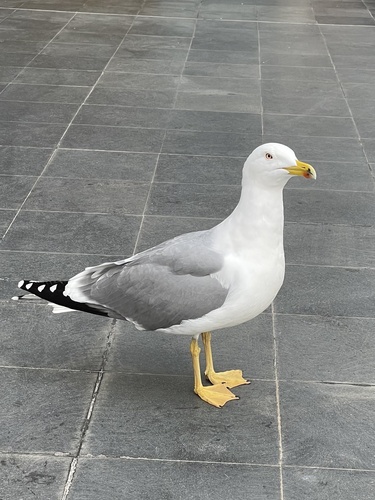 gaivota-de-patas-amarelas
 gaivota-da-arménia
Em resumo
A marca de campo mais confiável para separar a gaivota-de-patas-amarelas da gaivota-da-arménia é o padrão do bico em adultos: a gaivota-da-arménia apresenta um bico curto com uma forte faixa subterminal preta, enquanto a gaivota-de-patas-amarelas tem um bico mais longo com uma mancha vermelha, mas sem faixa preta. Para aves de primeiro inverno, ambas têm uma faixa de cauda preta estreita e bem definida, mas a gaivota-da-arménia é overall mais escura, com uma região da cauda mais clara e primárias internas pálidas. A gaivota-da-arménia é ligeiramente menor, com um manto mais escuro e mais preto nas pontas das asas, além de um olho escuro em adultos. Ambas as espécies podem ser confusas no Oriente Médio, mas a atenção cuidadosa ao padrão do bico, à tonalidade do manto e à cor do olho geralmente ajudará na identificação.
Dicas de identificação
- Padrão do bico (adultos): A gaivota-da-arménia tem um bico curto e robusto com uma proeminente faixa subterminal preta; a gaivota-de-patas-amarelas tem um bico mais longo com uma mancha vermelha, mas sem faixa preta. Esta é a melhor marca em adultos.
- Formato do bico: O bico da gaivota-da-arménia é mais curto e mais compacto em todas as idades, enquanto o da gaivota-de-patas-amarelas é mais longo e pesado, especialmente nos machos.
- Cor do olho (adultos): A gaivota-da-arménia tem um olho escuro; a gaivota-de-patas-amarelas geralmente tem um olho amarelo pálido com um anel orbital vermelho. Isso é confiável em adultos em reprodução.
- Cor do manto: O manto da gaivota-da-arménia é ligeiramente mais escuro que o da gaivota-de-patas-amarelas, mas mais claro que o da gaivota-da-asa-escura. Isso é melhor julgado lado a lado ou com experiência.
- Padrão das pontas das asas (adultos): A gaivota-da-arménia tem mais preto nas pontas das asas com manchas brancas menores; a gaivota-de-patas-amarelas tem menos preto e espelhos brancos maiores. Isso é sutil, mas pode ser visto em boas vistas de voo ou em aves empoleiradas com asas abertas.
- Cor da cabeça (outono): A gaivota-de-patas-amarelas tem a cabeça muito mais branca no outono, enquanto a gaivota-da-arménia retém mais estrias.
- Cor das pernas: Ambas têm pernas amareladas como adultos, mas as da gaivota-da-arménia podem ser mais opacas ou mais tom de carne. Nem sempre é confiável, especialmente em luz fraca.
- Plumagem de primeiro inverno/juvenil: A gaivota-da-arménia é overall mais escura, com uma região da cauda mais clara e primárias internas pálidas; a gaivota-de-patas-amarelas é mais clara na cabeça, região da cauda e partes inferiores. Ambas têm uma faixa de cauda preta estreita e bem definida.
- Aves de segundo inverno: A gaivota-da-arménia mantém um olho escuro e uma faixa preta no bico; a gaivota-de-patas-amarelas é mais clara, com uma mancha vermelha no bico e pernas mais claras.
- Tamanho e estrutura: A gaivota-da-arménia é menor e mais compacta, com um bico mais curto e uma construção menos volumosa; a gaivota-de-patas-amarelas pode parecer maior e com asas mais longas, especialmente nos machos.
- Contexto de habitat: A gaivota-da-arménia é mais provável de ser encontrada em grandes lagos interiores no Cáucaso e Oriente Médio; a gaivota-de-patas-amarelas é mais costeira e urbana na Europa e no Mediterrâneo. Se estiver longe da faixa típica, verifique todas as marcas cuidadosamente.
- Faixa de cauda (imaturos): Ambas mostram uma faixa de cauda preta bem definida no primeiro inverno, mas a da gaivota-da-arménia é frequentemente mais estreita e mais bem demarcada.
- Padrão primário (imaturos): A gaivota-da-arménia tem primárias internas pálidas, que podem contrastar com o resto da asa em voo; as da gaivota-de-patas-amarelas são mais escuras no geral.
- Risco de confusão: Ambas as espécies podem ser confundidas com a gaivota-argêntea e a gaivota-da-asa-escura; sempre verifique múltiplas características, especialmente o padrão do bico e a cor do olho, antes de concluir.
- Mudanças sazonais: Algumas marcas (como estrias na cabeça e cor das pernas) variam com a estação e a idade; priorize o padrão do bico, a cor do olho e o padrão das pontas das asas para a separação mais consistente.
Tamanho
A gaivota-da-arménia é a menor das duas, embora ambas sejam gaivotas grandes. A gaivota-da-arménia mede de 52 a 62 cm de comprimento e de 120 a 145 cm de envergadura, com uma massa típica de adulto em torno de 1000 g. A gaivota-de-patas-amarelas é maior em média, variando de 52 a 68 cm de comprimento e de 120 a 155 cm de envergadura, com uma faixa de massa mais ampla (550 a 1600 g). No campo, a diferença de tamanho pode ser sutil e muitas vezes é menos útil do que características do bico ou plumagem, mas a gaivota-da-arménia tende a parecer mais compacta e menos volumosa, especialmente em comparação com grandes gaivotas-de-patas-amarelas machos.
Plumagem
- Primeiro inverno/juvenil: Ambas as espécies mostram uma faixa de cauda preta estreita e bem definida, mas a gaivota-da-arménia é overall mais escura, com uma região da cauda mais clara e primárias internas pálidas. Os juvenis da gaivota-de-patas-amarelas têm uma cabeça, região da cauda e partes inferiores mais claras, e se assemelham mais às gaivotas-gigantes do que à gaivota-da-arménia. Ambas têm bicos e olhos escuros nesta idade, mas o bico da gaivota-da-arménia é mais curto e mais robusto.
- Segundo inverno: A gaivota-da-arménia começa a mostrar um bico curto com uma faixa preta, e o olho escuro persiste. A gaivota-de-patas-amarelas é overall mais clara, com um bico mais longo que desenvolve uma mancha vermelha, mas não tem uma faixa preta; as pernas tornam-se amarelo-claro.
- Adulto: A gaivota-da-arménia tem um dorso cinza ligeiramente mais escuro, mais preto nas pontas das asas com manchas brancas menores, um bico curto com uma forte faixa preta antes da ponta, e um olho escuro. A gaivota-de-patas-amarelas tem um dorso cinza mais claro (mais escuro que a gaivota-argêntea, mais claro que a gaivota-da-asa-escura), um bico mais longo com uma mancha vermelha (sem faixa preta), pernas amarelas e um anel orbital vermelho. A cabeça da gaivota-da-arménia é menos branca no outono do que a da gaivota-de-patas-amarelas.
Comportamento
Ambas as espécies são onívoras e oportunistas, forrageando em lixões, portos e costas, e podem ser predatórias se necessário. Não há diferenças comportamentais fortes em forrageamento ou estilo de voo observadas nas fontes. Ambas se reproduzem em colônias e podem nidificar em edifícios em áreas urbanas, mas isso é mais frequentemente notado para a gaivota-de-patas-amarelas na Europa Ocidental.
Habitat
A gaivota-de-patas-amarelas é amplamente distribuída na Europa, Oriente Médio e Norte da África, frequentemente encontrada ao longo de costas, portos e cada vez mais em ambientes urbanos. A gaivota-da-arménia é restrita ao Cáucaso e Oriente Médio, principalmente em grandes lagos interiores e reservatórios. Seus habitats não costumam se sobrepor, mas a vagância e os movimentos de inverno podem trazê-las em contato, especialmente no leste do Mediterrâneo e Oriente Médio.
gaivota-de-patas-amarelas · gaivota-da-arménia · Minhas aves difíceis