

yellow-crowned euphonia vs yellow-throated euphonia
Euphonia luteicapilla versus Euphonia hirundinacea
Jogue um quiz com yellow-crowned euphonia e yellow-throated euphonia
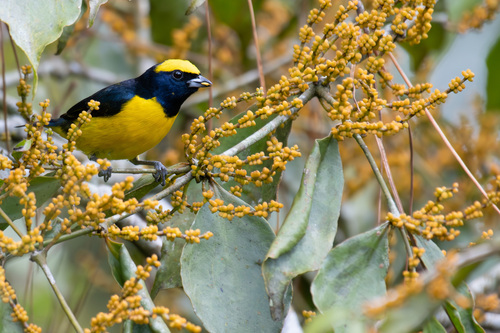 yellow-crowned euphonia
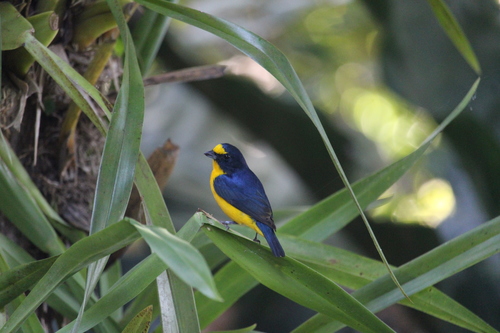 yellow-throated euphonia
Em resumo
A marca de campo mais confiável entre a yellow-crowned euphonia e a yellow-throated euphonia é a extensão e a colocação do amarelo na cabeça do macho: machos da yellow-crowned mostram uma grande coroa amarela brilhante que se estende bem além do olho, enquanto machos da yellow-throated têm apenas uma pequena mancha amarela na testa que chega até cerca da metade do olho. A separação das fêmeas depende da cor das partes inferiores: fêmeas da yellow-crowned são amarelo-oliva por baixo, enquanto fêmeas da yellow-throated têm uma garganta e barriga esbranquiçadas ou cinza-pálido com flancos amarelados. Machos imaturos e juvenis da yellow-throated euphonia passam por plumagens manchadas, oliva e amarela antes de atingirem as cores adultas, às vezes se assemelhando às fêmeas. Ambas as espécies são semelhantes em tamanho e estrutura, mas diferenças sutis na coloração das asas inferiores e da cauda, especialmente em voo, podem ajudar a confirmar a identificação se vistas bem.
Dicas de identificação
- O padrão da cabeça do macho adulto é a verificação mais rápida: A yellow-crowned tem uma grande coroa amarela brilhante que se estende bem além do olho; a yellow-throated mostra apenas uma pequena mancha amarela na testa que chega até cerca da metade do olho. Isso funciona o ano todo para machos adultos.
- As partes inferiores das fêmeas são a chave: Fêmeas da yellow-crowned são amarelo-oliva por baixo sem forte contraste, enquanto fêmeas da yellow-throated têm uma garganta, peito e barriga esbranquiçados ou cinza-pálido, com flancos amarelados. Procure por essa parte inferior central pálida em aves empoleiradas ou boas vistas de baixo.
- Machos juvenis/imaturos da yellow-throated: Essas aves passam por estágios com partes superiores verde-oliva e amarelo manchado na garganta e barriga antes de desenvolverem preto na cabeça. Eles podem se assemelhar às fêmeas, mas mostrarão amarelo e oliva irregulares à medida que trocam de penas. Imaturos da yellow-crowned não são descritos em detalhes, mas provavelmente se assemelham a adultos precocemente.
- Padrão das asas inferiores em voo: A yellow-throated euphonia mostra um grande oval branco na asa inferior (das teias internas das 2–3 primárias externas) e coberturas brancas das asas inferiores. A yellow-crowned não tem isso, possuindo asas uniformemente escuras por baixo. Isso é melhor visto em aves voando acima ou se limpando.
- Coberturas da cauda: A yellow-crowned tem coberturas da cauda amarelas brilhantes; as da yellow-throated são cinza-escuro ou pálido oliva-amareladas (fêmea). Isso pode ajudar se a ave estiver de costas ou balançando a cauda.
- Bico e estrutura: Ambas têm bicos curtos e robustos e corpos compactos; a estrutura não é um separador confiável.
- Partes superiores: Ambos os machos têm partes superiores azul-preto brilhantes, mas o padrão da coroa/testa amarela é a principal diferença. As fêmeas de ambas são oliva por cima, mas a yellow-throated é descrita como levemente brilhante e metálica.
- Tamanho: Ambas são semelhantes em tamanho e peso; não confie nisso para identificação.
- Habitat e distribuição: Se estiver no sudeste do México ou no norte da América Central, apenas a yellow-throated ocorre. Na Costa Rica e no Panamá, ambas podem estar presentes, então não use a distribuição sozinha nessas áreas.
- Voz: Se você ouvir uma canção rápida, picotada e aguda ou um chamado 'pidgel-eece' ou 'chi-bib-bib-bib-bib', suspeite da yellow-throated. A ausência desses chamados não é diagnóstica para a yellow-crowned.
- Dimorfismo sexual: Ambas as espécies são sexualmente dimórficas, mas a cor das partes inferiores das fêmeas é mais útil do que o tom das partes superiores.
- Armadilha: Amarelo sobreposto: Em luz fraca, a coroa amarela da yellow-crowned pode parecer menor, e a testa amarela da yellow-throated pode parecer mais extensa se a ave estiver arrepiada ou em um ângulo. Sempre tente obter uma visão lateral ou frontal direta da cabeça.
- Armadilha: Confusão imatura: Machos imaturos da yellow-throated podem parecer fêmeas de qualquer uma das espécies; verifique se há amarelo manchado na garganta e barriga e qualquer preto começando na cabeça.
- Armadilha: Flash das asas inferiores: A mancha branca da asa inferior da yellow-throated só é visível em voo ou quando se limpando; não espere vê-la em aves empoleiradas.
- Contexto: Ambas as espécies podem se juntar a bandos mistos, mas isso não é um separador. Foque na plumagem e no padrão da cabeça.
Tamanho
Ambas as espécies são pequenos tentilhões de bico curto, com a yellow-crowned euphonia pesando em média cerca de 13,0 g e medindo 9–10 cm de comprimento, e a yellow-throated euphonia ligeiramente mais pesada, com 14,0 g e 10–12 cm de comprimento. A diferença é menor e não confiável para identificação em campo. Ambas têm caudas curtas e construções compactas.
Plumagem
Juvenis e imaturos da yellow-throated euphonia se assemelham às fêmeas, com partes superiores verde-oliva e plumagem de textura solta; à medida que amadurecem, o amarelo aparece na garganta e barriga antes que o preto se desenvolva na cabeça e coroa. Em contraste, imaturos da yellow-crowned euphonia não são descritos em detalhes, mas espera-se plumagem semelhante à dos adultos precocemente.
Machos adultos são melhor separados pelo padrão da cabeça: a yellow-crowned tem uma grande coroa amarela brilhante que se estende bem além do olho, com o restante da cabeça, nuca e garganta azul-preto brilhante. Machos da yellow-throated têm uma mancha amarela muito menor limitada à testa, que chega apenas até cerca da metade do olho, e o restante da cabeça e partes superiores são azul-preto brilhante. Ambos têm partes inferiores amarelas, mas a yellow-throated tem coberturas brancas das asas inferiores e um grande oval branco na asa inferior (das teias internas das 2–3 primárias externas), além de coberturas da cauda cinza-escuro opacas, enquanto a yellow-crowned tem partes inferiores amarelas brilhantes, incluindo coberturas da cauda.
Fêmeas: Fêmeas da yellow-crowned são oliva por cima e amarelo-oliva por baixo, com um tom amarelado na testa e sem forte contraste nas partes inferiores. Fêmeas da yellow-throated são verde-oliva por cima, mas têm uma garganta, centro do peito e barriga distintamente esbranquiçados ou cinza-branco, com flancos oliva-amarelados e coberturas da cauda pálido oliva-amareladas. Essa parte inferior central pálida é a marca de campo chave para separar as fêmeas.
Comportamento
Ambas as espécies são arbóreas e tendem a forragear na copa ou na borda da floresta, frequentemente em pares ou pequenos grupos. Nenhuma diferença comportamental forte é notada nas fontes para separação em campo.
Habitat
A yellow-crowned euphonia é encontrada principalmente na Costa Rica, Nicarágua e Panamá, enquanto a yellow-throated euphonia se estende do sudeste do México através da América Central até o oeste do Panamá. Ambas utilizam bordas de florestas, matas abertas e plantações sombreadas, mas a yellow-throated é mais ampla e pode ser encontrada em regiões úmidas e secas. Em áreas de sobreposição (oeste do Panamá, sudoeste da Costa Rica), ambas podem ocorrer, então a distribuição sozinha nem sempre é diagnóstica.
Voz
Machos da yellow-throated euphonia têm uma canção variada com notas agudas, estridentes e chiadas, frequentemente em padrões rápidos e picotados de 2–4 notas, às vezes imitando outras aves. Os chamados incluem um rápido 'pidgel-eece', 'chi-bib-bib-bib-bib', 'tuck-a-tuck', 'weet' e 'gleer'. Fêmeas emitem chamados finos, agudos e quase trêmulos. Nenhuma descrição vocal detalhada está disponível para a yellow-crowned euphonia nessas notas, então a voz não é um separador confiável, a menos que os chamados distintivos da yellow-throated sejam ouvidos.
yellow-crowned euphonia · yellow-throated euphonia · Minhas aves difíceis