

Yellow-crowned Euphonia vs Yellow-throated Euphonia
Euphonia luteicapilla contro Euphonia hirundinacea
Fai un quiz con Yellow-crowned Euphonia e Yellow-throated Euphonia
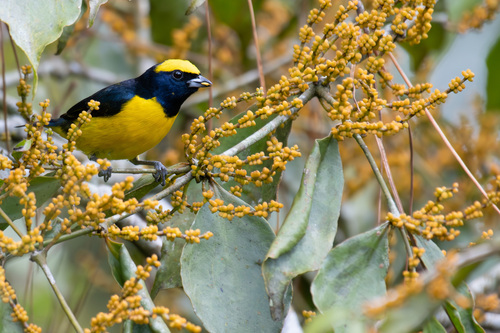 Yellow-crowned Euphonia
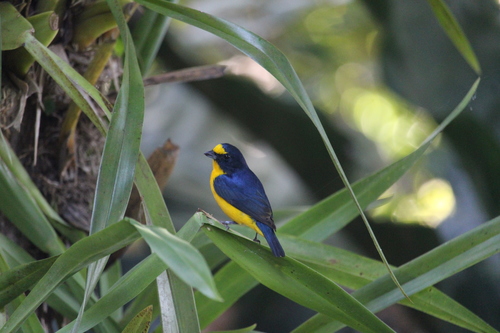 Yellow-throated Euphonia
In breve
Il segno di campo più affidabile tra Yellow-crowned e Yellow-throated Euphonias è l'estensione e la posizione del giallo sulla testa del maschio: i maschi Yellow-crowned mostrano una grande corona gialla brillante che si estende ben oltre l'occhio, mentre i maschi Yellow-throated hanno solo una piccola macchia gialla sulla fronte che raggiunge circa la metà dell'occhio. La separazione delle femmine dipende dal colore delle parti inferiori: le femmine Yellow-crowned sono di un giallo oliva sotto, mentre le femmine Yellow-throated hanno una gola e un ventre bianco o grigio pallido con fianchi giallastri. I maschi immaturi e juvenile di Yellow-throated Euphonia passano attraverso piumaggi macchiati, oliva e giallo prima di raggiungere i colori adulti, a volte somigliando alle femmine. Entrambe le specie sono simili in dimensioni e struttura, ma sottili differenze nel colore delle ali inferiori e della coda, specialmente in volo, possono aiutare a confermare l'identificazione se viste bene.
Consigli di identificazione
- Il modello della testa del maschio adulto è il controllo più veloce: Yellow-crowned ha una grande corona gialla brillante che si estende ben oltre l'occhio; Yellow-throated mostra solo una piccola macchia gialla sulla fronte che raggiunge circa la metà dell'occhio. Questo funziona tutto l'anno per i maschi adulti.
- Le parti inferiori delle femmine sono fondamentali: le femmine Yellow-crowned sono di un giallo oliva sotto senza forte contrasto, mentre le femmine Yellow-throated hanno una gola, un petto e un ventre bianchi o grigio pallido, con fianchi giallastri. Cerca questa parte centrale pallida in uccelli appollaiati o buone viste da sotto.
- Maschi juvenile/immaturi Yellow-throated: Questi uccelli passano attraverso fasi con parti superiori verde oliva e giallo macchiato sulla gola e sul ventre prima di sviluppare il nero sulla testa. Possono somigliare alle femmine, ma mostreranno giallo e oliva irregolari mentre mutano. Gli immaturi Yellow-crowned non sono descritti in dettaglio ma probabilmente somigliano presto agli adulti.
- Modello delle ali inferiori in volo: Yellow-throated Euphonia mostra un grande ovale bianco sulle ali inferiori (dalle membrane interne delle 2–3 primarie esterne) e copritori delle ali inferiori bianchi. Yellow-crowned non ha questo, avendo ali uniformemente scure sotto. Questo è meglio visto in uccelli che volano sopra o si puliscono.
- Copritori della coda: Yellow-crowned ha copritori della coda gialli brillanti; Yellow-throated's sono grigio opaco o giallo oliva pallido (femmina). Questo può aiutare se l'uccello è rivolto via o sbatte la coda.
- Becco e struttura: Entrambi hanno becchi corti e tozzi e corpi compatti; la struttura non è un separatore affidabile.
- Parti superiori: Entrambi i maschi hanno parti superiori blu-nerastre lucide, ma il modello della corona/fronte gialla è la principale differenza. Le femmine di entrambe sono olive sopra, ma Yellow-throated è descritta come leggermente lucida e metallica.
- Dimensioni: Entrambi sono simili in dimensioni e peso; non fare affidamento su questo per l'identificazione.
- Habitat e distribuzione: Se nel sud-est del Messico o nel nord dell'America Centrale, si trova solo Yellow-throated. In Costa Rica e Panama, entrambe possono essere presenti, quindi non usare solo la distribuzione in queste aree.
- Voce: Se senti un canto rapido, spezzato e acuto o un richiamo 'pidgel-eece' o 'chi-bib-bib-bib-bib', sospetta Yellow-throated. L'assenza di questi richiami non è diagnostica per Yellow-crowned.
- Dimorfismo sessuale: Entrambe le specie sono dimorfiche sessualmente, ma il colore delle parti inferiori delle femmine è più utile del tono delle parti superiori.
- Trappola: Giallo sovrapposto: In scarsa luce, la corona gialla di Yellow-crowned può apparire più piccola, e la fronte gialla di Yellow-throated può sembrare più estesa se l'uccello è gonfio o in un angolo. Cerca sempre una vista laterale o frontale diretta della testa.
- Trappola: Confusione immatura: I maschi immaturi di Yellow-throated possono sembrare femmine di entrambe le specie; controlla per giallo macchiato sulla gola e sul ventre e qualsiasi nero che inizia sulla testa.
- Trappola: Flash delle ali inferiori: La macchia bianca delle ali inferiori di Yellow-throated è visibile solo in volo o quando si pulisce; non aspettarti di vederla su uccelli appollaiati.
- Contesto: Entrambe le specie possono unirsi a stormi misti, ma questo non è un separatore. Concentrati sul piumaggio e sul modello della testa.
Taglia
Entrambe le specie sono piccoli fringillidi a becco corto, con Yellow-crowned Euphonia che pesa in media circa 13,0 g e misura 9–10 cm di lunghezza, e Yellow-throated Euphonia leggermente più pesante a 14,0 g e 10–12 cm di lunghezza. La differenza è minima e non affidabile per l'identificazione sul campo. Entrambi hanno code corte e corpi compatti.
Piumaggio
I giovani e gli immaturi Yellow-throated Euphonias somigliano alle femmine, con parti superiori verde oliva e piumaggio a trama sciolta; man mano che maturano, il giallo appare sulla gola e sul ventre prima che il nero si sviluppi sulla testa e sulla corona. Al contrario, gli immaturi Yellow-crowned Euphonia non sono descritti in dettaglio, ma ci si aspetta un piumaggio simile agli adulti presto.
I maschi adulti sono meglio separati dal modello della testa: Yellow-crowned ha una grande corona gialla brillante che si estende ben oltre l'occhio, con il resto della testa, della nuca e della gola blu-nerastra lucida. I maschi Yellow-throated hanno una macchia gialla molto più piccola limitata alla fronte, che raggiunge solo circa la metà dell'occhio, e il resto della testa e delle parti superiori è blu-nerastro lucido. Entrambi hanno parti inferiori gialle, ma Yellow-throated ha copritori delle ali inferiori bianchi e un grande ovale bianco sulle ali inferiori (dalle membrane interne delle 2–3 primarie esterne), oltre a copritori della coda grigio scuro opaco, mentre Yellow-crowned ha parti inferiori gialle brillanti, compresi i copritori della coda.
Femmine: le femmine Yellow-crowned sono olive sopra e giallo oliva sotto, con una sfumatura giallastra sulla fronte e senza forte contrasto sulle parti inferiori. Le femmine Yellow-throated sono verde oliva sopra ma hanno una gola, un centro del petto e un ventre distintamente bianchi o grigio chiaro, con fianchi giallo oliva e copritori della coda giallo oliva pallido. Questa parte centrale pallida è il segno di campo chiave per separare le femmine.
Comportamento
Entrambe le specie sono arboree e tendono a cercare cibo nella chioma o al margine della foresta, spesso in coppie o piccoli gruppi. Non sono state notate forti differenze comportamentali nelle fonti per la separazione sul campo.
Habitat
Yellow-crowned Euphonia si trova principalmente in Costa Rica, Nicaragua e Panama, mentre Yellow-throated Euphonia si estende dal sud-est del Messico attraverso l'America Centrale fino al Panama occidentale. Entrambe utilizzano i margini forestali, le foreste aperte e le piantagioni ombreggiate, ma Yellow-throated è più diffusa e può essere trovata sia in regioni umide che secche. Nelle aree di sovrapposizione (Panama occidentale, Costa Rica sud-occidentale), entrambe possono verificarsi, quindi la distribuzione da sola non è sempre diagnostica.
Voce
I maschi di Yellow-throated Euphonia hanno un canto vario con note acute, stridule e squittenti, spesso in schemi rapidi e spezzati di 2–4 note, a volte mimando altri uccelli. I richiami includono un rapido 'pidgel-eece', 'chi-bib-bib-bib-bib', 'tuck-a-tuck', 'weet' e 'gleer'. Le femmine emettono richiami sottili, acuti e quasi trillati. Non è disponibile una descrizione vocale dettagliata per Yellow-crowned Euphonia in queste note, quindi la voce non è un separatore affidabile a meno che non si sentano i richiami distintivi di Yellow-throated.
Yellow-crowned Euphonia · Yellow-throated Euphonia · I miei uccelli difficili