

yellow-bellied flycatcher vs papa-mosquitos
Empidonax flaviventris versus Empidonax virescens
Jogue um quiz com yellow-bellied flycatcher e papa-mosquitos
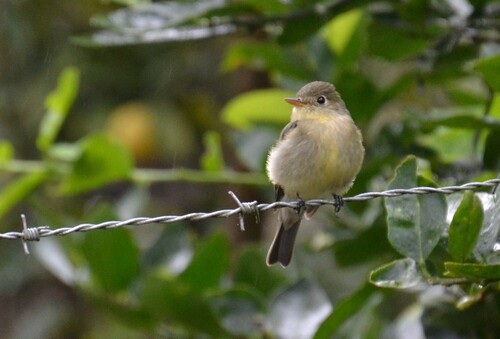 yellow-bellied flycatcher
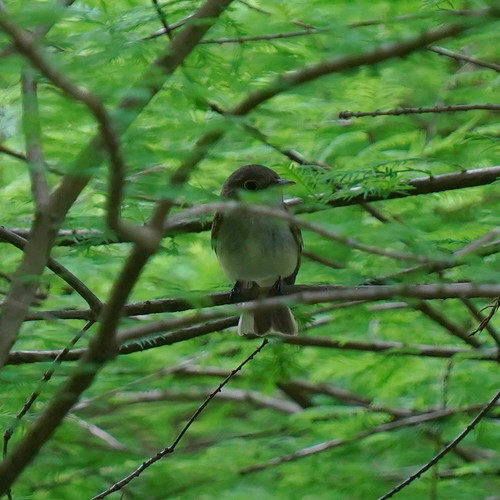 papa-mosquitos
Em resumo
A marca de campo mais confiável para separar o papa-mosquitos do yellow-bellied flycatcher é a cor da parte inferior: o yellow-bellied mostra partes inferiores distintamente amareladas (especialmente a garganta), enquanto o papa-mosquitos é muito mais branco embaixo, com apenas uma leve lavagem oliva no peito. Ambos têm partes superiores verde-oliva e anéis oculares brancos, mas as barras de asa e o anel ocular do yellow-bellied frequentemente parecem mais amareladas, e sua impressão geral é mais verde e brilhante. Estruturalmente, o yellow-bellied é ligeiramente menor, com uma cauda mais curta e um bico mais largo e plano, com uma mandíbula inferior mais laranja-rosa, em comparação com a envergadura de asas mais longa do papa-mosquitos e a mandíbula inferior mais amarelada. As vocalizações são bastante diferentes e muitas vezes são a melhor pista de campo quando a plumagem é ambígua.
Dicas de identificação
- Cor da parte inferior: O yellow-bellied flycatcher mostra partes inferiores distintamente amareladas, especialmente a garganta e o ventre, enquanto o papa-mosquitos é branco embaixo, com apenas uma leve lavagem oliva no peito. Esta é a marca de campo mais consistente para todas as idades e estações.
- Partes superiores: O yellow-bellied é mais verde em cima, enquanto o papa-mosquitos é mais oliva, mas isso pode ser sutil e afetado pela luz.
- Anel ocular: Ambas as espécies têm um anel ocular proeminente, mas o do yellow-bellied é frequentemente amarelado ou buffy, enquanto o do papa-mosquitos é branco nítido. A diferença é mais óbvia em boa luz.
- Barras de asa: As barras de asa do yellow-bellied são brancas a amareladas e contrastam fortemente com as asas escuras; as do papa-mosquitos são brancas e menos contrastantes contra as asas mais escuras.
- Cor do bico: Ambos têm uma mandíbula superior escura, mas a mandíbula inferior do yellow-bellied é laranja-rosa, enquanto a do papa-mosquitos é amarelada. Isso é sutil e melhor visto de perto.
- Cauda e estrutura: O yellow-bellied tem uma cauda relativamente curta e um bico largo e plano; o papa-mosquitos parece ter asas mais longas e ligeiramente maior no geral, mas isso nem sempre é óbvio em campo.
- Vocalizações: Aprenda as canções: "tse-berk" (yellow-bellied) vs. "peet-sa" ou "ka-zeep" (papa-mosquitos). Chamadas são frequentemente a melhor pista quando a plumagem é ambígua.
- Padrão de asa em voo: Nenhum padrão único de asa superior juvenil ou imaturo é descrito para qualquer uma das espécies que ajude em voo; concentre-se na cor da parte inferior e na estrutura.
- Postura empoleirada: Ambas empoleiram-se eretas, mas o yellow-bellied pode parecer mais compacto devido à sua cauda mais curta.
- Estação e localização: Ambas podem ocorrer em habitats semelhantes, então não confie apenas no contexto para separação.
- Diferenças sexuais: Nenhum dimorfismo sexual é descrito nas fontes; todas as marcas de campo se aplicam a ambos os sexos.
- Armadilhas de iluminação: Em luz fraca, a lavagem oliva do papa-mosquitos pode parecer mais amarelada, e o amarelo do yellow-bellied pode ser atenuado; sempre tente obter múltiplas visões.
- Cor da barra de asa: Se as barras de asa parecerem distintamente amareladas, favoreça o yellow-bellied; se brancas nítidas, favoreça o papa-mosquitos.
- Cor da base do bico: Se você conseguir ver claramente o bico, uma mandíbula inferior laranja-rosa aponta para o yellow-bellied, amarelada para o papa-mosquitos.
- Voz supera plumagem: Se você ouvir uma canção clara, use isso para identificação, pois a sobreposição de plumagem e a iluminação podem causar confusão.
Tamanho
O yellow-bellied flycatcher é ligeiramente menor e mais leve, com uma massa corporal em torno de 11,3 g [wikidata], comprimento de 13–15 cm e envergadura de 18–20 cm. O papa-mosquitos é marginalmente maior: comprimento de 14–15 cm e envergadura de 22–23 cm [wikipedia]. Em campo, o papa-mosquitos pode parecer ter asas mais longas e mais atenuadas, mas a diferença é sutil e nem sempre confiável para um único pássaro empoleirado.
Plumagem
- Adultos: O yellow-bellied flycatcher tem partes superiores esverdeadas e partes inferiores distintamente amareladas, especialmente na garganta e no ventre, com uma lavagem escura no peito. Seu anel ocular e barras de asa são frequentemente amarelados ou buffy, destacando-se contra asas escuras. O papa-mosquitos é oliva acima, com asas e cauda mais escuras, e partes inferiores esbranquiçadas; o peito é apenas levemente lavado com oliva. Seu anel ocular e barras de asa são brancos, não amarelados.
- Bico: Ambos têm uma mandíbula superior escura, mas a mandíbula inferior do yellow-bellied é laranja-rosa, enquanto a do papa-mosquitos é amarelada.
- Padrão de asa juvenil/imaturo: Nenhuma diferença específica de padrão de asa superior relacionada à idade é descrita nas fontes para essas duas espécies, então concentre-se na plumagem adulta e na cor da parte inferior para todas as idades.
Comportamento
Ambas as espécies são típicas de empidonax flycatchers, saindo de poleiros para capturar insetos. O yellow-bellied frequentemente empoleira-se baixo ou em nível médio nas árvores e às vezes paira sobre a folhagem. Nenhuma diferença comportamental única é notada nas fontes, então o comportamento sozinho não é um separador confiável.
Habitat
Nenhuma distinção direta de habitat é fornecida nas notas. Ambas as espécies são flycatchers de floresta e se sobrepõem em alguns habitats florestais. Use plumagem e voz para separação em vez de habitat.
Voz
As vocalizações são altamente diagnósticas. O yellow-bellied flycatcher emite um "tse-berk" áspero e descendente; a canção do papa-mosquitos é um "peet-sa" explosivo ou um único "ka-zeep" de duas notas. O papa-mosquitos também emite uma chamada suave "peet" e às vezes uma chamada que lembra um Northern Flicker. Se você ouvir bem a canção, a identificação é direta.
yellow-bellied flycatcher · papa-mosquitos · Minhas aves difíceis