

Yellow-bellied Flycatcher vs Acadian Flycatcher
Empidonax flaviventris contro Empidonax virescens
Fai un quiz con Yellow-bellied Flycatcher e Acadian Flycatcher
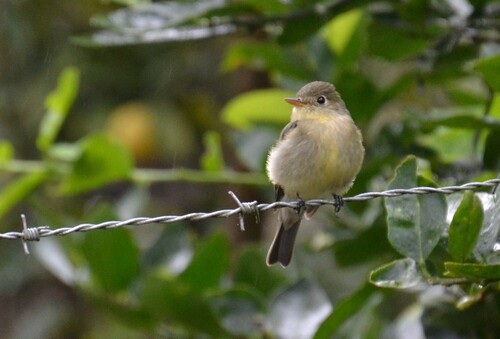 Yellow-bellied Flycatcher
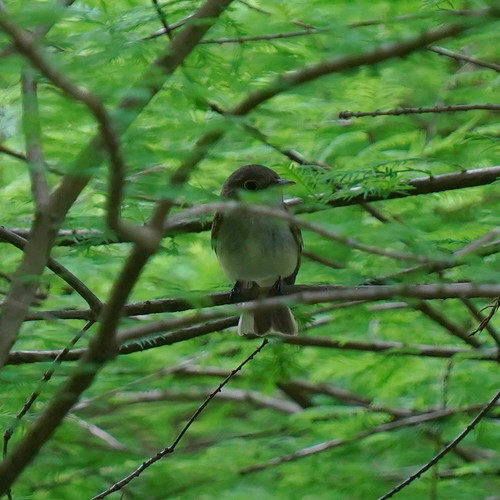 Acadian Flycatcher
In breve
Il segno di campo più affidabile per separare il Yellow-bellied Flycatcher dall'Acadian Flycatcher è il colore della parte inferiore: il Yellow-bellied mostra parti inferiori distintamente giallastre (soprattutto la gola), mentre l'Acadian è molto più bianco sotto con solo una leggera sfumatura olivastro sul petto. Entrambi hanno parti superiori verde oliva e anelli oculari bianchi, ma le barre alari e l'anello oculare del Yellow-bellied appaiono spesso più giallastri, e la sua impressione generale è più verde e luminosa. Strutturalmente, il Yellow-bellied è leggermente più piccolo, con una coda più corta e un becco più largo e piatto con una mandibola inferiore di un colore arancio-rosato, rispetto all'apertura alare più lunga dell'Acadian e alla mandibola inferiore più giallastra. Le vocalizzazioni sono abbastanza diverse e spesso sono il miglior indizio di campo quando il piumaggio è ambiguo.
Consigli di identificazione
- Colore della parte inferiore: Il Yellow-bellied Flycatcher mostra parti inferiori distintamente giallastre, specialmente la gola e il ventre, mentre l'Acadian Flycatcher è bianco sotto con solo una leggera sfumatura olivastro sul petto. Questo è il segno di campo più consistente per tutte le età e stagioni.
- Parti superiori: Il Yellow-bellied è più verde sopra, mentre l'Acadian è più olivastro, ma questo può essere sottile e influenzato dalla luce.
- Anello oculare: Entrambe le specie hanno un anello oculare prominente, ma quello del Yellow-bellied è spesso giallastro o buffo, mentre quello dell'Acadian è bianco nitido. La differenza è più evidente in buona luce.
- Barre alari: Le barre alari del Yellow-bellied sono bianche a giallastre e contrastano fortemente con le ali nerastre; quelle dell'Acadian sono bianche e meno contrastanti rispetto alle ali più scure.
- Colore del becco: Entrambi hanno una mandibola superiore scura, ma la mandibola inferiore del Yellow-bellied è arancio-rosata, mentre quella dell'Acadian è giallastra. Questo è sottile e meglio visibile da vicino.
- Coda e struttura: Il Yellow-bellied ha una coda relativamente corta e un becco largo e piatto; l'Acadian appare con ali più lunghe e leggermente più grande nel complesso, ma questo non è sempre evidente sul campo.
- Vocalizzazioni: Impara i canti: "tse-berk" (Yellow-bellied) contro "peet-sa" o "ka-zeep" (Acadian). I richiami sono spesso il miglior indizio quando il piumaggio è ambiguo.
- Schema alare in volo: Non sono descritti segni unici di ali superiori giovanili o immaturi per nessuna delle due specie che possano aiutare in volo; concentrati sul colore della parte inferiore e sulla struttura.
- Postura in perching: Entrambi si posano eretti, ma il Yellow-bellied può sembrare più compatto a causa della sua coda più corta.
- Stagione e posizione: Entrambi possono verificarsi in habitat simili, quindi non fare affidamento solo sul contesto per la separazione.
- Differenze sessuali: Non è descritto alcun dimorfismo sessuale nelle fonti; tutti i segni di campo si applicano a entrambi i sessi.
- Trappole di illuminazione: In scarsa luce, la sfumatura olivastro dell'Acadian può sembrare più giallastra, e il giallo del Yellow-bellied può essere attenuato; cerca sempre di ottenere più visuali.
- Colore delle barre alari: Se le barre alari sembrano distintamente giallastre, favorisci il Yellow-bellied; se bianche nitide, favorisci l'Acadian.
- Colore della base del becco: Se riesci a vedere chiaramente il becco, una mandibola inferiore arancio-rosata indica il Yellow-bellied, giallastra per l'Acadian.
- Voce supera il piumaggio: Se senti un canto chiaro, usalo per l'ID, poiché la sovrapposizione del piumaggio e l'illuminazione possono causare confusione.
Taglia
Il Yellow-bellied Flycatcher è leggermente più piccolo e leggero, con una massa corporea di circa 11,3 g [wikidata], lunghezza 13–15 cm e apertura alare 18–20 cm. L'Acadian Flycatcher è marginalmente più grande: lunghezza 14–15 cm e apertura alare 22–23 cm [wikipedia]. Sul campo, l'Acadian può sembrare con ali più lunghe e più attenuato, ma la differenza è sottile e non sempre affidabile per un singolo uccello in perching.
Piumaggio
- Adulti: Il Yellow-bellied Flycatcher ha parti superiori verdastre e parti inferiori distintamente giallastre, specialmente sulla gola e sul ventre, con una leggera sfumatura sul petto. Il suo anello oculare e le barre alari sono spesso giallastri o buffi, risaltando contro le ali nerastre. L'Acadian Flycatcher è olivastro sopra, con ali e coda più scure, e parti inferiori bianche; il petto è solo leggermente lavato di olivastro. Il suo anello oculare e le barre alari sono bianchi, non giallastri.
- Becco: Entrambi hanno una mandibola superiore scura, ma la mandibola inferiore del Yellow-bellied è arancio-rosata, mentre quella dell'Acadian è giallastra.
- Schema alare giovanile/immaturo: Non sono descritte differenze specifiche di schema alare superiori legate all'età nelle fonti per queste due specie, quindi concentrati sul piumaggio adulto e sul colore della parte inferiore per tutte le età.
Comportamento
Entrambe le specie sono tipici Empidonax flycatchers, che si lanciano da posatoi per catturare insetti. Il Yellow-bellied spesso si posiziona basso o a livello medio negli alberi e a volte si libra sopra il fogliame. Non sono notate differenze comportamentali uniche nelle fonti, quindi il comportamento da solo non è un separatore affidabile.
Habitat
Non sono fornite distinzioni dirette di habitat nelle note. Entrambe le specie sono flycatchers di bosco e si sovrappongono in alcuni habitat forestali. Usa il piumaggio e la voce per la separazione piuttosto che l'habitat.
Voce
Le vocalizzazioni sono altamente diagnostiche. Il Yellow-bellied Flycatcher emette un "tse-berk" ruvido e discendente; il canto dell'Acadian Flycatcher è un esplosivo "peet-sa" o un unico "ka-zeep" a due note. L'Acadian emette anche un morbido richiamo "peet" e a volte un richiamo che ricorda un Northern Flicker. Se senti bene il canto, l'identificazione è semplice.
Yellow-bellied Flycatcher · Acadian Flycatcher · I miei uccelli difficili