

Mosquero Ventriamarillo vs Mosquero Verdoso
Empidonax flaviventris frente a Empidonax virescens
Juega un quiz con Mosquero Ventriamarillo y Mosquero Verdoso
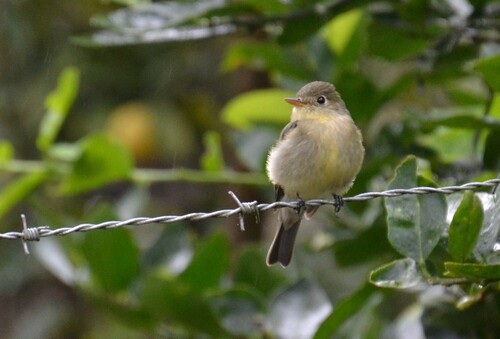 Mosquero Ventriamarillo
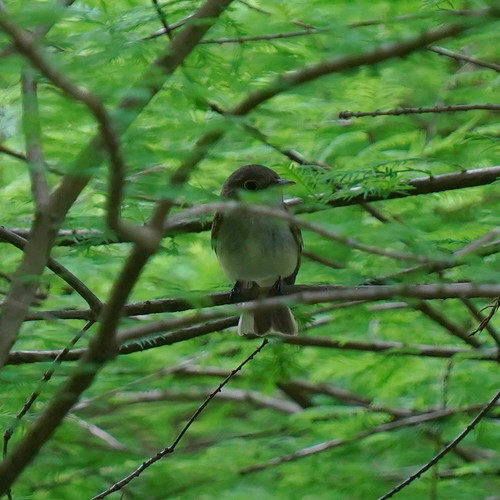 Mosquero Verdoso
En breve
La marca de campo más confiable para separar al Mosquero Ventriamarillo del Mosquero Verdoso es el color de las partes inferiores: el Mosquero Ventriamarillo muestra partes inferiores distintivamente amarillentas (especialmente la garganta), mientras que el Mosquero Verdoso es mucho más blanco por debajo, con solo un leve lavado de oliva en el pecho. Ambos tienen partes superiores de color verde oliva y anillos oculares blancos, pero las barras alares y el anillo ocular del Mosquero Ventriamarillo a menudo parecen más amarillentos, y su impresión general es más verde y brillante. Estructuralmente, el Mosquero Ventriamarillo es ligeramente más pequeño, con una cola más corta y un pico más ancho y plano con una mandíbula inferior de color rosa-naranja, en comparación con la envergadura más larga y la mandíbula inferior más amarilla del Mosquero Verdoso. Las vocalizaciones son bastante diferentes y a menudo son la mejor pista de campo cuando el plumaje es ambiguo.
Consejos de identificación
- Color de las partes inferiores: El Mosquero Ventriamarillo muestra partes inferiores distintivamente amarillentas, especialmente la garganta y el vientre, mientras que el Mosquero Verdoso es blanco por debajo con solo un leve lavado de oliva en el pecho. Esta es la marca de campo más consistente para todas las edades y estaciones.
- Partes superiores: El Mosquero Ventriamarillo es más verde por encima, mientras que el Mosquero Verdoso es más oliva, pero esto puede ser sutil y estar afectado por la luz.
- Anillo ocular: Ambas especies tienen un anillo ocular prominente, pero el del Mosquero Ventriamarillo a menudo es amarillento o beige, mientras que el del Mosquero Verdoso es blanco nítido. La diferencia es más obvia en buena luz.
- Barras alares: Las barras alares del Mosquero Ventriamarillo son blancas a amarillentas y contrastan fuertemente con alas negruzcas; las del Mosquero Verdoso son blancas y menos contrastantes contra las alas más oscuras.
- Color del pico: Ambos tienen una mandíbula superior oscura, pero la mandíbula inferior del Mosquero Ventriamarillo es rosa-naranja, mientras que la del Mosquero Verdoso es amarillenta. Esto es sutil y se ve mejor a corta distancia.
- Cola y estructura: El Mosquero Ventriamarillo tiene una cola relativamente corta y un pico ancho y plano; el Mosquero Verdoso parece tener alas más largas y ser ligeramente más grande en general, pero esto no siempre es obvio en el campo.
- Vocalizaciones: Aprende las canciones: "tse-berk" (Mosquero Ventriamarillo) vs. "peet-sa" o "ka-zeep" (Mosquero Verdoso). Los llamados son a menudo la mejor pista cuando el plumaje es ambiguo.
- Patrón de alas en vuelo: No se describen marcas únicas de alas superiores juveniles o inmaduras para ninguna de las especies que ayudarían en vuelo; concéntrate en el color de las partes inferiores y la estructura.
- Postura posada: Ambas especies se posan erguidas, pero el Mosquero Ventriamarillo puede parecer más compacto debido a su cola más corta.
- Temporada y ubicación: Ambas pueden ocurrir en hábitats similares, así que no confíes solo en el contexto para la separación.
- Diferencias sexuales: No se describe dimorfismo sexual en las fuentes; todas las marcas de campo se aplican a ambos sexos.
- Trampas de iluminación: En mala luz, el lavado de oliva del Mosquero Verdoso puede parecer más amarillento, y el amarillo del Mosquero Ventriamarillo puede estar atenuado; siempre intenta obtener múltiples vistas.
- Color de las barras alares: Si las barras alares parecen distintivamente amarillentas, favorece al Mosquero Ventriamarillo; si son blancas nítidas, favorece al Mosquero Verdoso.
- Color de la base del pico: Si obtienes una vista clara del pico, una mandíbula inferior rosa-naranja apunta al Mosquero Ventriamarillo, amarillenta al Mosquero Verdoso.
- La voz supera al plumaje: Si escuchas una canción clara, usa eso para la identificación, ya que la superposición de plumaje y la iluminación pueden causar confusión.
Tamaño
El Mosquero Ventriamarillo es ligeramente más pequeño y ligero, con una masa corporal de alrededor de 11.3 g [wikidata], longitud de 13–15 cm y envergadura de 18–20 cm. El Mosquero Verdoso es marginalmente más grande: longitud de 14–15 cm y envergadura de 22–23 cm [wikipedia]. En el campo, el Mosquero Verdoso puede parecer tener alas más largas y ser más atenuado, pero la diferencia es sutil y no siempre confiable para un solo pájaro posado.
Plumaje
- Adultos: El Mosquero Ventriamarillo tiene partes superiores verdosas y partes inferiores distintivamente amarillentas, especialmente en la garganta y el vientre, con un lavado de pecho oscuro. Su anillo ocular y barras alares son a menudo amarillentos o beige, destacándose contra alas negruzcas. El Mosquero Verdoso es oliva por encima, con alas y cola más oscuras, y partes inferiores blanquecinas; el pecho solo está ligeramente lavado con oliva. Su anillo ocular y barras alares son blancas, no amarillentas.
- Pico: Ambos tienen una mandíbula superior oscura, pero la mandíbula inferior del Mosquero Ventriamarillo es rosa-naranja, mientras que la del Mosquero Verdoso es amarillenta.
- Patrón de alas juveniles/inmaduros: No se describen diferencias específicas de patrón de alas superiores relacionadas con la edad en las fuentes para estas dos especies, así que concéntrate en el plumaje de los adultos y el color de las partes inferiores para todas las edades.
Comportamiento
Ambas especies son típicos mosqueros Empidonax, lanzándose desde posaderos para atrapar insectos. El Mosquero Ventriamarillo a menudo se posa bajo o a media altura en los árboles y a veces se queda suspendido sobre el follaje. No se notan diferencias de comportamiento únicas en las fuentes, por lo que el comportamiento por sí solo no es un separador confiable.
Hábitat
No se proporcionan distinciones directas de hábitat en las notas. Ambas especies son mosqueros de bosque y se superponen en algunos hábitats forestales. Usa el plumaje y la voz para la separación en lugar del hábitat.
Voz
Las vocalizaciones son altamente diagnósticas. El Mosquero Ventriamarillo emite un "tse-berk" áspero y descendente; la canción del Mosquero Verdoso es un explosivo "peet-sa" o un único "ka-zeep" de dos notas. El Mosquero Verdoso también emite un suave llamado "peet" y a veces un llamado que recuerda a un Pájaro Carpintero Norteño. Si escuchas bien la canción, la identificación es sencilla.
Mosquero Ventriamarillo · Mosquero Verdoso · Mis aves difíciles