

yellow-bellied flowerpecker vs orange-bellied flowerpecker
Pachyglossa melanozantha versus Dicaeum trigonostigma
Jogue um quiz com yellow-bellied flowerpecker e orange-bellied flowerpecker
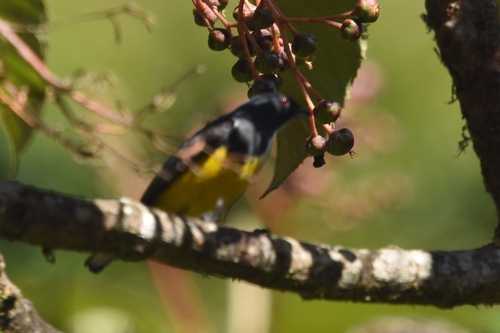 yellow-bellied flowerpecker
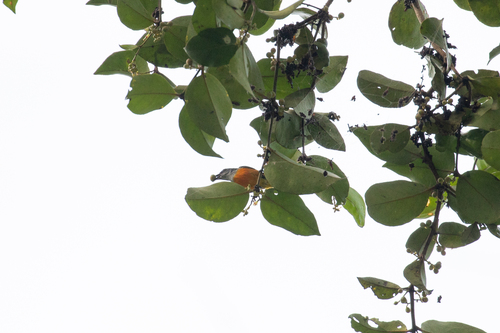 orange-bellied flowerpecker
Em resumo
A maneira mais confiável de separar o yellow-bellied flowerpecker do orange-bellied flowerpecker é focando na coloração das partes inferiores e no contraste das partes superiores, especialmente nos machos. Machos de orange-bellied flowerpecker apresentam uma parte superior azul-ardósia marcante com um peito laranja brilhante e um ventrículo amarelo, enquanto as fêmeas são de um oliva sem brilho com uma região inferior laranja pálido e um ventre amarelo. O yellow-bellied flowerpecker não possui a combinação de azul-ardósia e laranja. Diferenças estruturais, como a forma do bico e a aparência geral, são sutis, mas podem ajudar com a experiência. Ambas as espécies se sobrepõem em áreas do Sul e Sudeste da Ásia, portanto, atenção cuidadosa à plumagem é essencial.
Dicas de identificação
- O macho de orange-bellied flowerpecker é inconfundível: Procure pela combinação de partes superiores azul-ardósia e uma grande mancha laranja no manto, com um peito inferior laranja ardente que se desvanece para amarelo no ventrículo. Nenhum outro flowerpecker na região apresenta esse padrão.
- O yellow-bellied flowerpecker não possui azul e laranja: Se o pássaro não tiver partes superiores azul-ardósia e uma forte mancha laranja no peito/manto, suspeite do yellow-bellied, especialmente se as partes inferiores forem amarelas simples.
- A fêmea de orange-bellied flowerpecker é de um oliva marrom sem brilho: As fêmeas são principalmente de um oliva marrom sem brilho com uma região inferior laranja pálido e um ventre amarelo. Isso pode ser confundido com o yellow-bellied, mas a região inferior laranja é uma pista sutil.
- A forma do bico é sutilmente diferente: O orange-bellied flowerpecker tem um bico relativamente fino e curto que é ligeiramente curvado para baixo na ponta. Se você ver um bico visivelmente curvado para baixo, isso apoia a identificação do orange-bellied.
- Gradiente das partes inferiores no orange-bellied: Nos machos, a transição do laranja ardente (peito inferior) para o amarelo (ventrículo) é distintiva; o yellow-bellied não possui esse gradiente.
- Sem azul-ardósia no yellow-bellied: Qualquer indício de azul na coroa, nuca ou asas indica que não se trata de um yellow-bellied.
- Pássaros juvenis/imaturos são complicados: Como as plumagens juvenis detalhadas não são descritas, confie na ausência de azul e laranja para o yellow-bellied e procure por qualquer indício de laranja ou azul no orange-bellied.
- Empoleirado vs. em voo: Ambas as espécies são ativas e frequentemente vistas na copa das árvores, mas as vistas em voo podem obscurecer diferenças sutis de cor; tente ter uma boa visão do manto e das partes inferiores.
- Sobreposição de distribuição: Se estiver observando pássaros em Bangladesh, Myanmar ou Tailândia, ambas as espécies são possíveis. Nas Filipinas, Brunei, Indonésia, Malásia ou Cingapura, apenas o orange-bellied é esperado; no Butão, China, Índia, Laos, Nepal ou Vietnã, apenas o yellow-bellied é provável.
- O tamanho não é útil: Ambas são pássaros pequenos e compactos; não confie no tamanho para separação.
- O habitat é apenas fracamente diagnóstico: Ambas usam habitats semelhantes onde suas distribuições se sobrepõem.
- Nenhuma diferença vocal forte observada: Se você ouvir um chamado de flowerpecker, é improvável que ajude na identificação deste par.
- Cuidado com a iluminação e a muda: Luz fraca ou muda pode obscurecer os tons de azul e laranja do orange-bellied, fazendo-o parecer um yellow-bellied. Sempre procure por múltiplas marcas de campo.
- Verifique a região inferior laranja nas fêmeas: Se você ver uma região inferior laranja pálido em um flowerpecker de oliva sem brilho, incline-se para a fêmea de orange-bellied.
- Use uma combinação de marcas: Especialmente com fêmeas e imaturos, use o máximo de características possível—forma do bico, cor das partes inferiores e qualquer indício de azul ou laranja.
Tamanho
Apenas o orange-bellied flowerpecker tem uma massa adulta publicada (7,0 g [wikidata]); a massa do yellow-bellied flowerpecker não é fornecida, mas ambos são pássaros muito pequenos e compactos, típicos da família dos flowerpeckers. No campo, o tamanho não é um separador confiável entre esses dois, pois ambos parecem igualmente pequenos e ativos.
Plumagem
As diferenças de plumagem são mais pronunciadas em machos adultos. Machos de orange-bellied flowerpecker têm partes superiores azul-ardósia (incluindo coroa, nuca, asas e cauda) e uma grande mancha laranja triangular no manto, com um gradiente do laranja ardente no peito inferior para o amarelo no ventrículo. Sua garganta e peito superior são de um azul-acinzentado mais claro. As fêmeas são principalmente de um oliva marrom sem brilho com uma região inferior laranja pálido e um ventre amarelo. O yellow-bellied flowerpecker não apresenta o azul-ardósia ou o peito/mancha laranja; suas partes inferiores são amarelas, mas carecem do intenso gradiente laranja e do contraste azul. Plumagens juvenis e imaturas não são descritas em detalhes para nenhuma das espécies, portanto, cautela é necessária com pássaros não adultos, mas a ausência de azul e laranja no yellow-bellied é uma pista chave em todas as idades.
Comportamento
Ambas as espécies são alimentadoras ativas e inquietas na copa das árvores, típicas dos flowerpeckers. Seu estilo de forrageamento e movimento são semelhantes, tornando o comportamento isoladamente não confiável para separação.
Habitat
Ambas as espécies ocorrem em regiões sobrepostas do Sul e Sudeste da Ásia, incluindo Bangladesh, Myanmar e Tailândia. O orange-bellied flowerpecker também se estende para Brunei, Indonésia, Malásia, Filipinas e Cingapura, enquanto o yellow-bellied flowerpecker se estende mais ao norte, para o Butão, China, Índia, Laos, Nepal e Vietnã. As preferências de habitat não são detalhadas nas notas, portanto, o contexto é apenas fracamente diagnóstico.
yellow-bellied flowerpecker · orange-bellied flowerpecker · Minhas aves difíceis