

Motmot

キバラハナドリ 対 オレンジハナドリ

Pachyglossa melanozantha 対 Dicaeum trigonostigma

キバラハナドリとオレンジハナドリのクイズ
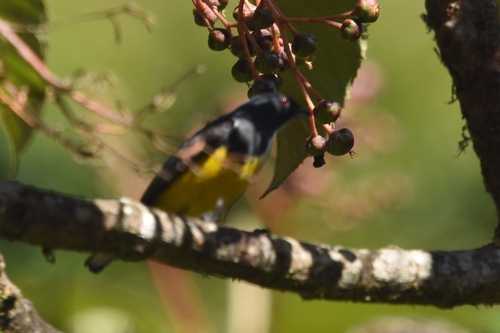
キバラハナドリ (Pachyglossa melanozantha) キバラハナドリ
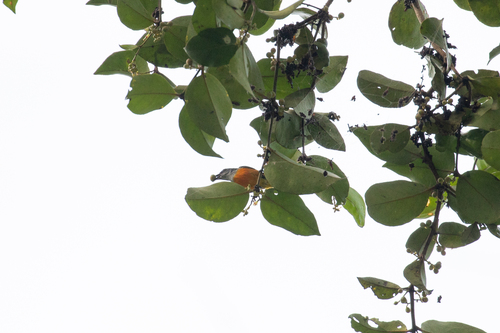
オレンジハナドリ (Dicaeum trigonostigma) オレンジハナドリ

メディア

読み込み中…

要点

キバラハナドリとオレンジハナドリを分ける最も信頼できる方法は、特にオスにおいて、下部の色合いと上部のコントラストに焦点を当てることです。オレンジハナドリのオスは、明るいオレンジの胸と黄色の腹を持つ印象的なスレートブルーの上部を示し、メスは地味なオリーブ色で淡いオレンジの尾と黄色の腹を持っています。キバラハナドリはスレートブルーとオレンジの組み合わせが欠けています。くちばしの形や全体的な印象のような構造的な違いは微妙ですが、経験があれば役立ちます。両種は南アジアおよび東南アジアの一部で分布が重なっているため、羽毛に注意を払うことが重要です。

識別のコツ

  1. オスのオレンジハナドリは間違いなく識別可能: スレートブルーの上部と大きなオレンジの斑点を持つ組み合わせを探し、下胸の炎のようなオレンジが腹の黄色にフェードアウトします。このパターンを示す他のハナドリは地域にはいません。
  2. キバラハナドリは青とオレンジが欠けている: 鳥がスレートブルーの上部と強いオレンジの胸/マントルの斑点の両方を欠いている場合、特に下部が単色の黄色であれば、キバラハナドリを疑ってください。
  3. メスのオレンジハナドリは地味なオリーブブラウン: メスは主に地味なオリーブブラウンで淡いオレンジの尾と黄色の腹を持っています。これはキバラハナドリと混同されることがありますが、オレンジの尾が微妙な手がかりです。
  4. くちばしの形は微妙に異なる: オレンジハナドリは、先端がわずかに下向きに曲がった比較的細く短いくちばしを持っています。明らかに下向きに曲がったくちばしが見えた場合、これはオレンジハナドリを支持します。
  5. オレンジハナドリの下部のグラデーション: オスでは、炎のようなオレンジ(下胸)から黄色(腹)への移行が特徴的です; キバラハナドリはこのグラデーションを欠いています。
  6. キバラハナドリにはスレートブルーがない: 頭、うなじ、または翼に青のヒントがあれば、キバラハナドリから外れます。
  7. 幼鳥/未熟な鳥は難しい: 幼鳥の羽毛が詳細に記述されていないため、キバラハナドリのためには青とオレンジの欠如に依存し、オレンジハナドリの中で青またはオレンジのヒントを探してください。
  8. 止まっている時と飛んでいる時: 両種は活発で、しばしば樹冠で見られますが、飛行中の視界では微妙な色の違いが隠れることがあります; マントルと下部をよく見るようにしてください。
  9. 分布の重なり: バングラデシュ、ミャンマー、またはタイでバードウォッチングをしている場合、両種が可能です。フィリピン、ブルネイ、インドネシア、マレーシア、またはシンガポールでは、オレンジハナドリのみが予想されます; ブータン、中国、インド、ラオス、ネパール、またはベトナムでは、キバラハナドリのみが可能性が高いです。
  10. サイズは役に立たない: 両方とも小さく、コンパクトな鳥です; 分離のためにサイズに依存しないでください。
  11. 生息地は弱く診断的: 両方とも分布が重なる場所で似たような生息地を使用します。
  12. 強い声の違いは記録されていない: ハナドリの鳴き声を聞いた場合、このペアの識別には役立たないでしょう。
  13. 照明と換羽に注意: 照明が悪い場合や換羽中は、オレンジハナドリの青とオレンジのトーンが隠れ、キバラハナドリに似ることがあります。常に複数のフィールドマークを探してください。
  14. メスのオレンジの尾を確認: 地味なオリーブのハナドリで淡いオレンジの尾が見えた場合、オレンジハナドリのメスに傾いてください。
  15. マークの組み合わせを使用: 特にメスや未熟な個体では、できるだけ多くの特徴を使用してください—くちばしの形、下部の色、そして青またはオレンジのヒント。

大きさ

オレンジハナドリのみが公表された成鳥の質量(7.0 g [wikidata])を持っています; キバラハナドリの質量は提供されていませんが、両方ともハナドリ科の典型的な非常に小さく、コンパクトな鳥です。フィールドでは、サイズはこれら二つを分ける信頼できる指標ではなく、両方とも同様に小さく活発に見えます。

羽色

羽毛の違いは成鳥のオスで最も顕著です。オレンジハナドリのオスはスレートブルーの上部(頭、うなじ、翼、尾を含む)とマントルに大きな三角形のオレンジの斑点を持ち、下胸の炎のようなオレンジから腹の黄色へのグラデーションがあります。彼らの喉と上胸は明るい灰色がかった青です。メスは主に地味なオリーブブラウンで淡いオレンジの尾と黄色の腹を持っています。キバラハナドリはスレートブルーやオレンジの胸/斑点を示さず、下部は黄色ですが、強いオレンジのグラデーションと青のコントラストが欠けています。幼鳥や未熟な羽毛はどちらの種でも詳細に記述されていないため、非成鳥の鳥には注意が必要ですが、キバラハナドリにおける青とオレンジの欠如はすべての年齢での重要な手がかりです。

行動

両種は活発で落ち着きのない樹冠の餌取りを行い、ハナドリの典型です。彼らの採餌スタイルと動きは似ており、行動だけでは分離は信頼できません。

生息環境

両種は南アジアおよび東南アジアの重なり合った地域に生息しており、バングラデシュ、ミャンマー、タイを含みます。オレンジハナドリはブルネイ、インドネシア、マレーシア、フィリピン、シンガポールにも分布し、キバラハナドリはブータン、中国、インド、ラオス、ネパール、ベトナムにさらに北に広がります。生息地の好みはメモに詳細に記載されていないため、文脈は弱く診断的です。

より良い説明を送る

比較と同じ項目を使ってください。文章はすぐに公開されます。

The most reliable way to separate Yellow-bellied Flowerpecker from Orange-bellied Flowerpecker is by focusing on the underpart coloration and upperpart contrast, especially in males. Orange-bellied Flowerpecker males show a striking slaty-blue upperpart with a bright orange breast and yellow vent, while females are drab olive with a pale orange rump and yellow belly. Yellow-bellied Flowerpecker lacks the slaty-blue and orange combination. Structural differences like bill shape and overall jizz are subtle but can help with experience. Both species overlap in range in parts of South and Southeast Asia, so careful attention to plumage is essential.

  1. Male Orange-bellied Flowerpecker is unmistakable: Look for the combination of slaty-blue upperparts and a large orange patch on the mantle, with a fiery orange lower breast fading to yellow on the vent. No other flowerpecker in the region shows this pattern.
  2. Yellow-bellied Flowerpecker lacks blue and orange: If the bird is missing both slaty-blue upperparts and a strong orange breast/mantle patch, suspect Yellow-bellied, especially if the underparts are plain yellow.
  3. Female Orange-bellied Flowerpecker is dull olive-brown: Females are mostly drab olive-brown with a pale orange rump and yellow belly. This can be confused with Yellow-bellied, but the orange rump is a subtle clue.
  4. Bill shape is subtly different: Orange-bellied Flowerpecker has a fairly thin, short bill that is slightly downcurved at the tip. If you see a noticeably downcurved bill, this supports Orange-bellied.
  5. Underpart gradient in Orange-bellied: In males, the transition from fiery orange (lower breast) to yellow (vent) is distinctive; Yellow-bellied lacks this gradient.
  6. No slaty-blue in Yellow-bellied: Any hint of blue on the crown, nape, or wings points away from Yellow-bellied.
  7. Juvenile/immature birds are tricky: Since detailed juvenile plumages are not described, rely on the absence of blue and orange for Yellow-bellied, and look for any orange or blue hints in Orange-bellied.
  8. Perched vs. in flight: Both species are active and often seen in the canopy, but flight views may obscure subtle color differences; try to get a good look at the mantle and underparts.
  9. Range overlap: If birding in Bangladesh, Myanmar, or Thailand, both species are possible. In the Philippines, Brunei, Indonesia, Malaysia, or Singapore, only Orange-bellied is expected; in Bhutan, China, India, Laos, Nepal, or Vietnam, only Yellow-bellied is likely.
  10. Size is not helpful: Both are tiny, compact birds; do not rely on size for separation.
  11. Habitat is only weakly diagnostic: Both use similar habitats where their ranges overlap.
  12. No strong vocal differences noted: If you hear a flowerpecker call, it is unlikely to help with this pair.
  13. Beware of lighting and molt: Poor light or molt can obscure the blue and orange tones of Orange-bellied, making it resemble Yellow-bellied. Always look for multiple field marks.
  14. Check for orange rump in females: If you see a pale orange rump on a drab olive flowerpecker, lean toward Orange-bellied female.
  15. Use a combination of marks: Especially with females and immatures, use as many features as possible—bill shape, underpart color, and any hint of blue or orange.

Only Orange-bellied Flowerpecker has a published adult mass (7.0 g [wikidata]); Yellow-bellied Flowerpecker's mass is not provided, but both are very small, compact birds typical of the flowerpecker family. In the field, size is not a reliable separator between these two, as both appear similarly tiny and active.

Plumage differences are most pronounced in adult males. Orange-bellied Flowerpecker males have slaty-blue upperparts (including crown, nape, wings, and tail) and a large, triangular orange patch on the mantle, with a gradient from fiery orange on the lower breast to yellow on the vent. Their throat and upper breast are lighter greyish-blue. Females are mostly dull olive-brown with a pale orange rump and yellow belly. Yellow-bellied Flowerpecker does not show the slaty-blue or orange breast/patch; its underparts are yellow but lack the intense orange gradient and blue contrast. Juvenile and immature plumages are not described in detail for either species, so caution is needed with non-adult birds, but the absence of blue and orange in Yellow-bellied is a key clue at all ages.

Both species are active, restless canopy feeders, typical of flowerpeckers. Their foraging style and movement are similar, making behavior alone unreliable for separation.

Both species occur in overlapping regions of South and Southeast Asia, including Bangladesh, Myanmar, and Thailand. Orange-bellied Flowerpecker also ranges into Brunei, Indonesia, Malaysia, the Philippines, and Singapore, while Yellow-bellied Flowerpecker extends further north into Bhutan, China, India, Laos, Nepal, and Vietnam. Habitat preferences are not detailed in the notes, so context is only weakly diagnostic.

変更を破棄しますか?

保存していない編集があります。今離れると失われます。

キバラハナドリ · オレンジハナドリ · 苦手な鳥