

wine-throated hummingbird vs white-eared hummingbird
Selasphorus ellioti versus Basilinna leucotis
Jogue um quiz com wine-throated hummingbird e white-eared hummingbird
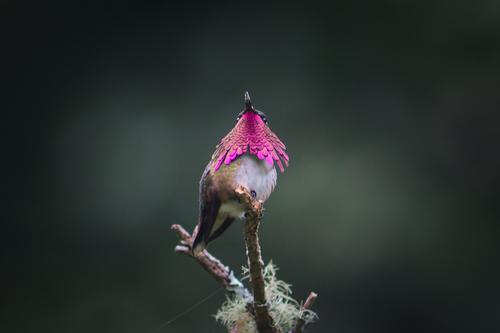 wine-throated hummingbird
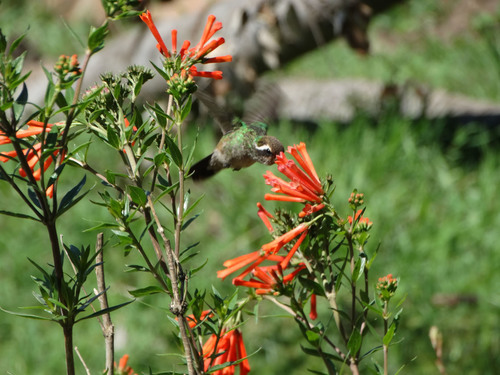 white-eared hummingbird
Em resumo
A marca de campo mais confiável para separar o beija-flor de garganta vinho do beija-flor de orelha branca é a cor da garganta do macho: os machos de garganta vinho apresentam uma gorjeta rosa brilhante a violeta, enquanto os machos de orelha branca têm um queixo e garganta azul-violeta com uma faixa branca contrastante na orelha. As fêmeas e os imaturos são mais complicados, mas o garganta vinho é notavelmente menor e tem mais rufo e canela na cauda e flancos, enquanto o orelha branca é maior, com uma faixa branca ousada atrás do olho e mais verde e bronze na plumagem. A cor do bico também ajuda: os machos de orelha branca têm um bico de base vermelha, enquanto os bicos de garganta vinho são negróides. Ambas as espécies compartilham algumas partes superiores verdes e brancas atrás do olho, mas seus padrões de cauda e tamanho geral diferem significativamente.
Dicas de identificação
- Tamanho: O orelha branca é visivelmente maior e mais robusto que o garganta vinho; use isso quando ambos estiverem presentes ou comparados a outros beija-flores locais (todas as idades).
- Cor do Bico: O macho adulto de orelha branca tem um bico de base vermelha com uma ponta preta, enquanto o bico do garganta vinho é curto, reto e totalmente negróide (ambos os sexos, todas as idades). A fêmea de orelha branca tem um pouco de vermelho ou laranja na base, mas principalmente negróide.
- Faixa Branca na Orelha: O orelha branca de todas as idades e sexos mostra uma faixa branca ousada atrás do olho, muito mais larga e óbvia do que a pequena mancha branca no garganta vinho.
- Cor da Garganta do Macho: Os machos de garganta vinho têm uma gorjeta rosa brilhante a violeta com destaques violetas; os machos de orelha branca têm um queixo e garganta azul-violeta, às vezes parecendo mais azuis ou roxos, com uma garganta inferior verde esmeralda metálica.
- Garganta da Fêmea: As fêmeas de garganta vinho têm um queixo e garganta brancos com muitas manchas escuras; as fêmeas de orelha branca têm partes inferiores cinza pálido a brancas acinzentadas com manchas verde bronze metálicas, mas carecem da densa mancha do garganta vinho.
- Cor do Flanco e da Cauda Inferior: O garganta vinho (ambos os sexos) mostra flancos e coberturas de cauda canela ou buff; o orelha branca tem flancos verde bronze a bronze-verde e coberturas de cauda inferior acinzentadas ou marrom acinzentado, às vezes com um brilho bronze.
- Padrão da Cauda: A cauda do garganta vinho tem penas centrais verdes, penas externas rufo com uma ampla faixa preta e pontas brancas (macho) ou canela (fêmea). A cauda do orelha branca é verde bronze centralmente, com penas externas preto bronze e pontas verdes, sem rufo ou canela.
- Coroa e Testa: O macho de orelha branca tem uma testa metálica violeta ou azul-violeta e uma coroa preta opaca; as fêmeas têm uma coroa marrom escura. O garganta vinho tem uma coroa verde que combina com as partes superiores.
- Padrão do Rosto: O orelha branca tem um rosto principalmente preto (macho) com uma ampla faixa branca; o garganta vinho tem um rosto verde com apenas uma pequena mancha branca atrás do olho.
- Partes Inferiores: Os machos de garganta vinho têm partes inferiores esbranquiçadas com flancos canela/verde; os machos de orelha branca têm partes inferiores bronze a bronze-verde com um centro cinza opaco.
- Forma da Cauda: Ambas as espécies têm formas de cauda semelhantes, mas o padrão de cor é mais diagnóstico.
- Vocalizações: Se ouvido, uma série de chips altos, zumbidos e estridentes quebrando em um trinado (garganta vinho) ou um forte zumbido de asas pode indicar garganta vinho; os chamados do orelha branca são menos distintos nesse contexto.
- Habitat: Na parte norte da distribuição (México, Guatemala), o orelha branca é mais amplamente distribuído e provavelmente em uma gama mais ampla de elevações e habitats; o garganta vinho é mais localizado em regiões montanhosas.
- Comportamento: O orelha branca é mais propenso a ser visto defendendo agressivamente flores, às vezes até de beija-flores maiores; o comportamento do garganta vinho é menos bem documentado.
- Armadilhas: Fêmeas e beija-flores imaturos são notoriamente complicados; concentre-se no tamanho, cor do bico, faixa na orelha e padrão da cauda. Evite confiar no padrão da asa superior, pois nenhuma das espécies tem marcas distintas lá.
Tamanho
O beija-flor de orelha branca é distintamente maior, com 9–10 cm de comprimento e uma média de 3,6 g (macho) e 3,2 g (fêmea) de peso. O beija-flor de garganta vinho é muito menor, com apenas 6,5–7 cm, com fêmeas pesando 2–4 g (pesos de machos não documentados, mas provavelmente semelhantes ou mais leves). Essa diferença de tamanho é frequentemente aparente em campo, especialmente quando vistos lado a lado ou comparados a outros beija-flores na área. O garganta vinho também parece mais compacto e delicado, enquanto o orelha branca é mais robusto e de cauda mais longa.
Plumagem
-
Marcas de Asa/Voos Juvenis/Imaturos: Nenhuma marca de padrão de asa ou voo específica para a idade é descrita para nenhuma das espécies nas fontes; a separação depende da plumagem do corpo e da cauda, não do padrão da asa.
-
Machos Adultos: Os machos de garganta vinho têm uma gorjeta rosa brilhante a violeta com penas traseiras abertas, partes superiores verdes e uma cauda com penas centrais verdes e penas externas rufo com uma ampla faixa preta e pontas brancas (mais externas). Os machos de orelha branca têm um queixo e garganta azul-violeta, partes superiores metálicas verdes a bronze, e uma faixa branca ousada atrás do olho; sua cauda é verde bronze centralmente, preto bronze nas penas externas com pontas verdes, carecendo do padrão rufo e branco do garganta vinho.
-
Fêmeas Adultas: As fêmeas de garganta vinho têm partes superiores verdes, queixo e garganta brancos com manchas escuras, flancos e coberturas de cauda canela, e uma cauda com mais preto e menos rufo do que o macho, com penas externas com pontas canela. As fêmeas de orelha branca são semelhantes aos machos, mas com uma coroa marrom escura, carecem da garganta brilhante e têm partes inferiores cinza pálido a brancas acinzentadas com manchas verde bronze; sua cauda tem pontas cinza acinzentadas, e a faixa branca na orelha permanece proeminente.
-
Variação de Subespécies: Ambas as espécies têm diferenças subspecíficas menores, mas estas não se sobrepõem de uma forma que confunda as duas; as principais marcas de campo acima se mantêm em suas distribuições.
Comportamento
Ambas as espécies forrageiam por néctar em níveis baixos a médios na vegetação e também podem capturar pequenos artrópodes. O beija-flor de orelha branca é mais territorial, defendendo áreas de alimentação mesmo contra espécies maiores, e é conhecido por abordagens secretivas a flores em territórios de outros pássaros. O garganta vinho forrageia em todos os níveis, mas é menos bem documentado em termos de territorialidade. Em voo, o orelha branca pode parecer mais robusto e de cauda mais longa, enquanto o garganta vinho é mais compacto e ágil.
Habitat
O beija-flor de garganta vinho é encontrado em regiões montanhosas de El Salvador, Guatemala, Honduras e sul do México, geralmente em florestas de pinheiros e carvalhos e bordas. O beija-flor de orelha branca tem uma distribuição mais ampla, desde o sudoeste dos EUA até a Nicarágua, e é comum em florestas montanhosas, florestas de pinheiros e carvalhos e bordas florestais. Ambas podem ocorrer em elevações semelhantes na América Central, mas o orelha branca é mais amplamente distribuído e provavelmente em uma gama mais ampla de habitats florestais.
Voz
O beija-flor de garganta vinho emite uma série de chips altos, zumbidos e estridentes que quebram em um trinado, com chamados agudos de 'sip-sip' ou 'cheup cheup'. Suas asas fazem um 'thrum' distintivo ao pairar. As vocalizações do beija-flor de orelha branca não são detalhadas nas notas, então a voz não é um separador forte, a menos que a canção ou o zumbido das asas do garganta vinho seja ouvido.
wine-throated hummingbird · white-eared hummingbird · Minhas aves difíceis