

Wine-throated Hummingbird vs White-eared Hummingbird
Selasphorus ellioti contro Basilinna leucotis
Fai un quiz con Wine-throated Hummingbird e White-eared Hummingbird
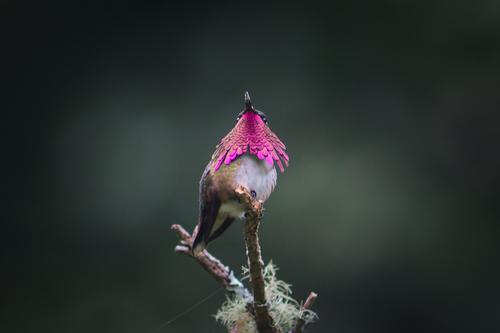 Wine-throated Hummingbird
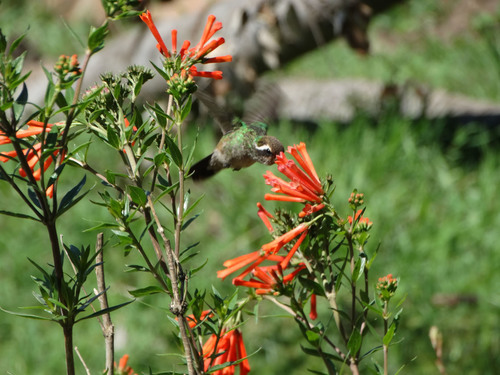 White-eared Hummingbird
In breve
Il segno di campo più affidabile per separare il Wine-throated Hummingbird dal White-eared Hummingbird è il colore della gola del maschio: i maschi Wine-throated mostrano una gola scintillante rosa-porpora, mentre i maschi White-eared hanno un mento e una gola blu-viola con una striscia bianca dell'orecchio in contrasto. Le femmine e gli immaturi sono più difficili da distinguere, ma il Wine-throated è notevolmente più piccolo e ha più ruggine e cannella nella coda e nei fianchi, mentre il White-eared è più grande, con una striscia post-oculare bianca audace e più verde e bronzo nel piumaggio. Anche il colore del becco aiuta: i maschi White-eared hanno un becco di base rossa, mentre i beccucci del Wine-throated sono nerognoli. Entrambe le specie condividono alcune parti superiori verdi e bianche dietro l'occhio, ma i loro schemi di coda e le dimensioni complessive differiscono significativamente.
Consigli di identificazione
- Dimensione: Il White-eared è visibilmente più grande e massiccio rispetto al Wine-throated; utilizza questo quando entrambi sono presenti o confrontati con altri colibrì locali (tutte le età).
- Colore del Becco: Il maschio adulto White-eared ha un becco di base rossa con una punta nera, mentre il becco del Wine-throated è corto, dritto e completamente nerognolo (entrambi i sessi, tutte le età). La femmina White-eared ha un po' di rosso o arancione alla base, ma per lo più è nerognola.
- Striscia Bianca dell'Orecchio: Il White-eared di tutte le età e sessi mostra una striscia bianca audace dietro l'occhio, molto più ampia e ovvia rispetto al piccolo punto bianco nel Wine-throated.
- Colore della Gola del Maschio: I maschi Wine-throated hanno una gola scintillante rosa-porpora con riflessi viola; i maschi White-eared hanno un mento e una gola blu-viola, a volte apparendo più blu o viola, con una gola inferiore verde smeraldo metallico.
- Gola della Femmina: Le femmine Wine-throated hanno un mento e una gola bianchi con molti punti scuri; le femmine White-eared hanno parti inferiori grigio chiaro-brunastro a grigio-bianco con macchie verde bronzo metallico, ma mancano della densa maculatura del Wine-throated.
- Colore dei Fianchi e della Coda Inferiore: Il Wine-throated (entrambi i sessi) mostra fianchi e copritail di cannella o buff; il White-eared ha fianchi verde bronzo a verde bronzo e copritail grigiastri o grigio-bruni, a volte con una lucentezza bronzo.
- Schema della Coda: La coda del Wine-throated ha piume centrali verdi, piume esterne ruggine con una larga banda nera e punte bianche (maschio) o cannella (femmina). La coda del White-eared è verde bronzo centralmente, con piume esterne nero bronzo e punte verdi, priva di ruggine o cannella.
- Corona e Fronte: Il maschio White-eared ha una fronte metallica viola o blu-viola e una corona nera opaca; le femmine hanno una corona marrone scuro. Il Wine-throated ha una corona verde che corrisponde alle parti superiori.
- Schema del Viso: Il White-eared ha un viso per lo più nero (maschio) con una larga striscia bianca; il Wine-throated ha un viso verde con solo un piccolo punto bianco dietro l'occhio.
- Parti Inferiori: I maschi Wine-throated hanno parti inferiori bianche con fianchi di cannella/verde; i maschi White-eared hanno parti inferiori da bronzo a verde bronzo con un centro grigio-bianco opaco.
- Forma della Coda: Entrambe le specie hanno forme di coda simili, ma il pattern di colore è più diagnostico.
- Vocalizzazioni: Se sentito, una serie di fischi acuti, frizzanti e squittenti che si interrompono in un gorgheggio (Wine-throated) o un forte battito d'ali può indicare il Wine-throated; le chiamate del White-eared sono meno distintive in questo contesto.
- Habitat: Nella parte settentrionale dell'areale (Messico, Guatemala), il White-eared è più diffuso e probabile in un'ampia gamma di altitudini e habitat; il Wine-throated è più localizzato nelle zone montuose.
- Comportamento: Il White-eared è più probabile che venga visto difendere aggressivamente i fiori, a volte anche da colibrì più grandi; il comportamento del Wine-throated è meno documentato.
- Trappole: I colibrì femmina e immaturi sono notoriamente difficili; concentrati su dimensione, colore del becco, striscia dell'orecchio e schema della coda. Evita di fare affidamento sul pattern della parte superiore dell'ala, poiché nessuna delle due specie ha segni distintivi lì.
Taglia
Il White-eared Hummingbird è nettamente più grande, con una lunghezza di 9–10 cm e un peso medio di 3,6 g (maschio) e 3,2 g (femmina). Il Wine-throated Hummingbird è molto più piccolo, con soli 6,5–7 cm, con femmine che pesano 2–4 g (i pesi dei maschi non sono documentati ma probabilmente simili o più leggeri). Questa differenza di dimensione è spesso evidente sul campo, specialmente quando visti fianco a fianco o confrontati con altri colibrì nella zona. Il Wine-throated appare anche più compatto e delicato, mentre il White-eared è più massiccio e con una coda più lunga.
Piumaggio
-
Segni di Volo/Alare per Giovanili/Immaturi: Non sono descritti segni specifici per età per la parte superiore dell'ala o il pattern di volo per nessuna delle due specie nelle fonti; la separazione si basa sul piumaggio del corpo e della coda, non sul pattern dell'ala.
-
Maschi Adulti: I maschi Wine-throated hanno una gola scintillante rosa-porpora con piume posteriori svasate, parti superiori verdi e una coda con piume centrali verdi e piume esterne ruggine con una larga banda nera e punte bianche (estremità). I maschi White-eared hanno un mento e una gola blu-viola, parti superiori verdi metalliche a bronzo, e una striscia bianca audace dietro l'occhio; la loro coda è verde bronzo centralmente, nero bronzo sulle piume esterne con punte verdi, priva del pattern di ruggine e bianco del Wine-throated.
-
Femmine Adulte: Le femmine Wine-throated hanno parti superiori verdi, mento e gola bianchi con punti scuri, fianchi e copritail di cannella, e una coda con più nero e meno ruggine rispetto al maschio, con piume esterne di cannella. Le femmine White-eared sono simili ai maschi ma con una corona marrone scuro, mancano della gola brillante e hanno parti inferiori grigio chiaro-brunastre con macchie verde bronzo; la loro coda ha punte grigio-brunastre, e la striscia bianca dell'orecchio rimane prominente.
-
Variazione delle Sottospecie: Entrambe le specie hanno piccole differenze sottospecifiche, ma queste non si sovrappongono in modo da confondere le due; i principali segni di campo sopra si mantengono attraverso i loro areali.
Comportamento
Entrambe le specie cercano nettare a livelli bassi e medi nella vegetazione e possono anche catturare piccoli artropodi. Il White-eared Hummingbird è più territoriale, difendendo le aree di alimentazione anche contro specie più grandi, ed è noto per approcci segreti ai fiori nei territori di altri uccelli. Il Wine-throated cerca cibo a tutti i livelli ma è meno documentato in termini di territorialità. In volo, il White-eared può apparire più massiccio e con una coda più lunga, mentre il Wine-throated è più compatto e agile.
Habitat
Il Wine-throated Hummingbird si trova nelle regioni montane di El Salvador, Guatemala, Honduras e sud del Messico, di solito in foreste di pino e quercia e ai margini. Il White-eared Hummingbird ha un'area di distribuzione più ampia, dal sud-ovest degli Stati Uniti al Nicaragua, ed è comune in foreste montane, boschi di pino e quercia e ai margini delle foreste. Entrambi possono verificarsi a altitudini simili in America Centrale, ma il White-eared è più diffuso e probabile in una gamma più ampia di habitat boschivi.
Voce
Il Wine-throated Hummingbird emette una serie di fischi acuti, frizzanti e squittenti che si interrompono in un gorgheggio, con chiamate acute 'sip-sip' o 'cheup cheup'. Le sue ali producono un 'thrum' distintivo quando è in sospensione. Le vocalizzazioni del White-eared Hummingbird non sono dettagliate nelle note, quindi la voce non è un forte separatore a meno che non si senta il canto o il battito d'ali del Wine-throated.
Wine-throated Hummingbird · White-eared Hummingbird · I miei uccelli difficili