

trinta-réis-negro-de-asa-branca vs gaivina-de-forster
Chlidonias leucopterus versus Sterna forsteri
Jogue um quiz com trinta-réis-negro-de-asa-branca e gaivina-de-forster
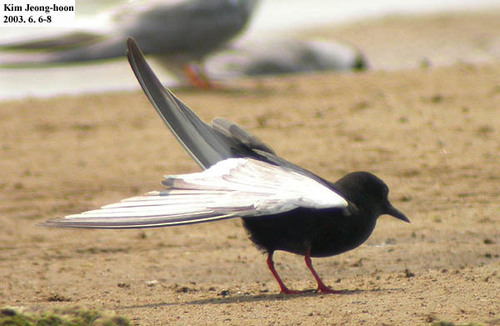 trinta-réis-negro-de-asa-branca
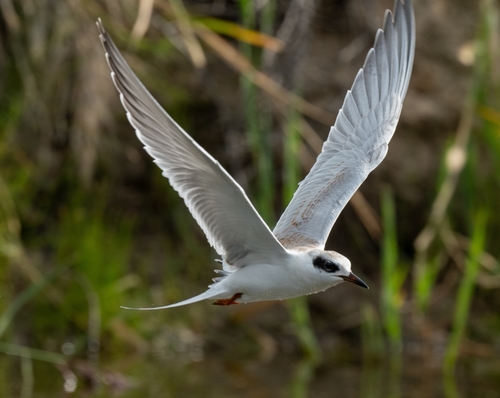 gaivina-de-forster
Em resumo
A marca de campo mais confiável para separar o trinta-réis-negro-de-asa-branca do gaivina-de-forster é o padrão da asa superior e a coloração geral em aves não reprodutoras e imaturas: o trinta-réis-negro-de-asa-branca (especialmente juvenis e adultos não reprodutores) apresenta um manto escuro isolado por uma clara rabadilha e colar brancos, com asas brancas contrastantes e uma cauda com ponta quadrada, enquanto a gaivina-de-forster tem uma asa superior mais uniforme de cinza claro, não possui o manto escuro isolado e apresenta uma cauda profundamente bifurcada. A gaivina-de-forster também é maior e com asas mais longas, com um bico esguio e pontudo e uma aparência mais clássica de 'trinta-réis', enquanto o trinta-réis-negro-de-asa-branca é menor, com um bico curto e robusto e um voo mais semelhante ao de andorinha, flutuante. Na plumagem de reprodução, o trinta-réis-negro-de-asa-branca é strikingly dark abaixo e na cabeça, enquanto a gaivina-de-forster é branca abaixo com uma touca preta completa. A cor do bico e das pernas também difere na estação de reprodução: a gaivina-de-forster tem pernas laranjas e um bico laranja com ponta preta, enquanto o trinta-réis-negro-de-asa-branca tem pernas vermelhas e um bico preto. Essas diferenças são mais aparentes quando as aves são vistas bem em voo ou em repouso.
Dicas de identificação
- Padrão da asa superior de juvenil/primeiro inverno: Os juvenis e adultos não reprodutores do trinta-réis-negro-de-asa-branca mostram um manto escuro bem definido ('sela') isolado por uma clara rabadilha e colar brancos, com asas principalmente brancas e uma cauda com ponta quadrada. A gaivina-de-forster nunca mostra esse padrão; sua asa superior é mais uniformemente cinza claro com escamas de tom gengibre em juvenis, e a cauda é sempre profundamente bifurcada.
- Formato da cauda: A gaivina-de-forster tem uma cauda longa e profundamente bifurcada com um centro cinza em todas as plumagens. A cauda do trinta-réis-negro-de-asa-branca é mais curta, mais clara e aparece com ponta quadrada em juvenis.
- Formato e cor do bico: O trinta-réis-negro-de-asa-branca tem um bico curto e robusto preto (mais curto que a cabeça), enquanto a gaivina-de-forster tem um bico mais longo e esguio. Na plumagem de reprodução, o bico da gaivina-de-forster é laranja com ponta preta; o do trinta-réis-negro-de-asa-branca é preto.
- Cor das pernas: Na estação de reprodução, a gaivina-de-forster tem pernas laranjas brilhantes, enquanto o trinta-réis-negro-de-asa-branca tem pernas vermelhas. Na plumagem não reprodutora, as pernas da gaivina-de-forster são mais opacas, de tom avermelhado.
- Padrão da cabeça (não reprodutora): A gaivina-de-forster mostra uma coroa branca com uma distinta mancha preta em forma de vírgula através do olho e das coberturas auriculares. O trinta-réis-negro-de-asa-branca tem uma coroa escura salpicada de branco, uma mancha escura na frente do olho e um amplo colar branco.
- Padrão da cabeça (reprodutora): A gaivina-de-forster tem uma touca preta completa que se estende pelo pescoço, enquanto o trinta-réis-negro-de-asa-branca tem uma cabeça, pescoço e barriga pretos, com um dorso cinza claro e um tom branco no rosto.
- Partes inferiores (reprodutoras): O trinta-réis-negro-de-asa-branca é escuro abaixo (pescoço e barriga pretos), enquanto a gaivina-de-forster é brilhantemente branca abaixo.
- Cor da asa superior: O trinta-réis-negro-de-asa-branca tem asas principalmente brancas com partes internas cinzentas e coberturas com pontas marrons; as asas da gaivina-de-forster são cinza claro com primárias mais escuras, mas nunca mostram o forte contraste branco/escuro do trinta-réis-negro-de-asa-branca.
- Estilo de voo: O trinta-réis-negro-de-asa-branca é mais flutuante e semelhante a uma andorinha, com batidas de asa rasas e lentas. A gaivina-de-forster é mais angular e semelhante a um trinta-réis, com asas mais longas e pontudas.
- Tamanho e estrutura: A gaivina-de-forster é maior, com asas mais longas e cauda mais longa. O trinta-réis-negro-de-asa-branca é menor e mais compacto.
- Habitat e distribuição: Na América do Norte, a gaivina-de-forster é esperada; na Eurásia, o trinta-réis-negro-de-asa-branca é o padrão. A gaivina-de-forster prefere habitats salinos/costeiros no inverno, enquanto o trinta-réis-negro-de-asa-branca está quase sempre em pântanos de água doce.
- Comportamento alimentar: A gaivina-de-forster mergulha para pescar, muitas vezes a partir de um parapeito. O trinta-réis-negro-de-asa-branca raramente mergulha, em vez disso, captura insetos da superfície ou em voo.
- Confusão de híbridos: Híbridos raros entre o trinta-réis-negro-de-asa-branca e o trinta-réis-negro podem mostrar caracteres mistos, mas a gaivina-de-forster não mostra as manchas escuras no peito do trinta-réis-negro ou o manto isolado do trinta-réis-negro-de-asa-branca.
- Voz: Não é diagnosticamente confiável com as informações fornecidas.
- Armadilhas: A gaivina-de-forster imatura pode parecer gengibre e escamosa acima, mas nunca mostra o contraste agudo da rabadilha/colar brancos e do manto escuro do trinta-réis-negro-de-asa-branca. Sempre verifique o formato da cauda e o padrão da asa superior em voo para a separação mais confiável.
Tamanho
A gaivina-de-forster é distintamente maior, medindo 33–36 cm de comprimento com uma envergadura de 78–80 cm e pesando 130–190 g [wikipedia]. O trinta-réis-negro-de-asa-branca é um trinta-réis pequeno, notavelmente mais compacto e leve, com um bico mais curto e robusto [wikipedia]. A gaivina-de-forster parece ter asas mais longas e cauda mais longa, especialmente em voo, enquanto o trinta-réis-negro-de-asa-branca é mais compacto e semelhante a uma andorinha.
Plumagem
- Juvenil/Primeiro inverno/Aves não reprodutoras:
- Trinta-réis-negro-de-asa-branca juvenis e adultos não reprodutores mostram um padrão distinto: um manto marrom escuro ('sela') isolado por uma clara rabadilha e colar brancos. A asa superior é principalmente branca com partes internas cinzentas e coberturas com pontas marrons, e a cauda é cinza claro a quase branca e aparece com ponta quadrada em juvenis. As coberturas da asa inferior retêm algum preto. O padrão da cabeça inclui uma coroa escura salpicada de branco e uma mancha escura na frente do olho, com um amplo colar branco [wikipedia].
- Gaivina-de-forster juvenis e adultos não reprodutores têm uma asa superior mais uniforme de cinza claro, sem o manto escuro isolado e o contraste da rabadilha/colar brancos. As costas e as coberturas das asas mostram um padrão escamoso de tom gengibre e marrom, mas o efeito geral é muito menos contrastante do que no trinta-réis-negro-de-asa-branca. A cauda é profundamente bifurcada, com um centro cinza, e as partes inferiores são brancas. A cabeça mostra uma coroa branca com uma mancha preta em forma de vírgula através do olho e das coberturas auriculares [wikipedia].
- Adultos reprodutores:
- Trinta-réis-negro-de-asa-branca é strikingly dark: pescoço e barriga pretos, dorso cinza escuro, rabadilha e cauda brancas, cabeça preta com um tom branco no rosto, e pernas curtas vermelhas com um bico curto e preto. As asas são principalmente brancas, mas com partes internas cinzentas e coberturas com pontas marrons.
- Gaivina-de-forster tem uma touca preta completa que se estende pelo pescoço, partes inferiores brancas brilhantes, partes superiores cinza claro e um bico laranja com ponta preta e pernas laranjas brilhantes. A cauda é longa e profundamente bifurcada, com um centro cinza.
- Contrastes principais: Apenas o trinta-réis-negro-de-asa-branca mostra o manto escuro isolado com colar e rabadilha brancos em jovens e aves não reprodutoras; a gaivina-de-forster nunca mostra esse padrão. A gaivina-de-forster sempre tem uma cauda profundamente bifurcada, enquanto a cauda do trinta-réis-negro-de-asa-branca é quadrada em juvenis e menos bifurcada no geral.
Comportamento
O trinta-réis-negro-de-asa-branca se alimenta por um voo lento e raso sobre a água, pegando insetos da superfície ou capturando-os no ar, e raramente mergulha [wikipedia]. Seu voo é flutuante e semelhante ao de uma andorinha, com batidas de asa rasas e lentas. A gaivina-de-forster é um trinta-réis 'branco' mais típico, alimentando-se mergulhando para pescar, muitas vezes a partir de um parapeito, e é mais agressiva na defesa de seu ninho. A gaivina-de-forster geralmente se alimenta em ambientes salinos ou salobros no inverno, enquanto o trinta-réis-negro-de-asa-branca está mais associado a pântanos de água doce. Em voo, a gaivina-de-forster parece mais angular e semelhante a um trinta-réis, enquanto o trinta-réis-negro-de-asa-branca é mais compacto e semelhante a uma andorinha.
Habitat
O trinta-réis-negro-de-asa-branca é quase sempre encontrado em ou perto de pântanos de água doce, lagos e zonas úmidas na Europa, África, Ásia e Austrália [wikipedia]. A gaivina-de-forster se reproduz em pântanos interiores na América do Norte, mas inverna principalmente em habitats costeiros, salinos ou salobros. Na Europa, a gaivina-de-forster é um vagante raro, então a localização pode ser uma forte pista. Se vista em um pântano salgado da América do Norte ou na costa, a gaivina-de-forster é muito mais provável; se em pântanos de água doce da Eurásia, o trinta-réis-negro-de-asa-branca é o padrão.
Voz
Nenhuma diferença vocal diagnóstica é descrita nas notas fornecidas. A gaivina-de-forster é notada por ter chamadas semelhantes ao trinta-réis-boreal, com algumas notas mais ásperas, semelhantes a gaivotas, mas isso não é descrito para o trinta-réis-negro-de-asa-branca.
trinta-réis-negro-de-asa-branca · gaivina-de-forster · Minhas aves difíceis