

Mignattino alibianche vs Forster's Tern
Chlidonias leucopterus contro Sterna forsteri
Fai un quiz con Mignattino alibianche e Forster's Tern
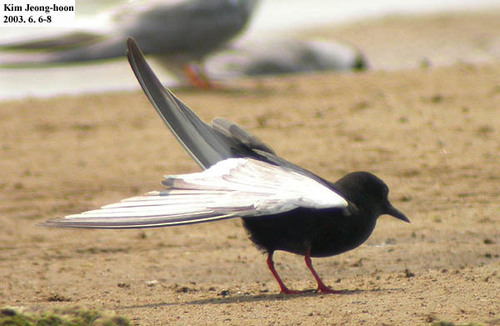 Mignattino alibianche
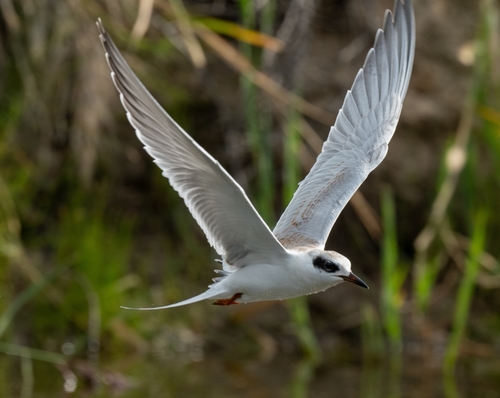 Forster's Tern
In breve
Il segno distintivo più affidabile per separare il Mignattino alibianche dal Forster's Tern è il modello dell'ala superiore e la colorazione generale negli uccelli non in riproduzione e immaturi: il Mignattino alibianche (soprattutto i giovani e gli adulti non in riproduzione) mostra un mantello scuro isolato da un chiaro sopracciglio e collare bianchi, con ali bianche a contrasto e una coda a punta quadrata, mentre il Forster's Tern ha un'ala superiore grigia chiara più uniforme, manca del mantello scuro isolato e mostra una coda profondamente biforcuta. Il Forster's Tern è anche più grande e con ali più lunghe, con un becco sottile e appuntito e un aspetto più classico da 'tern', mentre il Mignattino alibianche è più piccolo, con un becco corto e tozzo e un volo più simile a quello di una rondine, più galleggiante. In abito nuziale, il Mignattino alibianche è notevolmente scuro sotto e sulla testa, mentre il Forster's Tern è bianco sotto con un cappello nero completo. Anche il colore del becco e delle gambe differisce nella stagione di riproduzione: il Forster's ha gambe arancioni e un becco arancione con punta nera, mentre il Mignattino alibianche ha gambe rosse e un becco nero. Queste differenze sono più evidenti quando gli uccelli vengono visti bene in volo o a riposo.
Consigli di identificazione
- Modello dell'ala superiore nei giovani/primo inverno: I giovani Mignattino alibianche e gli adulti non in riproduzione mostrano un mantello scuro ben definito ('sella') isolato da un chiaro sopracciglio e un ampio collare bianco, con ali principalmente bianche e una coda a punta quadrata. Il Forster's Tern non mostra mai questo modello; la sua ala superiore è più uniformemente grigia chiara con squame marrone-ginger nei giovani, e la coda è sempre profondamente biforcuta.
- Forma della coda: Il Forster's Tern ha una coda lunga e profondamente biforcuta con un centro grigio in tutte le livree. La coda del Mignattino alibianche è più corta, più chiara e appare a punta quadrata nei giovani.
- Forma e colore del becco: Il Mignattino alibianche ha un becco corto e tozzo di colore nero (più corto della testa), mentre il Forster's Tern ha un becco più lungo e sottile. In abito nuziale, il becco del Forster's Tern è arancione con una punta nera; quello del Mignattino alibianche è nero.
- Colore delle gambe: Nella stagione di riproduzione, il Forster's Tern ha gambe arancioni brillanti, mentre il Mignattino alibianche ha gambe rosse. In livrea non riproduttiva, le gambe del Forster's Tern sono più opache, marrone-rossastre.
- Modello della testa (non in riproduzione): Il Forster's Tern mostra una corona bianca con una distintiva macchia nera a forma di virgola attraverso l'occhio e le copritrici auricolari. Il Mignattino alibianche ha una corona nerastra punteggiata di bianco, una macchia scura davanti all'occhio e un ampio collare bianco.
- Modello della testa (riproduzione): Il Forster's Tern ha un cappello nero completo che si estende lungo il collo, mentre il Mignattino alibianche ha una testa, un collo e un ventre neri, con un dorso grigio chiaro e una sfumatura bianca sul viso.
- Parte inferiore (riproduzione): Il Mignattino alibianche è scuro sotto (collo e ventre neri), mentre il Forster's Tern è bianco brillante sotto.
- Colore dell'ala superiore: Il Mignattino alibianche ha ali principalmente bianche con porzioni interne grigie e copritrici punteggiate di marrone; le ali del Forster's Tern sono grigie chiare con primarie più scure, ma non mostrano mai il forte contrasto bianco/scuro del Mignattino alibianche.
- Stile di volo: Il Mignattino alibianche è più galleggiante e simile a una rondine, con battiti d'ali lenti e superficiali. Il Forster's Tern è più angolare e simile a un tern, con ali più lunghe e appuntite.
- Dimensioni e struttura: Il Forster's Tern è più grande, più lungo nelle ali e nella coda. Il Mignattino alibianche è più piccolo e più compatto.
- Habitat e distribuzione: In Nord America, ci si aspetta il Forster's Tern; in Eurasia, il Mignattino alibianche è il default. Il Forster's Tern preferisce habitat salini/costieri in inverno, il Mignattino alibianche è quasi sempre in paludi d'acqua dolce.
- Comportamento alimentare: Il Forster's Tern si tuffa per pesci, spesso da un volo stazionario. Il Mignattino alibianche raramente si tuffa, preferendo prendere insetti dalla superficie o in volo.
- Confusione ibrida: I rari ibridi tra il Mignattino alibianche e il Mignattino comune possono mostrare caratteri misti, ma il Forster's Tern non mostra le macchie scure sul lato del petto del Mignattino comune o il mantello isolato del Mignattino alibianche.
- Voce: Non è affidabilmente diagnostica con le informazioni fornite.
- Trappole: Il giovane Forster's Tern può apparire ginger e squamoso sopra, ma non mostra mai il netto contrasto tra il sopracciglio/collare bianco e il mantello scuro del Mignattino alibianche. Controlla sempre la forma della coda e il modello dell'ala superiore in volo per la separazione più affidabile.
Taglia
Il Forster's Tern è nettamente più grande, misurando 33–36 cm di lunghezza con un'apertura alare di 78–80 cm e pesando 130–190 g [wikipedia]. Il Mignattino alibianche è un piccolo tern, notevolmente più compatto e leggero, con un becco più corto e tozzo [wikipedia]. Il Forster's Tern appare con ali più lunghe e coda più lunga, specialmente in volo, mentre il Mignattino alibianche è più compatto e simile a una rondine.
Piumaggio
- Giovani/Primo inverno/Uccelli non in riproduzione:
- Mignattino alibianche i giovani e gli adulti non in riproduzione mostrano un modello distintivo: un mantello marrone scuro ('sella') isolato da un chiaro sopracciglio e un ampio collare bianco. L'ala superiore è principalmente bianca con porzioni interne grigie e copritrici punteggiate di marrone, e la coda è grigia chiara fino a quasi bianca e appare a punta quadrata nei giovani. Le copritrici dell'ala inferiore mantengono un po' di nero. Il modello della testa include una corona nerastra punteggiata di bianco e una macchia scura davanti all'occhio, con un ampio collare bianco [wikipedia].
- Forster's Tern i giovani e gli adulti non in riproduzione hanno un'ala superiore grigia chiara più uniforme, mancante del mantello scuro isolato e del contrasto tra sopracciglio/collare bianchi. La schiena e le copritrici delle ali mostrano un modello squamoso marrone-ginger, ma l'effetto complessivo è molto meno contrastante rispetto al Mignattino alibianche. La coda è profondamente biforcuta, con un centro grigio, e le parti inferiori sono bianche. La testa mostra una corona bianca con una macchia nera a forma di virgola attraverso l'occhio e le copritrici auricolari [wikipedia].
- Adulti in riproduzione:
- Mignattino alibianche è notevolmente scuro: collo e ventre neri, dorso grigio scuro, sopracciglio e coda bianchi, testa nera con una sfumatura bianca sul viso, e gambe rosse corte con un becco corto e nero. Le ali sono principalmente bianche ma con porzioni interne grigie e copritrici punteggiate di marrone.
- Forster's Tern ha un cappello nero completo che si estende lungo il collo, parti inferiori bianche brillanti, parti superiori grigie chiare e un becco arancione con punta nera e gambe arancioni brillanti. La coda è lunga e profondamente biforcuta, con un centro grigio.
- Contrasti chiave: Solo il Mignattino alibianche mostra il mantello scuro isolato con collare e sopracciglio bianchi nei giovani e negli uccelli non in riproduzione; il Forster's Tern non mostra mai questo modello. Il Forster's Tern ha sempre una coda profondamente biforcuta, mentre la coda del Mignattino alibianche è a punta quadrata nei giovani e meno biforcuta nel complesso.
Comportamento
Il Mignattino alibianche si nutre volando lentamente e superficialmente sull'acqua, prendendo insetti dalla superficie o catturandoli in volo, e raramente si tuffa [wikipedia]. Il suo volo è galleggiante e simile a quello di una rondine, con battiti d'ali lenti e superficiali. Il Forster's Tern è un 'tern' bianco più tipico, che si nutre tuffandosi per pesci, spesso da un volo stazionario, ed è più aggressivo nella difesa del suo nido. Il Forster's Tern si nutre solitamente in ambienti salini o salmastri in inverno, mentre il Mignattino alibianche è più associato a paludi d'acqua dolce. In volo, il Forster's Tern appare più angolare e simile a un tern, mentre il Mignattino alibianche è più compatto e simile a una rondine.
Habitat
Il Mignattino alibianche si trova quasi sempre in o vicino a paludi d'acqua dolce, laghi e zone umide in tutta Europa, Africa, Asia e Australia [wikipedia]. Il Forster's Tern nidifica in paludi interne in Nord America ma sverna principalmente in habitat costieri, salini o salmastri. In Europa, il Forster's Tern è un raro vagabondo, quindi la posizione può essere un forte indizio. Se visto in una palude salina nordamericana o sulla costa, è molto più probabile che sia il Forster's Tern; se in paludi d'acqua dolce eurasiatiche, il Mignattino alibianche è il default.
Voce
Nessuna differenza vocale diagnostica è descritta nelle note fornite. Si nota che il Forster's Tern ha richiami simili a quelli della Sterna comune, con alcune note più dure, simili a quelle di un gabbiano, ma questo non è descritto per il Mignattino alibianche.
Mignattino alibianche · Forster's Tern · I miei uccelli difficili