

white-vented plumeleteer vs pirre hummingbird
Chalybura buffonii versus Goldmania bella
Jogue um quiz com white-vented plumeleteer e pirre hummingbird
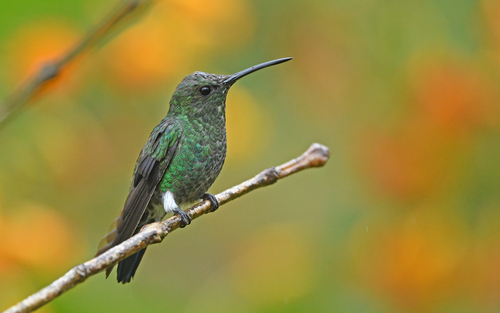 white-vented plumeleteer
 pirre hummingbird
Em resumo
A marca de campo mais confiável para separar o white-vented plumeleteer do pirre hummingbird é a combinação de coloração da cauda e do vent: o white-vented plumeleteer sempre apresenta longas coberturas brancas na parte inferior da cauda e uma cauda escura, azul-preta ou bronze, enquanto o pirre hummingbird tem coberturas brancas na parte inferior da cauda, mas uma cauda bicolor marcante com penas externas canela-buff com pontas pretas. Os machos do pirre hummingbird também têm uma testa e lore castanhas únicas, nunca vistas no plumeleteer. As fêmeas diferem na cor das partes inferiores: as fêmeas do plumeleteer são cinzas embaixo com manchas verdes, enquanto as fêmeas do pirre são de um buff canela pálido por baixo. A cor do bico também ajuda—o pirre hummingbird sempre apresenta uma mandíbula de base rosa, enquanto o plumeleteer é todo preto, exceto em uma subespécie. O tamanho e a estrutura diferem, mas podem ser sutis em campo.
Dicas de identificação
- O padrão da cauda é crítico: o white-vented plumeleteer sempre tem uma cauda escura uniforme (azul-preta ou bronze), enquanto o pirre hummingbird apresenta uma cauda bicolor com penas externas canela-buff e pontas pretas. Isso é visível tanto em aves empoleiradas quanto em voo, de todas as idades e sexos.
- Coberturas da parte inferior da cauda: Ambas as espécies têm coberturas brancas na parte inferior da cauda, mas as do plumeleteer são mais longas e proeminentes, frequentemente formando um tufo notável. As do pirre hummingbird são mais curtas e menos volumosas.
- Testa e lore dos machos: Os machos do pirre hummingbird têm uma testa e lore castanhas distintas, nunca presentes no plumeleteer. Se você ver uma coloração ruiva ou castanha no rosto, é pirre.
- Partes inferiores das fêmeas: As fêmeas do plumeleteer são cinzas embaixo com manchas verdes, enquanto as fêmeas do pirre hummingbird são de um buff canela pálido por baixo, sem manchas verdes. Essa é uma marca forte em boa luz.
- Cor do bico: O pirre hummingbird sempre tem uma mandíbula de base rosa com uma ponta preta, enquanto o plumeleteer é todo preto, exceto pela rara subespécie intermedia (que tem uma base rosada e não é encontrada na maior parte da área de distribuição). Se você ver um bico inferior rosado, suspeite de pirre.
- Tamanho e volume: O plumeleteer é maior e mais pesado, mas isso só é útil se ambas as espécies estiverem presentes para comparação ou se você tiver experiência com ambas.
- Coroa e coberturas superiores da cauda: Os machos do plumeleteer podem mostrar uma coroa bronzeada e coberturas superiores da cauda cobreadas, enquanto os machos do pirre hummingbird têm um rabo bronzeado, mas não uma coroa bronzeada.
- Penas centrais da cauda: No pirre hummingbird, as penas centrais da cauda são verde-bronze na base com pontas pretas; no plumeleteer, a cauda é uniformemente escura com um brilho bronze nas penas centrais.
- Rosto das fêmeas: As fêmeas do pirre hummingbird têm lore castanhas (mas não testa), o que pode ser uma marca sutil, mas útil.
- Cor das partes inferiores nos machos: Os machos do plumeleteer têm um peito superior azuloso e um peito inferior verde metálico brilhante, com uma barriga inferior esbranquiçada. Os machos do pirre hummingbird têm uma garganta, peito e barriga verde azulada brilhante, mas um queixo canela.
- Contexto geográfico: Se você estiver fora do Panamá ou no extremo noroeste da Colômbia, o pirre hummingbird é extremamente improvável. O plumeleteer é muito mais disseminado.
- Variação entre subespécies: Algumas subespécies do plumeleteer (por exemplo, caeruleogaster, intermedia) mostram mais azul ou cinza nas partes inferiores, mas nunca os tons canela do pirre hummingbird.
- Cauda em voo: Mesmo em vistas rápidas de voo, os painéis de cauda canela do pirre hummingbird são frequentemente visíveis e contrastam com a ave verde.
- Postura empoleirada: O plumeleteer pode parecer mais volumoso e de cauda mais longa, mas isso é sutil e nem sempre confiável.
- Sem distinção vocal: Nenhuma diferença vocal é descrita nas fontes, então não confie em canto ou chamado para separação.
Tamanho
O white-vented plumeleteer é notavelmente maior e mais pesado: 10,5–12 cm de comprimento, com machos de 6–7,3 g e fêmeas de até 7,9 g. O pirre hummingbird é menor e mais leve, com 8,4–9,5 cm e 3–4 g para ambos os sexos. Em comparação direta, o plumeleteer parece mais volumoso e longo, mas a sobreposição de tamanho pode tornar isso não confiável, a menos que ambos sejam vistos juntos. O comprimento do bico e as proporções do corpo não são fortemente contrastantes, mas o pirre hummingbird pode parecer mais delicado no geral.
Plumagem
- Plumagens juvenis/imaturas: Nenhuma diferença específica de padrão de asa superior ou de voo é descrita para ambas as espécies, então concentre-se na cauda e na área do vent em todas as idades.
- Machos adultos: Os machos do white-vented plumeleteer são verde metálico escuro por cima, com uma coroa bronzeada e coberturas superiores da cauda cobreadas, cauda azul-preta e longas coberturas brancas na parte inferior da cauda. Os machos do pirre hummingbird têm uma testa e lore castanhas, partes superiores verde metálico com um rabo bronzeado, uma cauda bicolor (penas centrais verde-bronze, externas canela-buff com pontas pretas) e uma barriga verde azulada brilhante com um queixo canela.
- Fêmeas adultas: As fêmeas do plumeleteer são verde metálico mais pálido por cima, cinzas embaixo com manchas verdes, e têm uma cauda escura com pontas cinzas. As fêmeas do pirre hummingbird não têm a testa castanha, têm lore castanhas, partes superiores totalmente verdes e partes inferiores de buff canela pálido. Sua cauda também é bicolor como a do macho.
- Coberturas da parte inferior da cauda: Ambas as espécies têm coberturas brancas na parte inferior da cauda, mas as do plumeleteer são mais longas e mais conspícuas.
- Cauda: O plumeleteer sempre tem uma cauda escura (azul-preta ou bronze), enquanto a cauda do pirre hummingbird é bicolor com canela e preto óbvios.
Comportamento
Ambas as espécies forrageiam por néctar e provavelmente pequenos artrópodes, tipicamente de níveis baixos a médios na floresta. Nenhuma diferença comportamental significativa é descrita nas fontes. Ambas podem ser vistas pairando em flores, mas o pirre hummingbird é conhecido por forragear perto do solo até níveis médios. Em voo ou empoleiradas, a postura comportamental não é um separador confiável.
Habitat
O white-vented plumeleteer é encontrado em uma faixa mais ampla na Colômbia, Equador, Panamá, Peru e Venezuela, frequentemente em florestas de planície e encosta. O pirre hummingbird é muito mais restrito, ocorrendo apenas no Panamá e no extremo noroeste da Colômbia, tipicamente em florestas úmidas, especialmente na região da Serranía del Pirre. Se visto fora dessa faixa limitada, o pirre hummingbird é improvável.
white-vented plumeleteer · pirre hummingbird · Minhas aves difíceis