

white-thighed hornbill vs trumpeter hornbill
Bycanistes albotibialis versus Bycanistes bucinator
Jogue um quiz com white-thighed hornbill e trumpeter hornbill
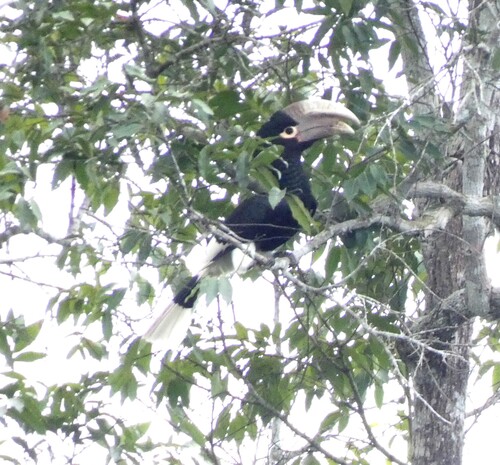 white-thighed hornbill
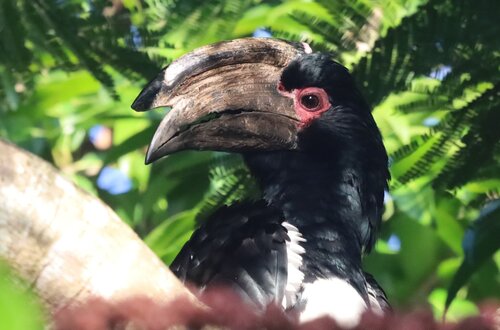 trumpeter hornbill
Em resumo
A marca de campo mais confiável para separar o trumpeter hornbill do white-thighed hornbill é a combinação do padrão de plumagem e da cor da pele facial: o trumpeter hornbill apresenta uma barriga branca e coberturas de asas inferiores brancas, com pele nua rosa ou vermelha ao redor dos olhos, enquanto o white-thighed hornbill não possui essas características. Em voo, o trumpeter hornbill revela asas com pontas brancas e uma parte inferior branca contrastante, o que não é descrito para o white-thighed hornbill. Estruturalmente, o trumpeter hornbill tem um grande casque cinza no bico, especialmente notável nos machos. Ambas as espécies são hornbills de tamanho médio a grande, mas o trumpeter hornbill é ligeiramente mais pesado em média. O habitat e a distribuição não se sobrepõem extensivamente, mas a confusão pode surgir em cativeiro ou em situações de borda de distribuição.
Dicas de identificação
- Padrão da parte inferior em voo: O trumpeter hornbill mostra coberturas de asas inferiores brancas e asas com pontas brancas, visíveis em todas as idades durante o voo. O white-thighed hornbill não possui descrição desse padrão; se você ver um hornbill com uma parte inferior branca, é um trumpeter.
- Cor da barriga: O trumpeter hornbill tem uma barriga branca, contrastando com suas costas pretas. O white-thighed hornbill não tem uma barriga branca; suas partes inferiores não são descritas como contrastantes e claras.
- Cor da pele facial: Procure por pele nua rosa ou vermelha ao redor do olho no trumpeter hornbill. O white-thighed hornbill não possui isso, tendo pele facial mais escura ou menos conspícua.
- Casque do bico: O trumpeter hornbill tem um grande e proeminente casque cinza no bico, especialmente nos machos. O casque do white-thighed hornbill não é descrito como especialmente grande ou cinza, então um casque pronunciado é uma forte pista para o trumpeter.
- Tamanho do grupo e comportamento: O trumpeter hornbill é frequentemente visto em grupos, às vezes bastante grandes. Se você ver um bando de hornbills, especialmente no sul da África, é mais provável que seja um trumpeter.
- Distribuição e localização: Se você estiver na África central ou ocidental, o white-thighed hornbill é possível; na África sudeste, o trumpeter hornbill é esperado. Sempre verifique por aves vagantes ou cativas em locais incomuns.
- Cor das costas: O trumpeter hornbill tem costas totalmente pretas. Se você ver um hornbill com costas mais claras ou com padrão diferente, reconsidere o trumpeter.
- Dimorfismo sexual: As fêmeas do trumpeter hornbill têm um casque menor, mas ambos os sexos mostram as outras marcas-chave. O tamanho do casque é menos útil para separar esses dois do que para determinar o sexo do trumpeter.
- Coxas brancas: Ambas as espécies têm coxas brancas, então isso não é um separador confiável por si só. Foque na extensão do branco nas partes inferiores e na parte inferior das asas.
- Visões de aves empoleiradas vs. em voo: Em aves empoleiradas, foque na barriga, na pele facial e no casque. Em voo, priorize a cor da parte inferior das asas e da barriga.
- Confusão com outros Bycanistes: O trumpeter hornbill é semelhante ao silvery-cheeked hornbill, mas não ao white-thighed hornbill em marcas de campo chave. Não confunda a parte inferior e a barriga brancas do trumpeter com o branco mais restrito do white-thighed.
- Plumagem juvenil/imatura: Nenhuma marca juvenil específica é descrita para o white-thighed hornbill, mas a parte inferior e a barriga brancas do trumpeter ainda devem ser visíveis em aves jovens.
- Contexto de habitat: Ambas as espécies preferem florestas tropicais perenes, então o habitat sozinho não é diagnóstico, a menos que combinado com a distribuição.
- Aves cativas: Em zoológicos ou avicultura, confie na plumagem e no casque, não na distribuição.
- Quando em dúvida: Se você ver um hornbill com uma barriga branca, parte inferior branca, pele facial rosa/vermelha e um grande casque, é um trumpeter hornbill.
Tamanho
O trumpeter hornbill é um hornbill de tamanho médio com uma massa corporal em torno de 644 g [wikidata], e um comprimento de 58–65 cm [wikipedia]. Nenhuma medição direta está disponível para o white-thighed hornbill, mas ambos são considerados hornbills Bycanistes de tamanho médio a grande e provavelmente se sobrepõem em tamanho. No campo, o tamanho sozinho não é um separador confiável, a menos que ambos sejam vistos lado a lado, mas o trumpeter hornbill pode parecer ligeiramente mais robusto, especialmente no peito e no bico devido ao casque.
Plumagem
As diferenças de plumagem são mais óbvias em adultos e provavelmente em imaturos também, embora os padrões de voo específicos por idade não sejam detalhados para o white-thighed hornbill. O trumpeter hornbill de todas as idades mostra um dorso totalmente preto, barriga branca e coberturas de asas inferiores brancas; em voo, a parte inferior branca e as asas com pontas brancas são diagnósticas. A pele facial ao redor do olho é rosa a vermelha, o que se destaca no campo. O white-thighed hornbill não menciona uma barriga ou parte inferior brancas, e não possui a pele facial rosa/vermelha. Ambas as espécies têm coxas brancas, mas as partes inferiores e a parte inferior das asas brancas do trumpeter hornbill são mais extensas e óbvias, especialmente quando a ave está voando ou quando vista de baixo. O casque do trumpeter hornbill é grande e cinza, menor nas fêmeas, e é uma marca estrutural chave não descrita para o white-thighed hornbill.
Comportamento
O trumpeter hornbill é notavelmente gregário, frequentemente visto em pequenos grupos (2–5, às vezes até 50), e é ativo e social, especialmente em árvores frutíferas. O comportamento social do white-thighed hornbill não é detalhado, mas como um Bycanistes, também pode ser visto em pares ou pequenos grupos. Em cativeiro, os trumpeter hornbills são descritos como dóceis e inteligentes, mas isso não é uma marca de campo. Ambas as espécies podem ser ativas e vocais, mas o comportamento em grupo do trumpeter hornbill pode ser uma pista sutil no campo.
Habitat
O white-thighed hornbill é encontrado na África central e ocidental (Angola, Benin, Camarões, República Centro-Africana, República do Congo, República Democrática do Congo, Guiné Equatorial, Gabão, Nigéria, Sudão e Uganda) [wikipedia]. O trumpeter hornbill é residente da África sudeste (Burundi, Moçambique, Botswana, Congo, Montanhas North Pare da Tanzânia, Quênia, faixa de Caprivi da Namíbia, leste da África do Sul) [wikipedia]. Suas distribuições não se sobrepõem extensivamente, então a localização é uma forte pista, mas não diagnóstica em cativeiro ou nas bordas de distribuição. Ambas preferem florestas tropicais perenes.
white-thighed hornbill · trumpeter hornbill · Minhas aves difíceis