

White-thighed Hornbill vs Trumpeter Hornbill
Bycanistes albotibialis contro Bycanistes bucinator
Fai un quiz con White-thighed Hornbill e Trumpeter Hornbill
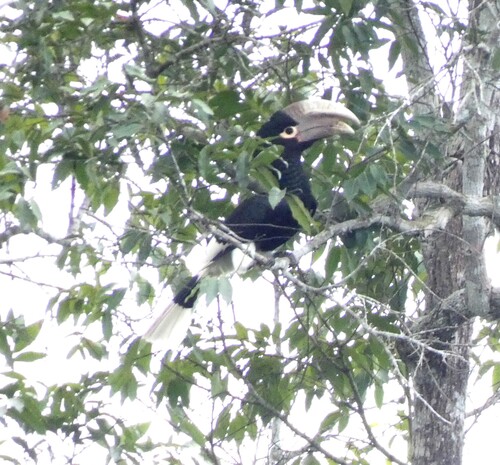 White-thighed Hornbill
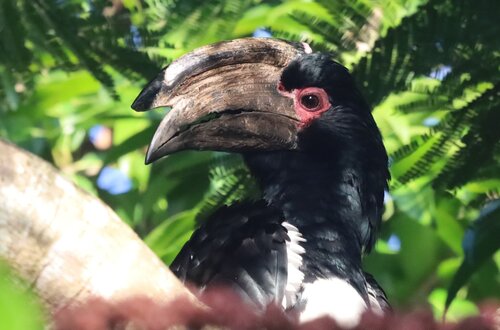 Trumpeter Hornbill
In breve
Il segno distintivo più affidabile per separare il Trumpeter Hornbill dal White-thighed Hornbill è la combinazione del modello di piumaggio e del colore della pelle facciale: il Trumpeter Hornbill mostra un ventre bianco e copritrici delle ali inferiori bianche, con pelle nuda rosa o rossa attorno agli occhi, mentre il White-thighed Hornbill manca di queste caratteristiche. In volo, il Trumpeter Hornbill rivela ali con punte bianche e un sottogola bianco contrastante, che non è descritto per il White-thighed Hornbill. Strutturalmente, il Trumpeter Hornbill ha un casco grigio prominente sulla parte superiore del becco, particolarmente evidente nei maschi. Entrambe le specie sono hornbills di dimensioni medie-grandi, ma il Trumpeter Hornbill è leggermente più pesante in media. L'habitat e l'areale non si sovrappongono ampiamente, ma potrebbero sorgere confusioni in cattività o in situazioni ai margini dell'areale.
Consigli di identificazione
- Modello delle ali inferiori in volo: il Trumpeter Hornbill mostra copritrici delle ali inferiori bianche e ali con punte bianche, visibili in tutte le età durante il volo. Il White-thighed Hornbill non ha descrizione di questo modello; se vedi un hornbill con un'ala inferiore bianca, è un Trumpeter.
- Colore del ventre: il Trumpeter Hornbill ha un ventre bianco, in contrasto con il suo dorso nero. Il White-thighed Hornbill non ha un ventre bianco; le sue parti inferiori non sono descritte come chiaramente pallide.
- Colore della pelle facciale: cerca pelle nuda rosa o rossa attorno all'occhio nel Trumpeter Hornbill. Il White-thighed Hornbill non ha questo, avendo pelle facciale più scura o meno evidente.
- Casco del becco: il Trumpeter Hornbill ha un grande casco grigio prominente sul becco, specialmente nei maschi. Il casco del White-thighed Hornbill non è descritto come particolarmente grande o grigio, quindi un casco pronunciato è un forte indizio per il Trumpeter.
- Dimensione del gruppo e comportamento: il Trumpeter Hornbill è spesso visto in gruppi, a volte piuttosto grandi. Se vedi un gruppo di hornbills, specialmente nell'Africa meridionale, è più probabile che sia un Trumpeter.
- Areale e posizione: se ti trovi nell'Africa centrale o occidentale, il White-thighed Hornbill è possibile; nell'Africa sudorientale, ci si aspetta il Trumpeter Hornbill. Controlla sempre per eventuali vagabondi o uccelli in cattività in luoghi insoliti.
- Colore del dorso: il Trumpeter Hornbill ha un dorso completamente nero. Se vedi un hornbill con un dorso più chiaro o con un modello diverso, ripensa al Trumpeter.
- Dimorfismo sessuale: le femmine del Trumpeter Hornbill hanno un casco più piccolo, ma entrambi i sessi mostrano gli altri segni distintivi. La dimensione del casco è meno utile per separare questi due che per determinare il sesso del Trumpeter.
- Cosce bianche: entrambe le specie hanno cosce bianche, quindi questo non è un separatore affidabile da solo. Concentrati sull'estensione del bianco nelle parti inferiori e nelle ali inferiori.
- Viste da posato vs. in volo: negli uccelli posati, concentrati su ventre, pelle facciale e casco. In volo, dai priorità al colore dell'ala inferiore e del ventre.
- Confusione con altri Bycanistes: il Trumpeter Hornbill è simile al Silvery-cheeked Hornbill, ma non al White-thighed Hornbill nei segni distintivi chiave. Non confondere l'ala inferiore e il ventre bianchi del Trumpeter con il bianco più ristretto del White-thighed.
- Piumaggio giovanile/immaturo: non sono descritti segni specifici per il giovanile del White-thighed Hornbill, ma l'ala inferiore e il ventre bianchi del Trumpeter dovrebbero comunque essere visibili negli uccelli giovani.
- Contesto dell'habitat: entrambe le specie preferiscono le foreste sempreverdi, quindi l'habitat da solo non è diagnostico a meno che non sia combinato con l'areale.
- Uccelli in cattività: negli zoo o nell'avicoltura, fai affidamento sul piumaggio e sul casco, non sull'areale.
- Quando hai dubbi: se vedi un hornbill con un ventre bianco, un'ala inferiore bianca, pelle facciale rosa/rossa e un grande casco, è un Trumpeter Hornbill.
Taglia
Il Trumpeter Hornbill è un hornbill di dimensioni medie con una massa corporea di circa 644 g [wikidata], e una lunghezza di 58–65 cm [wikipedia]. Non sono disponibili misurazioni dirette per il White-thighed Hornbill, ma entrambi sono considerati hornbills di dimensioni medie-grandi e probabilmente si sovrappongono in dimensioni. Sul campo, la dimensione da sola non è un separatore affidabile a meno che entrambi non siano visti fianco a fianco, ma il Trumpeter Hornbill può apparire leggermente più robusto, specialmente nel petto e nel becco a causa del casco.
Piumaggio
Le differenze nel piumaggio sono più evidenti negli adulti e probabilmente anche negli immaturi, sebbene i modelli di volo specifici per età non siano dettagliati per il White-thighed Hornbill. Il Trumpeter Hornbill di tutte le età mostra un dorso completamente nero, un ventre bianco e copritrici delle ali inferiori bianche; in volo, l'ala inferiore bianca e le ali con punte bianche sono diagnostiche. La pelle facciale attorno all'occhio è rosa-rossa, che si distingue sul campo. Il White-thighed Hornbill non menziona un ventre o un'ala inferiore bianchi, e non ha la pelle facciale rosa/rossa. Entrambe le specie hanno cosce bianche, ma le parti inferiori e l'ala inferiore bianche del Trumpeter Hornbill sono più estese e evidenti, specialmente quando l'uccello vola o quando è visto dal basso. Il casco del Trumpeter Hornbill è grande e grigio, più piccolo nelle femmine, ed è un segno strutturale chiave non descritto per il White-thighed Hornbill.
Comportamento
Il Trumpeter Hornbill è notevolmente gregario, spesso visto in piccoli gruppi (2–5, a volte fino a 50), ed è attivo e sociale, specialmente negli alberi da frutto. Il comportamento sociale del White-thighed Hornbill non è dettagliato, ma come Bycanistes, potrebbe essere visto anche in coppie o piccoli gruppi. In cattività, i Trumpeter Hornbills sono descritti come domestici e intelligenti, ma questo non è un segno distintivo. Entrambe le specie possono essere attive e vocali, ma il comportamento di gruppo del Trumpeter Hornbill può essere un indizio sottile sul campo.
Habitat
Il White-thighed Hornbill si trova nell'Africa centrale e occidentale (Angola, Benin, Camerun, Repubblica Centrafricana, Repubblica del Congo, Repubblica Democratica del Congo, Guinea Equatoriale, Gabon, Nigeria, Sudan e Uganda) [wikipedia]. Il Trumpeter Hornbill è residente nell'Africa sudorientale (Burundi, Mozambico, Botswana, Congo, Monti North Pare della Tanzania, Kenya, striscia di Caprivi della Namibia, sud-est del Sudafrica) [wikipedia]. I loro areali non si sovrappongono ampiamente, quindi la posizione è un forte indizio, ma non diagnostico in cattività o ai margini dell'areale. Entrambi preferiscono le foreste tropicali sempreverdi.
White-thighed Hornbill · Trumpeter Hornbill · I miei uccelli difficili