

white-fronted bee-eater vs abelharuco
Merops bullockoides versus Merops apiaster
Jogue um quiz com white-fronted bee-eater e abelharuco
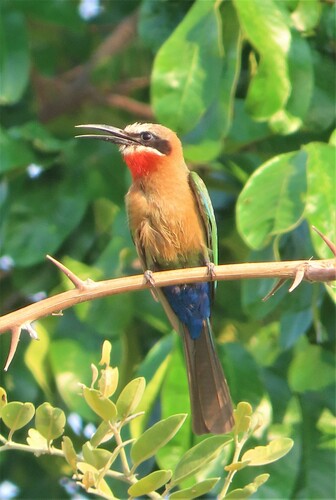 white-fronted bee-eater
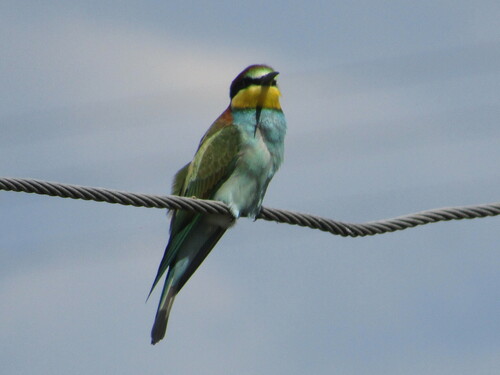 abelharuco
Em resumo
A maneira mais confiável de separar o white-fronted bee-eater do abelharuco é a combinação de uma testa branca ousada e cauda quadrada no primeiro, em comparação com as ricas partes superiores castanho-avermelhadas e amarelas do abelharuco e os longos streamers centrais da cauda pontiaguda. Ambos são abelharucos coloridos e esguios, mas o white-fronted apresenta uma impressionante garganta vermelha e máscara preta, enquanto o abelharuco tem uma aparência mais mesclada e multicolorida, sem testa branca e com uma cauda mais alongada. Juvenis e abelharucos não reprodutores perdem os streamers da cauda e se tornam mais apagados, mas ainda carecem da testa branca e da garganta vermelha do white-fronted. Ambas as espécies podem se sobrepor no sul da África, mas suas marcas de campo permanecem distintas.
Dicas de identificação
- Testa Branca (apenas white-fronted): Procure por uma mancha branca ousada acima do bico—única do white-fronted e visível em todas as idades e estações. O abelharuco nunca apresenta uma testa branca.
- Garganta Vermelha (apenas white-fronted): O white-fronted sempre apresenta uma mancha de garganta vermelha brilhante, nitidamente destacada da testa branca e da máscara preta. A garganta do abelharuco é amarela.
- Máscara Preta (white-fronted): Uma forte linha preta passa pelo olho no white-fronted, contrastando com a testa branca e a garganta vermelha. A máscara do abelharuco é menos definida e se mistura ao padrão da cabeça.
- Forma da Cauda: O white-fronted tem uma cauda quadrada sem streamers; o abelharuco tem uma cauda profundamente bifurcada com longas penas centrais em adultos, mas juvenis e aves não reprodutoras perdem esses streamers e mostram uma cauda mais arredondada—ainda assim, a cauda nunca é quadrada como no white-fronted.
- Cor das Partes Superiores: O abelharuco tem partes superiores castanho-avermelhadas e amarelas, com asas e costas verdes. O white-fronted é verde por cima com partes inferiores canela, sem os tons castanho/amarelo.
- Partes Inferiores: O white-fronted apresenta partes inferiores canela; as partes inferiores do abelharuco são mais variáveis, mas nunca canela.
- Tamanho: O abelharuco é maior e mais robusto, especialmente com os streamers da cauda. O tamanho sozinho nem sempre é confiável, a menos que ambos sejam vistos juntos.
- Bico: Ambos têm bicos esguios, pretos e levemente curvados, típicos de abelharucos; não é um separador útil.
- Juvenil/Não-reprodutor do abelharuco: Carece de streamers da cauda e é mais apagado, mas ainda tem partes superiores marrons/amarelas e sem testa branca ou garganta vermelha. Cuidado para não confundir esses com o white-fronted, mas o padrão facial sempre difere.
- Empoleirado vs. Voo: Em voo, os longos streamers da cauda do abelharuco (se presentes) e as partes superiores multicoloridas se destacam. A cauda quadrada e a testa branca do white-fronted são visíveis quando empoleirados e muitas vezes em voo.
- Contexto do Habitat: No sul da África, o white-fronted é residente e ligado a margens de rios e florestas baixas; o abelharuco é um migrante e pode ser encontrado em áreas mais abertas durante a passagem.
- Comportamento de Colônia: Ambas as espécies nidificam colonialmente, mas o white-fronted é mais propenso a ser visto em grupos apertados perto de bancos de nidificação durante todo o ano.
- Voz: O white-fronted emite um piado profundo; o chamado do abelharuco não é descrito aqui, então não confie na voz a menos que esteja familiarizado com ambos.
- Sexos: Ambas as espécies são sexualmente semelhantes; não use o sexo para separação.
- Estação: O plumagem do abelharuco se apaga e perde os streamers da cauda fora da reprodução, mas a ausência de testa branca e garganta vermelha permanece diagnóstica.
Tamanho
O abelharuco é visivelmente maior, medindo 27–29 cm de comprimento (incluindo longas penas centrais da cauda), em comparação com os 23 cm do white-fronted bee-eater. O abelharuco também é, em média, mais pesado (44–78 g, média de 52 g) [wikipedia], enquanto o peso do white-fronted não é especificado, mas é menor em comprimento. A diferença é mais óbvia quando ambas as espécies são vistas juntas, mas pode ser sutil à distância ou com aves solitárias, especialmente se o abelharuco não tiver seus streamers da cauda (juvenil ou não reprodutor).
Plumagem
- Juvenil/Não-reprodutor do abelharuco: Mais apagado no geral, com costas azul-esverdeadas e sem as longas penas centrais da cauda, mas ainda apresenta partes superiores marrons e amarelas e sem testa branca ou garganta vermelha. A coloração juvenil é menos variada, mas o padrão facial permanece distinto do white-fronted.
- Adulto do abelharuco: Partes superiores castanho-avermelhadas e amarelas ricas, asas verdes, bico preto e longos streamers centrais da cauda. Sem branco na testa, e a garganta é amarela (não vermelha).
- White-fronted Bee-eater (todas as idades): Sempre apresenta uma testa branca brilhante, máscara preta, cauda quadrada e garganta vermelha brilhante. As partes superiores são verdes, as partes inferiores são canela. Carece das costas castanho/amarelas e dos streamers da cauda do abelharuco. A testa branca e a garganta vermelha estão presentes durante todo o ano e em todas as plumagens.
- Cauda: A cauda do abelharuco é profundamente bifurcada com longas penas centrais (exceto em juvenis/não reprodutores), enquanto a do white-fronted é quadrada e carece de streamers.
Comportamento
Ambas as espécies são insetívoras aéreas, frequentemente vistas empoleiradas em galhos ou fios expostos e saindo para capturar insetos em voo. Os white-fronted bee-eaters são mais propensos a serem vistos em pequenas colônias, especialmente perto de bancos de terra ou penhascos onde nidificam. Os abelharucos também são coloniais, mas seu comportamento migratório significa que podem ser vistos em uma variedade maior de habitats abertos durante a migração. Ambas as espécies usam voos rápidos e ágeis para capturar presas, mas o jizz geral é semelhante, exceto pela forma da cauda em voo.
Habitat
O white-fronted bee-eater é residente na África subequatorial, geralmente perto de penhascos ou bancos para nidificação e em árvores baixas para caça. O abelharuco se reproduz em toda a Europa do sul/central, partes da África e oeste da Ásia, e inverna na África tropical. No sul da África, ambas podem ocorrer, mas o abelharuco é migratório e mais provável de ser encontrado em áreas abertas, terras agrícolas ou vales de rios durante a migração. O white-fronted está mais ligado a bancos de nidificação e florestas ribeirinhas.
Voz
O white-fronted bee-eater emite um piado profundo. O chamado do abelharuco não é descrito nas notas, então a vocalização não é um separador confiável com as informações fornecidas.