
Abejaruco Frentiblanco vs Abejaruco Europeo
Merops bullockoides frente a Merops apiaster
Juega un quiz con Abejaruco Frentiblanco y Abejaruco Europeo
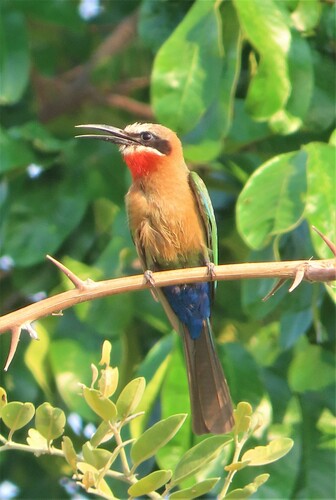 Abejaruco Frentiblanco
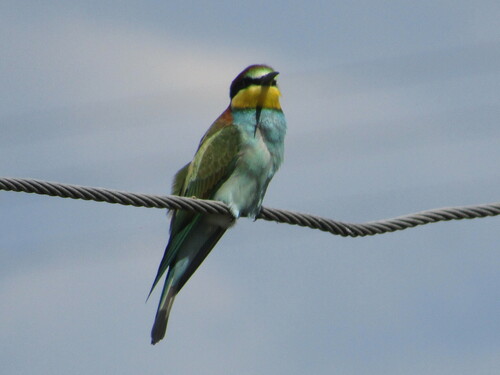 Abejaruco Europeo
En breve
La forma más confiable de separar el Abejaruco Frentiblanco del Abejaruco Europeo es la combinación de una frente blanca audaz y una cola cuadrada en el primero, frente a las ricas partes superiores castañas y amarillas del Abejaruco Europeo y las largas plumas centrales de la cola puntiagudas. Ambos son abejarucos coloridos y esbeltos, pero el Frentiblanco muestra una garganta roja llamativa y una máscara negra, mientras que el Europeo tiene un aspecto más mezclado y multicolor sin frente blanca y una cola más alargada. Los juveniles y los Abejarucos Europeos no reproductores pierden las plumas de la cola y se vuelven más apagados, pero aún carecen de la frente blanca y la garganta roja del Frentiblanco. Ambas especies pueden superponerse en el sur de África, pero sus marcas de campo siguen siendo distintas.
Consejos de identificación
- Frente Blanca (solo Frentiblanco): Busca un parche blanco audaz sobre el pico—único del Frentiblanco y visible en todas las edades y estaciones. El Abejaruco Europeo nunca muestra una frente blanca.
- Garganta Roja (solo Frentiblanco): El Frentiblanco siempre muestra un parche de garganta roja brillante, claramente separado de la frente blanca y la máscara negra. La garganta del Abejaruco Europeo es amarilla.
- Máscara Negra (Frentiblanco): Una fuerte línea negra corre a través del ojo en el Frentiblanco, contrastando con la frente blanca y la garganta roja. La máscara del Abejaruco Europeo es menos definida y se mezcla con el patrón de la cabeza.
- Forma de la Cola: El Frentiblanco tiene una cola cuadrada sin plumas; el Abejaruco Europeo tiene una cola profundamente bifurcada con largas plumas centrales en los adultos, pero los juveniles y las aves no reproductoras pierden estas plumas y muestran una cola más redondeada—sin embargo, la cola nunca es cuadrada como en el Frentiblanco.
- Color de las Partes Superiores: El Abejaruco Europeo tiene partes superiores castaño-amarillo, con alas y espalda verdes. El Frentiblanco es verde por encima con partes inferiores canela, careciendo de los tonos castaños/amarillos.
- Partes Inferiores: El Frentiblanco muestra partes inferiores canela; las partes inferiores del Abejaruco Europeo son más variables pero nunca canela.
- Tamaño: El Abejaruco Europeo es más grande y robusto, especialmente con plumas de cola. El tamaño por sí solo no siempre es confiable a menos que ambos se vean juntos.
- Pico: Ambos tienen picos esbeltos, negros, ligeramente curvados hacia abajo, típicos de los abejarucos; no es un separador útil.
- Abejaruco Europeo Juvenil/No reproductor: Carece de plumas de cola y es más apagado, pero aún tiene partes superiores marrón/amarillo y no tiene frente blanca ni garganta roja. Ten cuidado de confundir estos con el Frentiblanco, pero el patrón facial siempre difiere.
- Posado vs. Vuelo: En vuelo, las largas plumas de cola del Europeo (si están presentes) y las partes superiores multicolores destacan. La cola cuadrada y la frente blanca del Frentiblanco son visibles cuando está posado y a menudo en vuelo.
- Contexto de Hábitat: En el sur de África, el Frentiblanco es residente y está ligado a las orillas de los ríos y bosques bajos; el Europeo es un migrante y puede encontrarse en terrenos más abiertos durante el paso.
- Comportamiento Colonial: Ambos anidan colonialmente, pero es más probable que el Frentiblanco se vea en grupos compactos cerca de los bancos de anidación durante todo el año.
- Voz: El Frentiblanco emite un chirrido profundo; el canto del Europeo no se describe aquí, así que no confíes en la voz a menos que estés familiarizado con ambos.
- Sexos: Ambas especies son sexualmente similares; no uses el sexo para la separación.
- Temporada: El plumaje del Abejaruco Europeo se apaga y pierde las plumas de la cola fuera de la reproducción, pero la ausencia de frente blanca y garganta roja sigue siendo diagnóstica.
Tamaño
El Abejaruco Europeo es notablemente más grande, con 27–29 cm de longitud (incluyendo largas plumas centrales de la cola), en comparación con los 23 cm del Abejaruco Frentiblanco. El Abejaruco Europeo también promedia más pesado (44–78 g, media 52 g) [wikipedia], mientras que el peso del Frentiblanco no se especifica pero es más pequeño por longitud. La diferencia es más obvia cuando ambas especies se ven juntas, pero puede ser sutil a distancia o con aves solitarias, especialmente si el Europeo carece de sus plumas de cola (juvenil o no reproductor).
Plumaje
- Abejaruco Europeo Juvenil/No reproductor: Más apagado en general, con espalda azul-verde y careciendo de las largas plumas centrales de la cola, pero aún muestra partes superiores marrón y amarillas y no tiene frente blanca ni garganta roja. La coloración juvenil es menos variada, pero el patrón facial sigue siendo distinto del Frentiblanco.
- Abejaruco Europeo Adulto: Ricas partes superiores marrón y amarillas, alas verdes, pico negro y largas plumas centrales de la cola. Sin blanco en la frente, y la garganta es amarilla (no roja).
- Abejaruco Frentiblanco (todas las edades): Siempre muestra una brillante frente blanca, máscara negra, cola cuadrada y garganta roja brillante. Las partes superiores son verdes, las partes inferiores canela. Carece de la espalda castaña/amarilla y las plumas de la cola del Europeo. La frente blanca y la garganta roja están presentes durante todo el año y en todos los plumajes.
- Cola: La cola del Abejaruco Europeo es profundamente bifurcada con largas plumas centrales (excepto en juveniles/no reproductores), mientras que la del Frentiblanco es cuadrada y carece de plumas.
Comportamiento
Ambas especies son insectívoras aéreas, a menudo vistas posadas en ramas expuestas o alambres y saliendo para atrapar insectos en vuelo. Los Abejarucos Frentiblancos son más propensos a ser vistos en pequeñas colonias, especialmente cerca de bancos de tierra o acantilados donde anidan. Los Abejarucos Europeos también son coloniales, pero su comportamiento migratorio significa que pueden ser vistos en una variedad más amplia de hábitats abiertos durante la migración. Ambas especies utilizan vuelos rápidos y ágiles para atrapar presas, pero el jizz general es similar excepto por la forma de la cola en vuelo.
Hábitat
El Abejaruco Frentiblanco es residente en África subecuatorial, generalmente cerca de acantilados o bancos para anidar y en árboles bajos para cazar. El Abejaruco Europeo cría en el sur/centro de Europa, partes de África y Asia occidental, y pasa el invierno en África tropical. En el sur de África, ambas pueden ocurrir, pero el Europeo es migratorio y más probable en terrenos abiertos, tierras agrícolas o valles fluviales durante la migración. El Frentiblanco está más ligado a los bancos de anidación y bosques ribereños.
Voz
El Abejaruco Frentiblanco emite un chirrido profundo. El canto del Abejaruco Europeo no se describe en las notas, por lo que la vocalización no es un separador confiable con la información proporcionada.
Abejaruco Frentiblanco · Abejaruco Europeo · Mis aves difíciles