

irerê vs cortiçol-coroado
Dendrocygna viduata versus Pterocles coronatus
Jogue um quiz com irerê e cortiçol-coroado
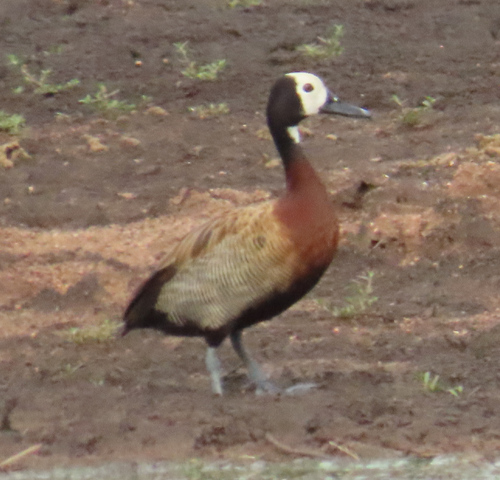 irerê
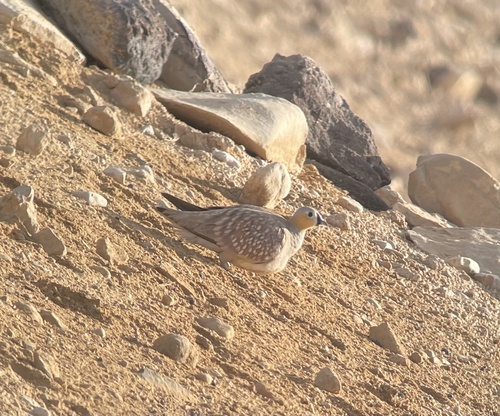 cortiçol-coroado
Em resumo
A marca de campo mais confiável para separar o irerê do cortiçol-coroado é o impressionante rosto branco e pescoço preto do pato, que nunca é exibido por cortiçóis de qualquer idade. Em voo, o cortiçol-coroado mostra penas de voo totalmente escuras contrastando com as asas superiores arenosas e as asas inferiores cremosas, enquanto as asas do irerê são escuras no geral, com menos contraste. A estrutura também é fundamental: o irerê tem um corpo muito mais pesado, com um pescoço e bico longos, enquanto o cortiçol-coroado é compacto, com pescoço curto e semelhante a uma pomba. Se você não tiver certeza, verifique o comportamento de agrupamento e o habitat—os irerês se reúnem em grandes grupos barulhentos em áreas úmidas, enquanto os cortiçóis são silenciosos, muitas vezes em pequenos grupos, e são estritamente aves do deserto.
Dicas de identificação
- Rosto branco e pescoço preto (todas as idades): Apenas o irerê mostra um rosto branco limpo e pescoço preto; o cortiçol-coroado nunca mostra isso, independentemente da idade ou sexo.
- Padrão da cabeça juvenil: Os irerês juvenis têm um rosto branco menos contrastante, mas ainda mostram um pouco de claro no rosto e um pescoço escuro; os cortiçóis juvenis nunca mostram branco no rosto ou pescoço.
- Asa superior em voo (todas as idades): O cortiçol-coroado tem penas de voo totalmente escuras que contrastam nitidamente com as coberturas superiores arenosas e as coberturas inferiores cremosas—procure por esse contraste em qualquer cortiçol em voo. Os irerês têm asas escuras no geral, com menos contraste entre as coberturas e as penas de voo.
- Estrutura do corpo: Os irerês têm pescoço longo, pernas longas e corpo pesado, com um bico cinza longo. Os cortiçóis são compactos, com pescoço curto, e têm um bico pequeno, semelhante a uma pomba.
- Formato do bico: O bico do pato é longo e cinza, adequado para mergulhar; os cortiçóis têm um bico curto e grosso para pegar sementes.
- Plumagem abaixo: Os irerês têm partes inferiores pretas com finas barras brancas nas flancos; os cortiçóis têm partes inferiores arenosas ou cremosas com vermiculações escuras (nunca barradas ou pretas).
- Máscara do macho cortiçol: O macho adulto do cortiçol-coroado tem uma máscara preta, mas esta não é tão extensa quanto o pescoço preto do pato e nunca é combinada com um rosto branco.
- Sexos: Ambos os sexos do irerê são semelhantes; nos cortiçóis, apenas os machos têm uma máscara preta, fêmeas e imaturos não a possuem, mas ainda nunca mostram branco no rosto.
- Comportamento de agrupamento: Os irerês estão frequentemente em grandes bandos barulhentos em áreas úmidas; os cortiçóis estão em pequenos grupos silenciosos nos desertos.
- Habitat: Área úmida = irerê; deserto pedregoso = cortiçol. Se você vê a ave na água, é um irerê.
- Postura de voo: Os irerês voam com o pescoço estendido; os cortiçóis voam com o pescoço retraído, parecendo compactos.
- Voz: Assobio alto de três notas = irerê. Silêncio ou chamadas suaves = cortiçol.
- Tamanho: O irerê é muito mais pesado e volumoso que o cortiçol; se vistos juntos, o pato irá ofuscar o cortiçol.
- Variação regional: Alguns irerês na África Ocidental têm mais preto no rosto, mas ainda mostram uma área branca; os cortiçóis nunca mostram qualquer branco.
- Armadilhas comuns: Irerês imaturos podem parecer com rostos apagados, mas sempre verifique se há algum claro no rosto e um pescoço escuro; os cortiçóis nunca mostram essa combinação.
Tamanho
O irerê é mais de duas vezes mais pesado que o cortiçol-coroado (674 g vs 300 g) [wikidata], e parece mais volumoso e com pescoço mais longo em campo. O cortiçol é menor no geral, com uma construção mais compacta, semelhante a uma pomba, e pescoço mais curto. Embora ambos possam parecer semelhantes em comprimento, a massa e as proporções do pato são notavelmente maiores, especialmente quando vistos lado a lado ou em bandos mistos.
Plumagem
- Contraste juvenil/imaturo: Os irerês juvenis se assemelham aos adultos, mas com um rosto branco e pescoço preto menos definidos, de modo que o contraste facial é reduzido, mas ainda presente. Os cortiçóis juvenis não têm branco no rosto ou pescoço; em vez disso, mostram tons arenosos com vermiculações escuras no peito e na barriga. Em voo, cortiçóis de todas as idades têm penas de voo totalmente escuras contrastando com as coberturas superiores arenosas e as coberturas inferiores cremosas—um padrão não mostrado pelos irerês.
- Contraste adulto: Os irerês adultos têm um rosto branco ousado, cabeça e pescoço pretos, base do pescoço castanha, costas e asas de marrom escuro a preto, e flancos finamente barrados. Os machos do cortiçol-coroado têm uma máscara preta, partes superiores arenosas, e partes inferiores uniformes arenosas ou cremosas com vermiculações escuras (fêmeas/imaturos não têm a máscara, mas compartilham o padrão vermiculado). Cortiçóis nunca mostram um rosto branco ou pescoço preto.
- Visões de voo: Cortiçóis mostram um forte contraste entre penas de voo escuras e asas superiores arenosas, enquanto irerês aparecem com asas escuras no geral, com menos contraste.
Comportamento
Os irerês são altamente gregários, frequentemente vistos em grandes bandos barulhentos (às vezes milhares) chegando a áreas úmidas ao amanhecer. Eles nadam e mergulham na água, e seu voo é direto, mas com o pescoço estendido. Os cortiçóis-coroado são mais frequentemente encontrados em pequenos grupos, voam rápido e baixo sobre terrenos desertos, e raramente, se é que nadam. Seu voo é rápido e direto, com batidas de asas rápidas e uma postura compacta, semelhante a uma pomba.
Habitat
Os irerês são especialistas em áreas úmidas, encontrados em lagos, pântanos e campos alagados na África subsaariana e na América do Sul. Eles nunca são encontrados em desertos verdadeiros. Os cortiçóis-coroado são estritamente aves de desertos áridos e pedregosos no Norte da África e no Oriente Médio, evitando áreas com muita vegetação ou água aberta. Se você vê a ave em uma área úmida, é quase certamente um irerê; em um deserto pedregoso e árido, será um cortiçol.
Voz
Os irerês são extremamente vocais, emitindo um chamado claro de assobio de três notas que se propaga por longas distâncias, especialmente em voo e em bandos. Os cortiçóis-coroado são muito mais silenciosos, sem menção de chamadas distintivas nas notas; eles não produzem chamados altos e assobiantes e são geralmente silenciosos ou emitem chamadas suaves e discretas.