

Motmot

シロガオリュウキュウガモ 対 ササフサケイ

Dendrocygna viduata 対 Pterocles coronatus

シロガオリュウキュウガモとササフサケイのクイズ
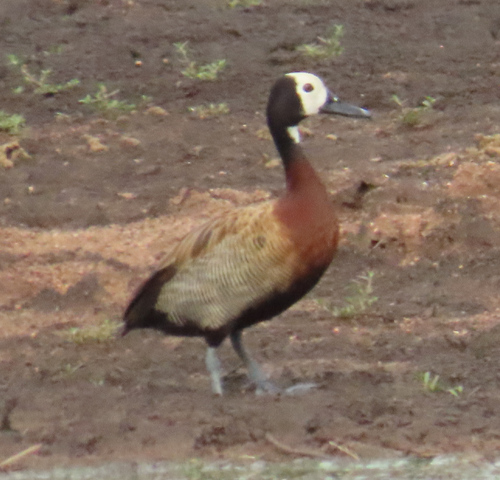
シロガオリュウキュウガモ (Dendrocygna viduata) シロガオリュウキュウガモ
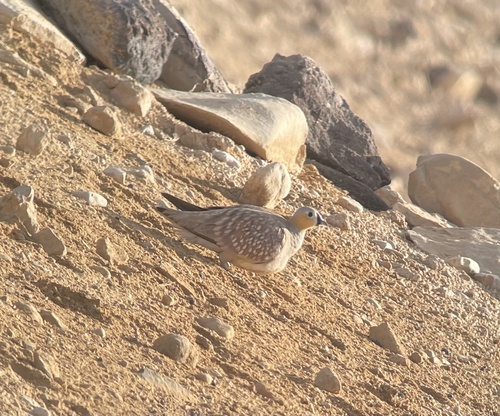
ササフサケイ (Pterocles coronatus) ササフサケイ

メディア

読み込み中…

要点

シロガオリュウキュウガモとササフサケイを区別する最も信頼できるフィールドマークは、カモの目を引く白い顔と黒い首であり、これはどの年齢のササフサケイにも見られません。飛行中、ササフサケイは砂色の上翼とクリーム色の下翼と対照的な完全に暗い飛行羽を示し、一方でシロガオリュウキュウガモの翼は全体的に暗く、対照が少ないです。構造も重要です:シロガオリュウキュウガモは体がずっと重く、長い首とくちばしを持ち、ササフサケイはコンパクトで短い首を持ち、ハトのようです。もし不明な場合は、群れ行動と生息地を確認してください—シロガオリュウキュウガモは湿地で大きく騒がしい群れを作り、ササフサケイは静かで、小さな群れで、厳密に砂漠の鳥です。

識別のコツ

  1. 白い顔と黒い首(全ての年齢): シロガオリュウキュウガモだけが清潔な白い顔と黒い首を示し、ササフサケイは年齢や性別に関係なくこれを示しません。
  2. 幼鳥の頭の模様: 幼鳥のシロガオリュウキュウガモは鈍い、対照の少ない白い顔を持ちますが、顔にはいくらかの淡い部分と黒い首を示します;幼鳥のササフサケイは顔や首に白を示しません。
  3. 飛行中の上翼(全ての年齢): ササフサケイは砂色の上翼カバーとクリーム色の下翼カバーと対照的な完全に暗い飛行羽を持ちます—飛んでいるササフサケイでこの対照を探してください。シロガオリュウキュウガモは全体的に暗い翼を持ち、カバーと飛行羽の間の対照は少ないです。
  4. 体の構造: シロガオリュウキュウガモは長い首、長い脚、重い体を持ち、長い灰色のくちばしを持ちます。ササフサケイはコンパクトで短い首を持ち、小さくハトのようなくちばしを持ちます。
  5. くちばしの形: カモのくちばしは長く灰色で、ダブリングに適しています;ササフサケイは種をつまむための短くて太いくちばしを持ちます。
  6. 下の羽毛: シロガオリュウキュウガモは脇腹に細かい白い縞模様のある黒い下部を持ち、ササフサケイは暗い螺旋模様のある砂色またはクリーム色の下部を持ちます(決して縞模様や黒ではありません)。
  7. オスのササフサケイのマスク: 成熟したオスのササフサケイは黒いマスクを持ちますが、これはカモの黒い首ほど広範ではなく、白い顔と組み合わされることはありません。
  8. 性別: 両方のシロガオリュウキュウガモの性別は似ています;ササフサケイでは、オスだけが黒いマスクを持ち、メスと幼鳥はそれを持たず、顔に白を示すことはありません。
  9. 群れ行動: シロガオリュウキュウガモは湿地で大きく騒がしい群れにいることが多い;ササフサケイは砂漠で小さく静かな群れにいます。
  10. 生息地: 湿地 = シロガオリュウキュウガモ;石の砂漠 = ササフサケイ。水の上で鳥を見たら、それはシロガオリュウキュウガモです。
  11. 飛行姿勢: シロガオリュウキュウガモは首を伸ばして飛び、ササフサケイは首を引っ込めて飛び、コンパクトに見えます。
  12. 声: 大きな三音の口笛 = シロガオリュウキュウガモ。沈黙または静かな呼び声 = ササフサケイ。
  13. サイズ: シロガオリュウキュウガモはササフサケイよりもずっと重く、体格が大きいです;一緒に見た場合、カモはササフサケイを圧倒します。
  14. 地域的な変異: 西アフリカの一部のシロガオリュウキュウガモは顔にもっと黒があるが、依然として白い部分を示します;ササフサケイは決して白を示しません。
  15. 一般的な落とし穴: 幼鳥のシロガオリュウキュウガモは鈍い顔に見えることがありますが、常に顔にいくらかの淡い部分と黒い首を確認してください;ササフサケイはこの組み合わせを決して示しません。

大きさ

シロガオリュウキュウガモはササフサケイの2倍以上の重さがあります(674 g 対 300 g)[wikidata]、そしてフィールドではずっと体格が大きく、首が長く見えます。ササフサケイは全体的に小さく、よりコンパクトでハトのような体型と短い首を持っています。両者は長さが似ているように見えることがありますが、カモの質量と比率は明らかに大きく、特に並んで見たり混合した群れで見たりすると顕著です。

羽色

行動

シロガオリュウキュウガモは非常に群れを成す性質があり、夜明けに湿地に到着する大きく騒がしい群れ(時には数千羽)で見られることが多いです。彼らは水の上で泳ぎ、ダブリングを行い、飛行は直接的ですが首を伸ばしています。ササフサケイはより小さな群れでいることが多く、砂漠の地形の上を速く低く飛び、泳ぐことはほとんどありません。彼らの飛行は迅速で直接的で、急速な羽ばたきとコンパクトなハトのような姿勢を持っています。

生息環境

シロガオリュウキュウガモは湿地の専門家であり、サハラ以南のアフリカと南アメリカの湖、湿地、洪水の田んぼで見られます。彼らは真の砂漠では決して見られません。ササフサケイは北アフリカと中東の乾燥した石の砂漠の鳥であり、植生や開水域の多い地域を避けます。湿地で鳥を見たら、それはほぼ確実にシロガオリュウキュウガモであり、荒れた石の砂漠ではササフサケイです。

声

シロガオリュウキュウガモは非常に声が大きく、特に飛行中や群れの中で長距離にわたって響く明確な三音の口笛を発します。ササフサケイはずっと静かで、メモの中に特有の呼び声の言及はありません;彼らは大きな口笛の呼び声を出さず、一般的に静かで、柔らかく目立たない呼び声を出します。

より良い説明を送る

比較と同じ項目を使ってください。文章はすぐに公開されます。

The most reliable field mark to separate White-faced Whistling-Duck from Crowned Sandgrouse is the duck’s striking white face and black neck, which are never shown by sandgrouse of any age. In flight, the sandgrouse shows wholly dark flight feathers contrasting with sandy upperwings and creamy underwings, while the whistling-duck’s wings are dark overall with less contrast. Structure is also key: the whistling-duck is much heavier-bodied with a long neck and bill, while the sandgrouse is compact, short-necked, and pigeon-like. If you’re unsure, check for flocking behavior and habitat—whistling-ducks gather in large, noisy groups at wetlands, while sandgrouse are quiet, often in small groups, and strictly desert birds.

  1. White face and black neck (all ages): Only White-faced Whistling-Duck shows a clean white face and black neck; Crowned Sandgrouse never shows this, regardless of age or sex.
  2. Juvenile head pattern: Juvenile whistling-ducks have a duller, less contrasting white face, but still show some pale on the face and a dark neck; juvenile sandgrouse never show white on the face or neck.
  3. Upperwing in flight (all ages): Crowned Sandgrouse has wholly dark flight feathers sharply contrasting with sandy upperwing coverts and creamy underwing coverts—look for this contrast in any flying sandgrouse. Whistling-ducks have dark wings overall with less contrast between coverts and flight feathers.
  4. Body structure: Whistling-ducks are long-necked, long-legged, and heavy-bodied, with a long grey bill. Sandgrouse are compact, short-necked, and have a small, pigeon-like bill.
  5. Bill shape: The duck’s bill is long and grey, suited for dabbling; sandgrouse have a short, stubby bill for picking seeds.
  6. Plumage below: Whistling-ducks have black underparts with fine white barring on the flanks; sandgrouse have sandy or creamy underparts with dark vermiculations (never barred or black).
  7. Male sandgrouse mask: Adult male Crowned Sandgrouse has a black mask, but this is not as extensive as the duck’s black neck and is never combined with a white face.
  8. Sexes: Both whistling-duck sexes look alike; in sandgrouse, only males have a black mask, females and immatures lack it but still never show white on the face.
  9. Flocking behavior: Whistling-ducks are often in large, noisy flocks at wetlands; sandgrouse are in small, quiet groups in deserts.
  10. Habitat: Wetland = whistling-duck; stony desert = sandgrouse. If you see the bird on water, it is a whistling-duck.
  11. Flight posture: Whistling-ducks fly with neck outstretched; sandgrouse fly with neck retracted, appearing compact.
  12. Voice: Loud, three-note whistle = whistling-duck. Silence or soft calls = sandgrouse.
  13. Size: Whistling-duck is much heavier and bulkier than sandgrouse; if seen together, the duck will dwarf the sandgrouse.
  14. Regional variation: Some whistling-ducks in West Africa have more black on the face, but still show a white area; sandgrouse never shows any white.
  15. Common pitfalls: Immature whistling-ducks may look dull-faced, but always check for some pale on the face and a dark neck; sandgrouse never shows this combination.

White-faced Whistling-Duck is more than twice as heavy as Crowned Sandgrouse (674 g vs 300 g) [wikidata], and appears bulkier and longer-necked in the field. The sandgrouse is smaller overall, with a more compact, pigeon-like build and shorter neck. While both can seem similar in length, the duck’s mass and proportions are noticeably greater, especially when seen side by side or in mixed flocks.

  • Juvenile/immature contrast: Juvenile White-faced Whistling-Ducks resemble adults but with a less sharply defined white face and black neck, so the facial contrast is reduced but still present. Juvenile Crowned Sandgrouse lack any white on the face or neck; instead, they show sandy tones with dark vermiculations across the breast and belly. In flight, sandgrouse of all ages have wholly dark flight feathers contrasting with sandy upperwing coverts and creamy underwing coverts—a pattern not shown by whistling-ducks.
  • Adult contrast: Adult White-faced Whistling-Ducks have a bold white face, black head and neck, chestnut neck base, dark brown to black back and wings, and finely barred flanks. Crowned Sandgrouse males have a black mask, sandy upperparts, and uniform sandy or creamy underparts with dark vermiculations (females/immatures lack the mask but share the vermiculated pattern). Sandgrouse never show a white face or black neck.
  • Flight views: Sandgrouse show a strong contrast between dark flight feathers and sandy upperwings, while whistling-ducks appear dark-winged overall with less contrast.

White-faced Whistling-Ducks are highly gregarious, often seen in large, noisy flocks (sometimes thousands) arriving at wetlands at dawn. They swim and dabble on water, and their flight is direct but with neck outstretched. Crowned Sandgrouse are more often in small groups, fly fast and low over desert terrain, and rarely if ever swim. Their flight is swift and direct, with rapid wingbeats and a compact, pigeon-like posture.

White-faced Whistling-Ducks are wetland specialists, found at lakes, marshes, and flooded fields in sub-Saharan Africa and South America. They are never found in true desert. Crowned Sandgrouse are strictly birds of arid, stony deserts in North Africa and the Middle East, avoiding areas with much vegetation or open water. If you see the bird at a wetland, it is almost certainly a whistling-duck; in a barren, stony desert, it will be a sandgrouse.

White-faced Whistling-Ducks are extremely vocal, giving a clear, three-note whistling call that carries over long distances, especially in flight and in flocks. Crowned Sandgrouse are much quieter, with no mention of distinctive calls in the notes; they do not produce loud, whistling calls and are generally silent or give soft, unobtrusive calls.

変更を破棄しますか?

保存していない編集があります。今離れると失われます。

シロガオリュウキュウガモ · ササフサケイ · 苦手な鳥