

cartaxo-nortenho vs chasco-cinzento
Saxicola rubetra versus Oenanthe oenanthe
Jogue um quiz com cartaxo-nortenho e chasco-cinzento
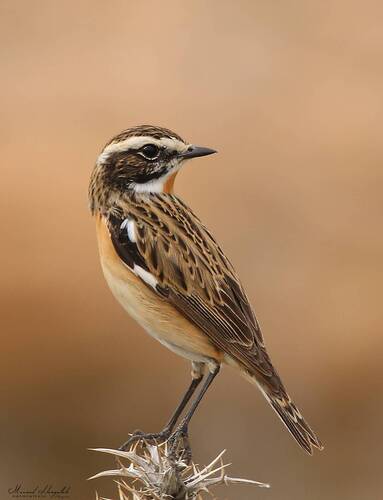 cartaxo-nortenho
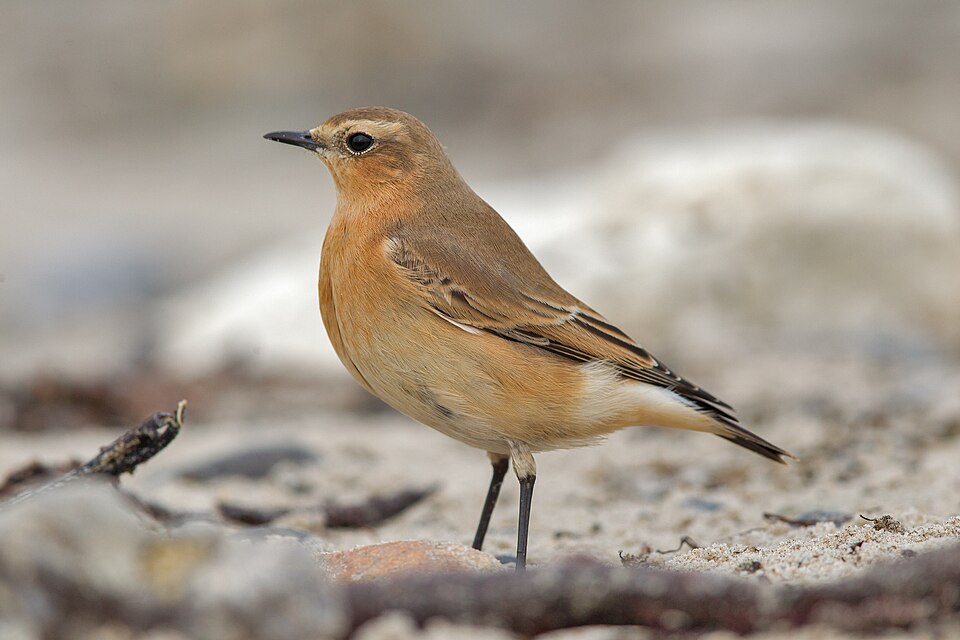 chasco-cinzento
Em resumo
A marca de campo mais confiável para separar o cartaxo-nortenho do chasco-cinzento em qualquer plumagem é o supercílio (faixa acima dos olhos): o cartaxo-nortenho sempre apresenta um supercílio pálido forte, enquanto o rosto do chasco-cinzento é simples ou mascarado, mas carece dessa característica. Em voo, ambas as espécies mostram branco na cauda, mas o chasco-cinzento tem um rabo e cauda brancos ousados com uma ponta preta em forma de 'T', enquanto a cauda do cartaxo-nortenho é mais escura, com branco apenas nas bases das penas externas. O cartaxo-nortenho é mais esguio, com pontas de asas mais longas e uma postura mais ereta, enquanto o chasco-cinzento é maior e mais robusto. Fêmeas e imaturos de cartaxo-nortenho podem ser confundidos com fêmeas de chasco-cinzento, mas o supercílio e a aparência geral mais clara e manchada do cartaxo-nortenho são fundamentais. Ambas as espécies movem suas caudas, mas o rabo branco do chasco-cinzento é muito mais proeminente quando o faz.
Dicas de identificação
- Supercílio (faixa acima dos olhos): O cartaxo-nortenho sempre apresenta um supercílio pálido forte, mesmo em juvenis e fêmeas; o chasco-cinzento carece disso, tendo um rosto simples ou mascarado. Esta é a marca de campo mais confiável em todas as idades.
- Padrão da cauda em voo: O chasco-cinzento mostra um rabo e cauda brancos com um ousado 'T' preto invertido na ponta (faixa terminal preta e eixo central); a cauda do cartaxo-nortenho é escura, com apenas as bases das penas externas brancas, e o rabo é manchado de marrom, não branco. Isso é melhor visto quando o pássaro move sua cauda ou voa.
- Cor do rabo: O rabo do cartaxo-nortenho é marrom e manchado como as costas; o do chasco-cinzento é sempre branco e se destaca em voo ou quando a cauda é movida.
- Manchas nas asas: O macho adulto do cartaxo-nortenho tem pequenas manchas brancas nas asas maiores e medianas internas, visíveis quando empoleirado ou movendo as asas; o chasco-cinzento nunca mostra isso.
- Constituição geral: O cartaxo-nortenho é mais esguio, mais ereto e menos 'gordo' do que o chasco-cinzento, com pontas de asas mais longas em relação ao tamanho do corpo. O chasco-cinzento é mais robusto e volumoso.
- Cor do peito e do abdômen: O cartaxo-nortenho tem um abdômen pálido, de cor bege a esbranquiçada e, nos machos, uma garganta e peito laranja-brilhante; o chasco-cinzento é bege por baixo, mas a cor é menos rica e mais uniforme, especialmente nas fêmeas.
- Partes superiores: O cartaxo-nortenho é marronzinho e fortemente manchado por cima; o chasco-cinzento é cinza simples (macho) ou marrom claro (fêmea) por cima, com menos manchas.
- Máscara facial: O macho do cartaxo-nortenho em plumagem de reprodução tem uma máscara facial escura quase cercada por branco; o macho do chasco-cinzento tem uma máscara facial preta, mas sem o forte supercílio branco e faixa malar.
- Cor das asas: O chasco-cinzento tem asas pretas em todas as plumagens; as asas do cartaxo-nortenho são marronzadas, com possíveis manchas brancas nos machos.
- Comportamento de empoleiramento: O cartaxo-nortenho prefere se empoleirar em arbustos ou ervas altas; o chasco-cinzento é frequentemente visto em rochas ou no chão.
- Habitat: O cartaxo-nortenho é mais provável de ser encontrado em campos gramados e arbustivos; o chasco-cinzento em solo aberto, rochoso ou nu.
- Tamanho: O chasco-cinzento é maior e mais volumoso; o cartaxo-nortenho é menor e mais esguio, mas o tamanho pode ser difícil de julgar sem comparação direta.
- Movimento da cauda: Ambas as espécies movem suas caudas, mas o rabo branco e o padrão da cauda do chasco-cinzento são muito mais óbvios.
- Confusão sazonal: Fêmeas e imaturos de cartaxo-nortenho são mais propensos a serem confundidos com fêmeas de chasco-cinzento no outono; sempre verifique o supercílio e a cor do rabo.
- Branco na asa: Apenas o cartaxo-nortenho (principalmente machos) mostra manchas brancas nas asas; o chasco-cinzento nunca mostra isso.
Tamanho
O chasco-cinzento é visivelmente maior, medindo 14,5–16 cm de comprimento e pesando 17–30 g [wikipedia], em comparação com os 12–14 cm e 13–26 g do cartaxo-nortenho [wikipedia]. O chasco-cinzento também tem uma envergadura proporcionalmente maior (26–32 cm) e uma constituição mais robusta e menos delicada. O cartaxo-nortenho parece mais esguio e menos 'gordo', com uma projeção primária mais longa em relação ao tamanho do corpo, refletindo sua estratégia de migração de longa distância.
Plumagem
- Juvenil/imaturo e fêmeas: O cartaxo-nortenho e o chasco-cinzento podem parecer semelhantes em plumagens apagadas, mas o cartaxo-nortenho sempre apresenta um supercílio pálido forte (sobrancelha), mesmo em imaturos e fêmeas, enquanto o chasco-cinzento carece disso e tem um rosto simples ou mascarado. As partes superiores do cartaxo-nortenho são marronzadas e fortemente manchadas, com um rabo igualmente manchado, enquanto as partes superiores do chasco-cinzento são marrons ou cinzas mais simples, e o rabo é sempre striking white.
- Padrão da cauda em voo: O chasco-cinzento de todas as idades mostra um rabo e cauda brancos com um ousado 'T' preto invertido na ponta (faixa terminal preta e eixo central), enquanto a cauda do cartaxo-nortenho é escura, com apenas as bases das penas externas brancas—nunca um rabo ou 'T' totalmente brancos.
- Machos adultos (reprodução): Os machos do cartaxo-nortenho têm uma máscara facial escura quase cercada por um forte supercílio branco e faixa malar, garganta e peito laranja-bege, e pequenas manchas brancas nas asas. Os machos do chasco-cinzento têm partes superiores cinzas, uma máscara facial preta, asas pretas, garganta bege e rabo/cauda brancos.
- Fêmeas e aves não reprodutoras: As fêmeas do cartaxo-nortenho são mais apagadas, mas ainda mostram o supercílio e as partes superiores manchadas; as fêmeas do chasco-cinzento são marrons claras por cima e bege por baixo, com rostos simples e rabos brancos.
- Manchas nas asas: Machos do cartaxo-nortenho (o ano todo) e algumas fêmeas mostram pequenas manchas brancas nas asas; o chasco-cinzento nunca mostra isso.
Comportamento
Ambas as espécies se empoleiram eretas em postes ou arbustos expostos e atacam o chão em busca de insetos, mas o cartaxo-nortenho é mais propenso a ser visto movendo tanto a cauda quanto as asas, muitas vezes para exibir sua cauda branca e flashes de asas. O chasco-cinzento é mais terrestre, frequentemente visto correndo em solo aberto ou rochas, e seu movimento da cauda exibe o striking white rabo e padrão da cauda. O cartaxo-nortenho tende a se mover com pequenos saltos rápidos e é mais propenso a se empoleirar por longos períodos em vegetação baixa.
Habitat
O cartaxo-nortenho prefere campos de grama áspera, prados e áreas com arbustos dispersos ou poleiros baixos, frequentemente em áreas montanhosas ou menos intensamente cultivadas. O chasco-cinzento favorece solo aberto e pedregoso, encostas rochosas e terra nua, incluindo promontórios costeiros, pedreiras e até mesmo entulho urbano. A sobreposição pode ocorrer durante a migração, mas o cartaxo-nortenho está mais intimamente ligado a habitats gramados e arbustivos, enquanto o chasco-cinzento é um pássaro clássico de terrenos abertos e rochosos.
Voz
A canção do chasco-cinzento é uma série de notas assobiantes e estaladas, e seu chamado é um 'chack' ou 'chat' agudo, com um chamado de voo distinto. As vocalizações do cartaxo-nortenho não são descritas em detalhes nestas notas, mas ambas as espécies têm chamados típicos semelhantes a chats. A voz não é o separador mais confiável, a menos que a canção seja ouvida claramente.