

Stiaccino vs Culbianco
Saxicola rubetra contro Oenanthe oenanthe
Fai un quiz con Stiaccino e Culbianco
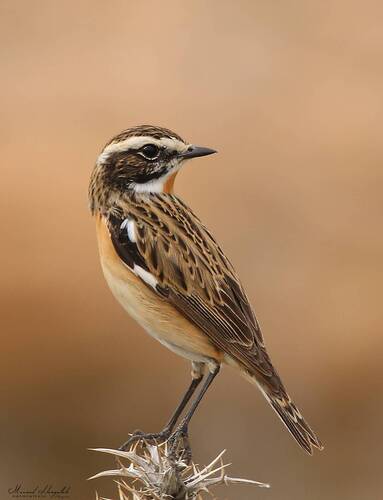 Stiaccino
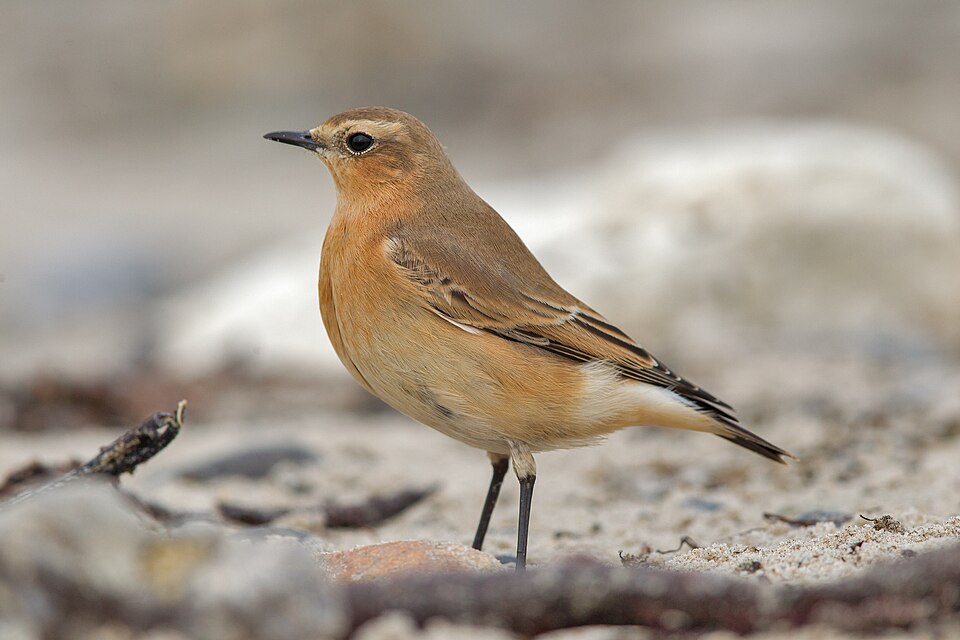 Culbianco
In breve
Il segno di campo più affidabile per separare lo Stiaccino dal Culbianco in qualsiasi piumaggio è il supercilium (striscia sopra l'occhio): lo Stiaccino mostra sempre un forte supercilium chiaro, mentre il volto del Culbianco è semplice o mascherato ma privo di questa caratteristica. In volo, entrambe le specie mostrano bianco nella coda, ma il Culbianco ha un forte sottocoda e coda bianchi con una punta nera a forma di 'T', mentre la coda dello Stiaccino è più scura con bianco solo alla base delle piume esterne. Lo Stiaccino è più snello, con punte delle ali più lunghe e una postura più eretta, mentre il Culbianco è più grande e massiccio. Le femmine e gli immaturi di Stiaccino possono essere confusi con le femmine di Culbianco, ma il supercilium e l'aspetto complessivo più chiaro e maculato dello Stiaccino sono fondamentali. Entrambe le specie muovono le loro code, ma il sottocoda bianco del Culbianco è molto più evidente quando lo fa.
Consigli di identificazione
- Supercilium (striscia sopra l'occhio): Lo Stiaccino mostra sempre un forte supercilium chiaro, anche nei giovani e nelle femmine; il Culbianco non ha questo, avendo un volto semplice o mascherato. Questo è il segno di campo più affidabile in tutte le età.
- Schema della coda in volo: Il Culbianco mostra un sottocoda e una coda bianchi con una forte 'T' nera rovesciata alla punta (banda terminale nera e asta centrale); la coda dello Stiaccino è scura con solo le basi delle piume esterne bianche, e il sottocoda è marrone maculato, non bianco. Questo è meglio visibile quando l'uccello muove la coda o vola.
- Colore del sottocoda: Il sottocoda dello Stiaccino è marrone e maculato come la schiena; quello del Culbianco è sempre bianco e si distingue in volo o quando la coda viene mossa.
- Macchie sulle ali: Il maschio adulto di Stiaccino ha piccole macchie bianche sulle copritrici maggiori e mediane interne, visibili quando è posato o muove le ali; il Culbianco non mostra mai queste.
- Costruzione generale: Lo Stiaccino è più snello, più eretto e meno 'massiccio' rispetto al Culbianco, con punte delle ali più lunghe rispetto alla dimensione del corpo. Il Culbianco è più massiccio e robusto.
- Colore del petto e dell'addome: Lo Stiaccino ha un ventre chiaro color buff o bianco e, nei maschi, una gola e un petto arancio-buff brillanti; il Culbianco è color buff sotto, ma il colore è meno ricco e più uniforme, specialmente nelle femmine.
- Parte superiore: Lo Stiaccino è marrone e fortemente maculato sopra; il Culbianco è grigio semplice (maschio) o marrone chiaro (femmina) sopra, con meno maculature.
- Maschera facciale: Il maschio di Stiaccino in piumaggio nuziale ha una maschera facciale nera quasi circondata di bianco; il maschio di Culbianco ha una maschera facciale nera ma senza il forte supercilium bianco e la striscia malare.
- Colore delle ali: Il Culbianco ha ali nere in tutti i piumaggi; le ali dello Stiaccino sono marroni con possibili macchie bianche nei maschi.
- Comportamento di posarsi: Lo Stiaccino preferisce posarsi su arbusti o erbacce alte; il Culbianco è spesso visto su rocce o a terra.
- Habitat: Lo Stiaccino è più probabile trovarlo in campi erbosi e cespugliosi; il Culbianco in terreni aperti, rocciosi o nudi.
- Dimensione: Il Culbianco è più grande e massiccio; lo Stiaccino è più piccolo e snello, ma la dimensione può essere difficile da giudicare senza un confronto diretto.
- Movimento della coda: Entrambe le specie muovono le loro code, ma il sottocoda bianco del Culbianco e il suo schema di coda sono molto più evidenti.
- Confusione stagionale: Le femmine e gli immaturi di Stiaccino sono più probabilmente confusi con le femmine di Culbianco in autunno; controlla sempre il supercilium e il colore del sottocoda.
- Bianco nelle ali: Solo lo Stiaccino (principalmente maschi) mostra macchie bianche sulle ali; il Culbianco non lo fa mai.
Taglia
Il Culbianco è notevolmente più grande, misurando 14.5–16 cm di lunghezza e pesando 17–30 g [wikipedia], rispetto ai 12–14 cm e 13–26 g dello Stiaccino [wikipedia]. Il Culbianco ha anche un'apertura alare proporzionalmente più lunga (26–32 cm) e una costruzione più massiccia e meno delicata. Lo Stiaccino appare più snello e meno 'massiccio', con una proiezione primaria più lunga rispetto alla dimensione del corpo, riflettendo la sua strategia di migrazione a lungo raggio.
Piumaggio
- Uccelli giovani/immaturi e femmine: Lo Stiaccino e il Culbianco possono sembrare simili in piumaggi opachi, ma lo Stiaccino mostra sempre un forte supercilium chiaro (sopra l'occhio), anche negli immaturi e nelle femmine, mentre il Culbianco non ha questo e ha un volto semplice o mascherato. Le parti superiori dello Stiaccino sono marroni e fortemente maculate, con un sottocoda simile, mentre le parti superiori del Culbianco sono marroni o grigie più semplici, e il sottocoda è sempre sorprendentemente bianco.
- Schema della coda in volo: Il Culbianco di tutte le età mostra un sottocoda e una coda bianchi con una forte 'T' nera rovesciata alla punta (banda terminale nera e asta centrale), mentre la coda dello Stiaccino è scura con solo le basi delle piume esterne bianche—mai un sottocoda bianco completo o una 'T'.
- Maschi adulti (riproduzione): I maschi di Stiaccino hanno una maschera facciale nera quasi circondata da un forte supercilium bianco e una striscia malare, gola e petto arancio-buff, e piccole macchie bianche sulle ali. I maschi di Culbianco hanno parti superiori grigie, una maschera facciale nera, ali nere, gola buff e sottocoda/coda bianchi.
- Femmine e uccelli non in riproduzione: Le femmine di Stiaccino sono più opache ma mostrano ancora il supercilium e le parti superiori maculate; le femmine di Culbianco sono marrone chiaro sopra e buff sotto, con volti semplici e sottocoda bianchi.
- Macchie sulle ali: I maschi di Stiaccino (tutto l'anno) e alcune femmine mostrano piccole macchie bianche sulle ali; il Culbianco non mostra mai queste.
Comportamento
Entrambe le specie si posano erette su pali esposti o arbusti e si lanciano a terra per cercare insetti, ma lo Stiaccino è più probabile essere visto muovere sia la coda che le ali, spesso per mostrare la sua coda bianca e i lampi delle ali. Il Culbianco è più terrestre, spesso visto correre su terreni aperti o rocce, e il suo movimento della coda mette in mostra il sorprendente sottocoda bianco e il suo schema di coda. Lo Stiaccino tende a muoversi con piccoli salti rapidi ed è più probabile posarsi per periodi prolungati su vegetazione bassa.
Habitat
Lo Stiaccino preferisce terreni erbosi, prati e aree con cespugli sparsi o posatoi bassi, spesso in aree montane o meno intensamente coltivate. Il Culbianco favorisce terreni aperti e rocciosi, pendii rocciosi e terra nuda, comprese le scogliere costiere, le cave e persino i detriti urbani. Può verificarsi sovrapposizione durante la migrazione, ma lo Stiaccino è più legato a habitat erbosi e cespugliosi, mentre il Culbianco è un uccello classico di terreni aperti e rocciosi.
Voce
Il canto del Culbianco è una serie di note fischianti e crepitanti, e il suo richiamo è un acuto 'chack' o 'chat', con un richiamo di volo distintivo. Le vocalizzazioni dello Stiaccino non sono descritte in dettaglio in queste note, ma entrambe le specie hanno richiami tipici simili a quelli degli uccelli. La voce non è il separatore più affidabile a meno che il canto non venga sentito bene.