

toutinegra-de-bigodes-ocidental vs felosa-do-mato
Curruca iberiae versus Curruca undata
Jogue um quiz com toutinegra-de-bigodes-ocidental e felosa-do-mato
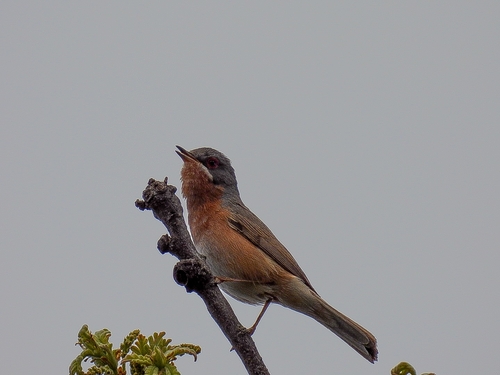 toutinegra-de-bigodes-ocidental
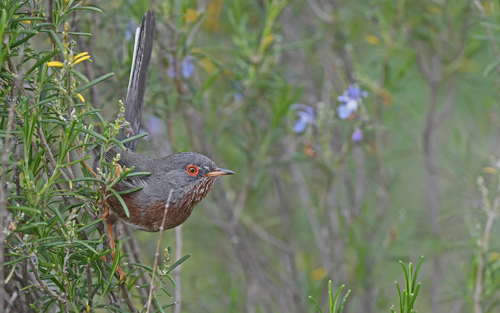 felosa-do-mato
Em resumo
A marca de campo mais confiável para separar a toutinegra-de-bigodes-ocidental da felosa-do-mato é a presença de faixas malar brancas ('bigodes') no macho da Subalpine, que estão ausentes na Dartford. A felosa-do-mato é estruturalmente distinta, com uma cauda notavelmente mais longa e fina e um bico mais esguio e pontudo, enquanto a toutinegra-de-bigodes-ocidental parece mais compacta. Machos de ambas as espécies apresentam partes inferiores avermelhadas, mas os machos da toutinegra-de-bigodes-ocidental têm partes inferiores vermelho-tijolo com uma clara faixa malar branca, enquanto os machos da felosa-do-mato são de um marrom-avermelhado mais opaco, com uma mancha suja branca na barriga e garganta manchada de branco. Fêmeas e imaturos são mais complicados, mas a felosa-do-mato sempre apresenta uma cauda mais longa e um olho vermelho, enquanto as fêmeas da toutinegra têm um tom rosa nas partes inferiores e não possuem o olho vermelho. Ambas as espécies se sobrepõem no sul da Europa e no noroeste da África, mas a felosa-do-mato está mais ligada a áreas de urze e arbustos.
Dicas de identificação
- Faixa malar branca (apenas macho da Subalpine): Procure uma 'bigode' branca ousada no rosto do macho adulto da toutinegra-de-bigodes-ocidental. A felosa-do-mato nunca apresenta essa característica; sua garganta é avermelhada com manchas brancas.
- Comprimento e forma da cauda: A felosa-do-mato tem uma cauda distintamente longa e fina, frequentemente mantida erguida ou balançando. A cauda da toutinegra-de-bigodes-ocidental é mais curta e menos proeminente; isso é especialmente útil quando os pássaros estão empoleirados ou em voo.
- Cor dos olhos: A felosa-do-mato (todas as idades/sexos) tem um olho vermelho e um anel ocular vermelho, uma característica que nunca é mostrada pela toutinegra-de-bigodes-ocidental.
- Cor das partes inferiores (machos): Machos da toutinegra têm partes inferiores vermelho-tijolo, enquanto machos da felosa-do-mato são de um marrom-avermelhado mais opaco com uma mancha suja branca na barriga.
- Padrão da garganta: A felosa-do-mato tem uma garganta avermelhada com manchas brancas (mais óbvias nos machos), enquanto os machos da toutinegra-de-bigodes-ocidental têm uma garganta vermelho-tijolo simples com uma faixa malar branca; as fêmeas de ambas são mais simples, mas as fêmeas da felosa-do-mato ainda mostram algumas manchas brancas na garganta.
- Partes inferiores de fêmeas/imaturos: As fêmeas da toutinegra são esbranquiçadas nas partes inferiores com um tom rosa, enquanto as fêmeas da felosa-do-mato são mais pálidas e menos coloridas, sem o tom rosado.
- Partes superiores: Machos da toutinegra são cinza limpo acima; machos da felosa-do-mato são cinza-marrom ou marrom-acinzentado. Fêmeas de ambas são mais marrons, mas a felosa-do-mato é sempre mais opaca e mais suave.
- Forma do bico: A felosa-do-mato tem um bico mais longo, mais fino e mais pontudo, refletindo seus hábitos insetívoros em áreas de urze; o bico da toutinegra é mais curto e menos fino.
- Jizz: A felosa-do-mato frequentemente parece alongada devido à sua cauda longa e corpo esguio, especialmente quando empoleirada ereta em tojos ou urzes. A toutinegra-de-bigodes-ocidental é mais compacta e menos propensa a exibir sua cauda de forma tão proeminente.
- Contexto do habitat: Em áreas abertas de urze com tojos ou urzes, a felosa-do-mato é mais provável; em arbustos densos mediterrânicos ou maquis, a toutinegra é favorecida. Use o habitat como uma pista de apoio, não como um separador primário.
- Canto: Se ouvido, o canto rápido e ruidoso da toutinegra é semelhante ao do papa-amoras-cinzento, mas isso não é diagnóstico sem mais detalhes sobre o canto da felosa-do-mato.
- Dimorfismo sexual: Ambas as espécies mostram diferenças entre machos e fêmeas, mas a faixa malar branca nos machos da toutinegra e o olho vermelho na felosa-do-mato de ambos os sexos são fundamentais.
- Pássaros juvenis/imaturos: Ambos são semelhantes às fêmeas, mas a longa cauda e o olho vermelho da felosa-do-mato permanecem úteis. Nenhum padrão distinto de asa superior é descrito para qualquer uma das espécies em jovens pássaros.
- Armadilhas: Cuidado com machos da toutinegra-de-bigodes-ocidental em plumagem desgastada, que podem parecer menos coloridos; verifique a faixa malar branca e a estrutura geral. Felosas-do-mato em luz forte podem parecer mais cinzentas, mas a cauda e o olho permanecem confiáveis.
- Contexto sazonal: A felosa-do-mato é residente em grande parte de sua área; a toutinegra é uma migrante, então o tempo pode ajudar em algumas regiões, mas não é diagnóstico por si só.
Tamanho
Ambas as espécies são pequenas, mas a felosa-do-mato é ligeiramente maior e mais alongada em aparência, principalmente devido à sua cauda proporcionalmente mais longa e fina. A toutinegra-de-bigodes-ocidental é mais compacta no geral. Nenhum valor preciso de comprimento ou massa é dado nas notas, mas a cauda da felosa-do-mato é uma clara diferença estrutural em campo.
Plumagem
Não há padrões distintos de asa superior juvenil ou de primeiro inverno descritos para qualquer uma das espécies, então a separação depende da plumagem geral e do padrão da cabeça.
-
Machos adultos: Machos da toutinegra-de-bigodes-ocidental têm costas e cabeça cinzas limpas, partes inferiores vermelho-tijolo e uma impressionante faixa malar branca. Machos da felosa-do-mato são cinza-marrom acima, marrom-avermelhado opaco abaixo com uma mancha suja branca na barriga, e têm uma garganta avermelhada com manchas brancas e um olho vermelho.
-
Fêmeas e imaturos: Fêmeas da toutinegra são marrons acima com uma cabeça mais cinza, esbranquiçadas abaixo com um tom rosa, e não possuem o olho vermelho. Fêmeas da felosa-do-mato são mais marrons-cinzentas acima, mais pálidas abaixo (especialmente na garganta), e têm manchas brancas menores na garganta; juvenis assemelham-se às fêmeas. As partes inferiores da felosa-do-mato são menos vívidas, e as manchas brancas na garganta são uma característica sutil, mas consistente.
-
Características compartilhadas: Ambas têm algum grau de partes inferiores avermelhadas e dimorfismo sexual, mas apenas os machos da toutinegra têm a faixa malar branca ousada. A felosa-do-mato sempre tem um olho vermelho, que a toutinegra não possui.
Comportamento
A felosa-do-mato é mais provável de ser vista voando baixo sobre a urze ou empoleirada no topo de tojos ou urzes, frequentemente com sua cauda longa erguida ou balançando. A toutinegra-de-bigodes-ocidental é mais provável de ser vista em arbustos mediterrânicos, movendo-se rapidamente e menos propensa a exibir sua cauda de forma tão proeminente. Ambas são ativas e furtivas, mas a cauda e o jizz da felosa-do-mato são distintos em campo.
Habitat
A toutinegra-de-bigodes-ocidental se reproduz no extremo sul da Europa e no noroeste da África, favorecendo arbustos mediterrânicos e maquis. A felosa-do-mato também ocorre na Europa ocidental/sul e no noroeste da África, mas está mais intimamente ligada a áreas de urze secas, tojos e arbustos baixos, especialmente na Europa ocidental. Em áreas sobrepostas, a felosa-do-mato é mais provável de ser encontrada em urze aberta ou tojos, enquanto a toutinegra é favorecida em arbustos mais densos e de tipo mediterrâneo.
Voz
O canto da toutinegra-de-bigodes-ocidental é descrito como rápido e ruidoso, semelhante ao do papa-amoras-cinzento. As vocalizações da felosa-do-mato não são detalhadas nas notas, então o canto não é um separador confiável com as informações fornecidas.
toutinegra-de-bigodes-ocidental · felosa-do-mato · Minhas aves difíceis