

west african batis vs angola batis
Batis occulta versus Batis minulla
Jogue um quiz com west african batis e angola batis
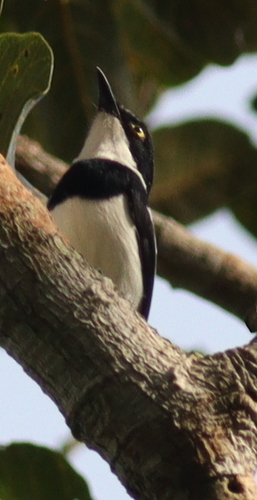 west african batis
 angola batis
Em resumo
A marca de campo mais confiável entre o west african batis e o angola batis é a cor da faixa peitoral do macho adulto: preta nos machos de angola batis, castanha nas fêmeas, enquanto os detalhes do west african batis não são descritos aqui. Os machos de angola batis também apresentam uma testa e coroa azuladas e cinzentas distintas com uma máscara preta brilhante, além de uma faixa branca nas asas e manchas brancas na nuca e nas coberturas da cauda superior, que não são mencionadas para o west african batis. Ambas as espécies são pequenas, bicolores e inquietas, mas o angola batis é descrito como particularmente robusto e enérgico. A sobreposição de habitat é parcial, mas o west african batis está mais estritamente associado a florestas de planície da África Ocidental e Central, enquanto o angola batis é encontrado na África Central Ocidental. A separação em campo depende da atenção cuidadosa ao padrão da cabeça, cor da faixa peitoral (por sexo) e marcas nas asas.
Dicas de identificação
- Cor da faixa peitoral do macho adulto: Os machos de angola batis têm uma faixa peitoral preta, enquanto as fêmeas têm uma faixa castanha. A cor da faixa peitoral não é especificada para o west african batis, então use esta marca apenas para confirmar o angola batis.
- Padrão da coroa e máscara: Os machos de angola batis apresentam uma testa e coroa azuladas e cinzentas com uma máscara preta brilhante que se estende pelos olhos até a nuca e desce pelos lados do pescoço, além de uma mancha branca nas lore e na nuca. Essas características não são descritas para o west african batis e são pistas fortes para o angola batis.
- Padrão das asas: O angola batis tem penas de voo pretas com bordas brancas estreitas e uma faixa branca clara nas asas, além de manchas brancas nas coberturas da cauda superior. Estas não são mencionadas para o west african batis e podem ser diagnósticas se vistas bem.
- Padrão da cauda: O angola batis tem uma cauda preta com penas externas brancas. Isso não é contrastado para o west african batis, então use com cautela.
- Partes inferiores: O angola batis tem partes inferiores brancas, exceto pela faixa peitoral e coberturas da cauda inferior acinzentadas. Sem detalhes para o west african batis, então isso é útil apenas para confirmar o angola batis.
- Cor dos olhos: O angola batis tem olhos amarelos brilhantes; a cor dos olhos do west african batis não é descrita, então use apenas para apoiar uma identificação de angola batis.
- Bico e pernas: Ambos são pretos no angola batis; sem informações para o west african batis, então não é diagnóstico.
- Estrutura e comportamento: O angola batis é descrito como robusto e inquieto, frequentemente se movendo energeticamente. O west african batis pode ser semelhante, mas isso não é especificado. Use apenas como uma marca de apoio.
- Diferenças sexuais: Apenas o angola batis é descrito como tendo uma faixa peitoral castanha nas fêmeas; se você ver isso, é diagnóstico para a fêmea de angola batis.
- Pássaros juvenis/imaturos: Não há informações disponíveis para nenhuma das espécies, então pássaros imaturos provavelmente serão muito desafiadores e devem ser deixados não identificados, a menos que vistos muito bem.
- Habitat e distribuição: Se estiver em floresta de planície na África Ocidental (especialmente fora da África Central Ocidental), o west african batis é mais provável. Na África Central Ocidental, verifique cuidadosamente as marcas da plumagem, pois ambas podem ocorrer.
- Tamanho: Ambas as espécies são muito pequenas e semelhantes em tamanho; não use o tamanho como separador.
- Voz: Nenhuma diferença vocal é descrita; não confie em chamadas ou canções para separação.
- Armadilhas: Cuidado ao assumir que todos os pequenos batis bicolores na região são a mesma espécie; verifique a coroa azulada e cinzenta, a máscara preta e a cor da faixa peitoral, especialmente nos machos.
- Variação sazonal: Nenhuma informação é dada sobre a mudança sazonal da plumagem, então assuma que as marcas dos adultos são estáveis durante todo o ano, a menos que evidências sugiram o contrário.
Tamanho
Ambas as espécies são batis muito pequenas, e as medições disponíveis não sugerem uma diferença de tamanho significativa: o angola batis pesa cerca de 9,8–10,4 g e tem aproximadamente 10 cm de comprimento. Nenhuma massa ou comprimento é fornecido para o west african batis, mas não há indicação de que seja notavelmente maior ou menor. Em campo, o tamanho não é um separador confiável.
Plumagem
Para machos adultos, o angola batis é distinto com uma testa e coroa azuladas e cinzentas, uma máscara preta brilhante que se estende até a nuca, uma mancha branca nas lore e na nuca, e uma faixa peitoral preta. As partes superiores são cinzentas a cinzentas-escuras com manchas brancas, e as asas têm penas de voo pretas com bordas brancas estreitas, além de uma faixa branca clara nas asas. A cauda é preta com penas externas brancas. As fêmeas se assemelham aos machos, mas têm uma faixa peitoral castanha (não preta). Nenhuma descrição detalhada da plumagem é fornecida para o west african batis, então a comparação direta é limitada. No entanto, a combinação de coroa azulada e cinzenta, máscara preta e faixa branca nas asas no angola batis não é mencionada para o west african batis, tornando essas marcas úteis para separação. Plumagens juvenis e imaturas não são descritas para nenhuma das espécies, então cautela é necessária com pássaros não adultos.
Comportamento
O angola batis é descrito como robusto e notavelmente inquieto, frequentemente se movendo energeticamente através de seu habitat. Nenhuma nota comportamental específica é dada para o west african batis, mas ambos são batis ativos típicos. O comportamento sozinho é improvável que forneça uma separação confiável em campo.
Habitat
O west african batis é encontrado em florestas tropicais ou subtropicais úmidas de planície em uma ampla faixa da África Ocidental e Central, incluindo Camarões, República Centro-Africana, República do Congo, Costa do Marfim, Guiné Equatorial, Gabão, Gana, Libéria, Nigéria e Serra Leoa. O angola batis é encontrado na África Central Ocidental, sem mais detalhes sobre o habitat fornecidos. Embora as distribuições possam se sobrepor na África Central Ocidental, o west african batis está mais estritamente ligado à floresta de planície, o que pode ajudar no contexto se o habitat for bem conhecido.