

Motmot

ニシアフリカセワタビタキ 対 アンゴラセワタビタキ

Batis occulta 対 Batis minulla

ニシアフリカセワタビタキとアンゴラセワタビタキのクイズ
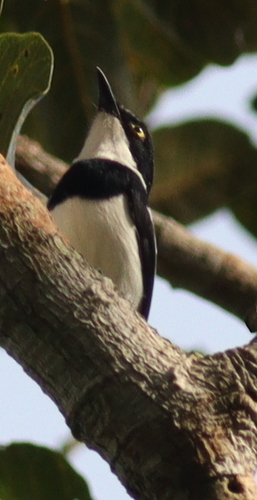
ニシアフリカセワタビタキ (Batis occulta) ニシアフリカセワタビタキ
アンゴラセワタビタキ (Batis minulla) アンゴラセワタビタキ

メディア

読み込み中…

要点

ニシアフリカセワタビタキとアンゴラセワタビタキの最も信頼できるフィールドマークは、成鳥オスの胸帯の色です:アンゴラセワタビタキのオスは黒、メスは栗色です。一方、ニシアフリカセワタビタキの詳細はここでは説明されていません。アンゴラセワタビタキのオスは、光沢のある黒いマスクを持つ特徴的な青灰色の額と頭頂を示し、白い翼のストライプと後頭部および上尾羽覆いに白い斑点がありますが、これらはニシアフリカセワタビタキには言及されていません。両種は小型で、白黒の模様があり、落ち着きがありませんが、アンゴラセワタビタキは特にずんぐりしていて活発であると説明されています。生息地の重複は部分的ですが、ニシアフリカセワタビタキは西アフリカと中央アフリカの低地森林に厳密に関連しているのに対し、アンゴラセワタビタキは西中央アフリカに生息しています。フィールドでの識別は、頭の模様、胸帯の色(性別による)、および翼の模様に細心の注意を払うことに依存します。

識別のコツ

  1. 成鳥オスの胸帯の色:アンゴラセワタビタキのオスは黒い胸帯を持ち、メスは栗色の帯を持っています。ニシアフリカセワタビタキの胸帯の色は指定されていないため、このマークはアンゴラセワタビタキを確認するためだけに使用してください。
  2. 頭頂とマスクの模様:アンゴラセワタビタキのオスは、光沢のある黒いマスクが目を通って後頭部に伸び、首の側面に下がる青灰色の額と頭頂を示し、さらにロアと後頭部に白い斑点があります。これらの特徴はニシアフリカセワタビタキには言及されておらず、アンゴラセワタビタキの強い手がかりです。
  3. 翼の模様:アンゴラセワタビタキは、狭い白い縁を持つ黒い飛翔羽と明確な白い翼のストライプ、さらに上尾羽覆いに白い斑点があります。これらはニシアフリカセワタビタキには言及されておらず、よく見られれば診断的かもしれません。
  4. 尾の模様:アンゴラセワタビタキは白い外尾羽を持つ黒い尾を持っています。これはニシアフリカセワタビタキには対比されていないため、注意して使用してください。
  5. 腹部:アンゴラセワタビタキは胸帯と灰色の下尾羽覆いを除いて白い腹部を持っています。ニシアフリカセワタビタキの詳細はないため、これはアンゴラセワタビタキを確認するためだけに有用です。
  6. 目の色:アンゴラセワタビタキは明るい黄色の目を持っています;ニシアフリカセワタビタキの目の色は説明されていないため、アンゴラセワタビタキの識別を支持するためだけに使用してください。
  7. くちばしと脚:両方ともアンゴラセワタビタキでは黒ですが、ニシアフリカセワタビタキの情報はないため、診断的ではありません。
  8. 構造と印象:アンゴラセワタビタキはずんぐりしていて落ち着きがないと説明されており、しばしば活発に動き回ります。ニシアフリカセワタビタキも似ているかもしれませんが、これは指定されていません。サポートマークとしてのみ使用してください。
  9. 性差:アンゴラセワタビタキのメスは栗色の胸帯を持つと説明されているのはこの種だけです;これを見た場合、アンゴラセワタビタキのメスの診断になります。
  10. 幼鳥/未成熟の鳥:どちらの種についても情報はありませんので、未成熟の鳥は非常に難しい可能性があり、よく見ない限り識別を避けるべきです。
  11. 生息地と分布:西アフリカの低地森林にいる場合(特に西中央アフリカの外)、ニシアフリカセワタビタキの可能性が高いです。西中央アフリカでは、両方が発生する可能性があるため、羽毛のマークを注意深く確認してください。
  12. サイズ:両種は非常に小型でサイズが似ているため、サイズを分離の基準として使用しないでください。
  13. 声:声の違いは説明されていないため、分離のために呼び声や歌に頼らないでください。
  14. 落とし穴:地域のすべての小型の白黒のセワタビタキが同じ種であると仮定することに注意してください;特にオスの場合、青灰色の頭頂、黒いマスク、胸帯の色を確認してください。
  15. 季節的変化:季節的な羽毛の変化に関する情報は提供されていないため、証拠が示さない限り、成鳥のマークは年間を通じて安定していると仮定してください。

大きさ

両種は非常に小型のセワタビタキであり、利用可能な測定値は意味のあるサイズの違いを示唆していません:アンゴラセワタビタキは約9.8〜10.4gで、長さは約10cmです。ニシアフリカセワタビタキの質量や長さは提供されていませんが、明らかに大きいまたは小さいという兆候はありません。フィールドでは、サイズは信頼できる分離の基準ではありません。

羽色

成鳥オスの場合、アンゴラセワタビタキは青灰色の額と頭頂、後頭部にまで伸びる光沢のある黒いマスク、ロアと後頭部に白い斑点、そして黒い胸帯を持つことで特徴的です。上面は灰色から黒灰色で白い斑点があり、翼には狭い白い縁を持つ黒い飛翔羽と明確な白い翼のストライプがあります。尾は黒で白い外羽があります。メスはオスに似ていますが、胸帯は栗色(黒ではない)です。ニシアフリカセワタビタキの詳細な羽毛の説明は提供されていないため、直接比較は限られています。しかし、アンゴラセワタビタキの青灰色の頭頂、黒いマスク、白い翼のストライプの組み合わせはニシアフリカセワタビタキには言及されておらず、これらのマークは分離に有用です。幼鳥や未成熟の羽毛はどちらの種についても説明されていないため、非成鳥の鳥には注意が必要です。

行動

アンゴラセワタビタキはずんぐりしていて落ち着きがないと説明されており、しばしばその生息地を活発に動き回ります。ニシアフリカセワタビタキに関する特定の行動のメモはありませんが、両方とも典型的な活発なセワタビタキです。行動だけでは信頼できるフィールドの分離を提供することは難しいでしょう。

生息環境

ニシアフリカセワタビタキは、カメルーン、中央アフリカ共和国、コンゴ共和国、コートジボワール、赤道ギニア、ガボン、ガーナ、リベリア、ナイジェリア、シエラレオネを含む西アフリカと中央アフリカの広範囲にわたる亜熱帯または熱帯の湿った低地森林に生息しています。アンゴラセワタビタキは西中央アフリカに生息しており、さらなる生息地の詳細は提供されていません。範囲が西中央アフリカで重複する可能性がありますが、ニシアフリカセワタビタキは低地森林に厳密に結びついているため、生息地がよく知られている場合には文脈で役立つかもしれません。

より良い説明を送る

比較と同じ項目を使ってください。文章はすぐに公開されます。

The most reliable field mark between West African Batis and Angola Batis is the adult male's breast band color: black in Angola Batis males, chestnut in females, while details for West African Batis are not described here. Angola Batis males also show a distinctive bluish-grey forehead and crown with a glossy black mask, plus a white wing stripe and white spots on the nape and uppertail coverts, which are not mentioned for West African Batis. Both species are small, pied, and restless, but Angola Batis is described as particularly dumpy and energetic. Habitat overlap is partial, but West African Batis is more strictly associated with lowland forests of West and Central Africa, while Angola Batis is found in western central Africa. Separation in the field relies on close attention to head pattern, breast band color (by sex), and wing markings.

  1. Adult male breast band color: Angola Batis males have a black breast band, while females have a chestnut band. The breast band color is not specified for West African Batis, so use this mark only to confirm Angola Batis.
  2. Crown and mask pattern: Angola Batis males show a bluish-grey forehead and crown with a glossy black mask extending through the eyes to the nape and down the neck sides, plus a white spot on the lores and nape. These features are not described for West African Batis and are strong clues for Angola Batis.
  3. Wing pattern: Angola Batis has black flight feathers with narrow white edges and a clear white wing stripe, plus white spots on the uppertail coverts. These are not mentioned for West African Batis and may be diagnostic if seen well.
  4. Tail pattern: Angola Batis has a black tail with white outer tail feathers. This is not contrasted for West African Batis, so use with caution.
  5. Underparts: Angola Batis has white underparts with the exception of the breast band and greyish undertail coverts. No details for West African Batis, so this is only useful for confirming Angola Batis.
  6. Eye color: Angola Batis has bright yellow eyes; eye color for West African Batis is not described, so use only to support an Angola Batis ID.
  7. Bill and legs: Both are black in Angola Batis; no information for West African Batis, so not diagnostic.
  8. Structure and jizz: Angola Batis is described as dumpy and restless, often moving energetically. West African Batis may be similar, but this is not specified. Use only as a supporting mark.
  9. Sex differences: Only Angola Batis is described as having a chestnut breast band in females; if you see this, it is diagnostic for Angola Batis female.
  10. Juvenile/immature birds: No information is available for either species, so immature birds are likely to be very challenging and should be left unidentified unless seen very well.
  11. Habitat and range: If in lowland forest in West Africa (especially outside western central Africa), West African Batis is more likely. In western central Africa, check plumage marks carefully as both may occur.
  12. Size: Both species are very small and similar in size; do not use size as a separator.
  13. Voice: No vocal differences are described; do not rely on calls or song for separation.
  14. Pitfalls: Beware of assuming all small, pied batises in the region are the same species; check for the bluish-grey crown, black mask, and breast band color, especially in males.
  15. Seasonal variation: No information is given on seasonal plumage change, so assume adult marks are stable year-round unless evidence suggests otherwise.

Both species are very small batises, and available measurements do not suggest a meaningful size difference: Angola Batis weighs about 9.8–10.4 g and is approximately 10 cm long. No mass or length is provided for West African Batis, but there is no indication it is noticeably larger or smaller. In the field, size is not a reliable separator.

For adult males, Angola Batis is distinctive with a bluish-grey forehead and crown, a glossy black mask extending to the nape, a white spot on the lores and nape, and a black breast band. The upperparts are grey to blackish-grey with white spots, and the wings have black flight feathers edged narrowly white, plus a clear white wing stripe. The tail is black with white outer feathers. Females resemble males but have a chestnut (not black) breast band. No detailed plumage description is provided for West African Batis, so direct comparison is limited. However, the combination of bluish-grey crown, black mask, and white wing stripe in Angola Batis is not mentioned for West African Batis, making these marks useful for separation. Juvenile and immature plumages are not described for either species, so caution is needed with non-adult birds.

Angola Batis is described as dumpy and notably restless, often moving energetically through its habitat. No specific behavioral notes are given for West African Batis, but both are typical active batises. Behavior alone is unlikely to provide a reliable field separation.

West African Batis is found in subtropical or tropical moist lowland forests across a broad swath of West and Central Africa, including Cameroon, Central African Republic, Republic of the Congo, Ivory Coast, Equatorial Guinea, Gabon, Ghana, Liberia, Nigeria, and Sierra Leone. Angola Batis is found in western central Africa, with no further habitat detail provided. While ranges may overlap in western Central Africa, West African Batis is more strictly tied to lowland forest, which may help in context if habitat is well known.

変更を破棄しますか?

保存していない編集があります。今離れると失われます。

ニシアフリカセワタビタキ · アンゴラセワタビタキ · 苦手な鳥