

pardela-rabilonga vs buller's shearwater
Ardenna pacifica versus Ardenna bulleri
Jogue um quiz com pardela-rabilonga e buller's shearwater
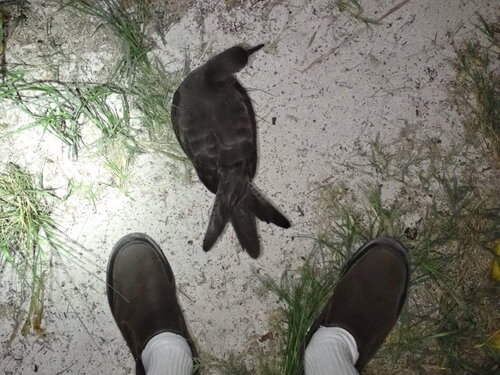 pardela-rabilonga
 buller's shearwater
Em resumo
Buller's Shearwater é melhor separado do pardela-rabilonga pelo seu padrão de asa superior marcante em voo: um 'M' ou 'W' preto, quebrado, sobre as asas superiores cinza claro, único entre as grandes pardelas. O pardela-rabilonga, em contraste, apresenta partes superiores uniformemente escuras ou cinza-marrom sem nenhum padrão de asa forte, independentemente da idade ou morfo. Ambos têm caudas em forma de cunha e bicos escuros, mas o de Buller's é mais fino e leve no geral. Use as vistas de voo e o padrão da asa superior primeiro; aves empoleiradas ou distantes são mais difíceis, especialmente para o morfo claro do Wedge-tailed.
Dicas de identificação
- Padrão da asa superior em voo (todas as idades): Buller's Shearwater apresenta um 'M' ou 'W' preto, quebrado, sobre as asas superiores cinza claro, com primárias escuras e uma faixa secundária escura separada por um painel claro. O pardela-rabilonga (ambos os morfos) não possui tal padrão; as asas superiores são cinza-marrom simples (morfo claro) ou uniformemente escuras (morfo escuro).
- Contraste da parte inferior e do corpo: Buller's tem uma parte inferior e asa inferior brancas brilhantes, com contraste acentuado em relação às partes superiores. O morfo claro do Wedge-tailed também é branco embaixo, mas não possui o contraste acentuado da asa superior; o morfo escuro é uniformemente escuro embaixo também.
- Cabeça e face: Buller's tem uma touca cinza que se estende até o nível dos olhos, destacando uma bochecha branca brilhante que pode parecer marcante em boa luz. A cabeça do Wedge-tailed combina com as partes superiores—ou cinza-marrom (claro) ou escura (morfo escuro)—e não possui um rosto branco bem definido.
- Forma e cor da cauda: Ambos têm caudas em forma de cunha, mas a cauda de Buller's é escura e combina com as penas de voo, enquanto a cauda do Wedge-tailed é da mesma cor que as costas (cinza-marrom ou cinza-marrom escuro).
- Cor e forma do bico: Ambos têm bicos escuros, mas o de Buller's é ligeiramente mais fino e mais esbelto; isso é sutil e nem sempre confiável no mar.
- Tamanho e construção geral: O Wedge-tailed é mais robusto e pesado; Buller's é mais esbelto e elegante, mas o tamanho é difícil de julgar a menos que sejam vistos juntos.
- Estilo de voo: Buller's frequentemente parece mais flutuante e gracioso, com planadas longas e arqueadas e menos batidas de asas. O Wedge-tailed pode parecer mais pesado e mais direto.
- Morfo de plumagem: O Wedge-tailed vem em morfos claro e escuro; Buller's tem sempre o mesmo padrão. Cuidado com o Wedge-tailed claro, que pode parecer superficialmente semelhante embaixo ao Buller's, mas nunca mostra o 'M' na asa superior.
- Aves juvenis/imaturas: Os juvenis de Buller's parecem adultos, então o padrão da asa superior está sempre presente. Os juvenis de Wedge-tailed combinam com seu morfo, sem padrão especial de asa.
- Vistas empoleiradas/rafters: A separação é muito mais difícil quando as aves estão sentadas na água; confie no padrão da cabeça (Buller's: rosto branco, touca cinza) e na cor geral (Wedge-tailed: simples, nunca padronizado). A forma da cauda nem sempre é óbvia quando estão sentadas.
- Habitat e distribuição: Ambos podem ser encontrados no Pacífico tropical, mas Buller's é mais provável em águas temperadas e ao largo das Américas no final do verão/outono. O Wedge-tailed é mais estritamente tropical.
- Voz: Útil apenas em colônias; o Wedge-tailed emite chamadas longas e gemedoras. Não é útil no mar.
- Armadilhas: O principal erro é confundir um Wedge-tailed de morfo claro com o Buller's devido à barriga branca; sempre verifique o 'M' na asa superior em voo. O Wedge-tailed de morfo escuro é improvável de ser confundido com o Buller's.
- Sexo e estação: Não há dimorfismo sexual ou diferença de plumagem sazonal em nenhuma das espécies; todas as marcas de campo se aplicam durante todo o ano.
- Condições de iluminação: O padrão 'M' no Buller's é mais óbvio em boa luz, mas o painel claro geralmente é visível mesmo em condições ruins. Sempre tente obter uma visão da asa superior em voo para uma separação confiante.
Tamanho
O pardela-rabilonga é a ave mais pesada (465 g vs. 326 g) e é a maior pardela tropical. O Buller's Shearwater ainda é grande, mas visivelmente mais leve e ligeiramente menor em volume. Ambos têm asas longas e são semelhantes em proporções gerais, mas o Buller's pode parecer mais elegante devido à sua construção mais esbelta.
Plumagem
A diferença mais diagnóstica está em voo: Buller's Shearwater (todas as idades a partir do desmame) apresenta um padrão de asa superior distinto—um 'M' ou 'W' preto, quebrado, formado por primárias escuras e uma faixa escura ao longo das secundárias, separadas por um painel cinza-prateado claro. Isso é visível mesmo à distância e é único entre as grandes pardelas. O restante das partes superiores é cinza-azulado, com uma parte inferior branca brilhante e uma touca cinza que se estende até o nível dos olhos, destacando o rosto branco. pardela-rabilonga nunca mostra esse padrão. Em vez disso, vem em dois morfos: o morfo claro tem partes superiores e asas superiores cinza-marrom simples, com uma barriga branca, enquanto o morfo escuro é uniformemente cinza-marrom escuro por toda parte. Ambos os morfos não possuem painel de asa, 'M' ou padrão contrastante—as asas superiores são simples. Os juvenis de Buller's já parecem adultos; os juvenis de Wedge-tailed se assemelham aos seus respectivos morfos. Ambas as espécies têm caudas em forma de cunha, mas a cauda de Buller's é mais escura e combina com as penas de voo.
Comportamento
Ambas as espécies são pelágicas e frequentemente vistas planando baixo sobre o mar, mas o Buller's Shearwater é conhecido por seu voo mais flutuante e gracioso, frequentemente com planadas longas e arqueadas e batidas de asas menos frequentes. O pardela-rabilonga pode parecer mais pesado e mais direto em voo, especialmente quando comparado lado a lado. Ambas nidificam em tocas, mas isso não é uma marca de campo no mar.
Habitat
Ambos são oceânicos e podem se sobrepor no Pacífico tropical e subtropical. O pardela-rabilonga é mais estritamente tropical, enquanto o Buller's Shearwater se distribui amplamente pelo Pacífico, incluindo águas temperadas e até subárticas, e é mais provável ao largo da costa oeste das Américas no final do verão e outono. O habitat raramente é diagnóstico no mar, mas o contexto pode ajudar em áreas marginais.
Voz
O pardela-rabilonga é conhecido por suas longas chamadas gemedoras em colônias, com um padrão distinto de inalação e exalação ('OOO...err'), especialmente à noite. O Buller's Shearwater é ouvido com menos frequência no mar e não é notado por chamadas distintivas em situações de campo. A voz geralmente não é útil para separação no mar.
pardela-rabilonga · buller's shearwater · Minhas aves difíceis