

Motmot

オナガミズナギドリ 対 ミナミオナガミズナギドリ

Ardenna pacifica 対 Ardenna bulleri

オナガミズナギドリとミナミオナガミズナギドリのクイズ
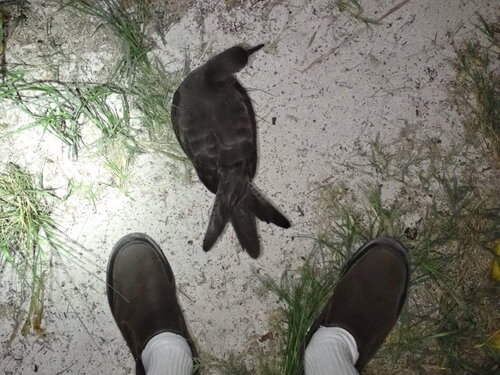
オナガミズナギドリ (Ardenna pacifica) オナガミズナギドリ
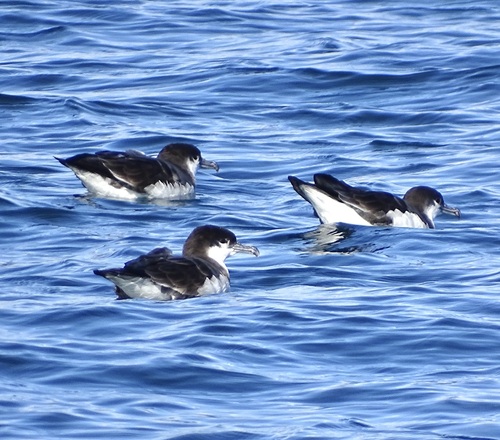
ミナミオナガミズナギドリ (Ardenna bulleri) ミナミオナガミズナギドリ

メディア

読み込み中…

要点

ミナミオナガミズナギドリは、飛行中の目を引く上翼パターンによってオナガミズナギドリと最も区別されます:淡い灰色の上翼に大胆で壊れた黒の'M'または'W'があり、大型のミズナギドリの中でユニークです。対照的に、オナガミズナギドリは、年齢や形態に関係なく、強い翼のパターンがない均一な暗色または単色の灰褐色の上部を示します。両者はくさび形の尾と暗いくちばしを持っていますが、ミナミオナガミズナギドリは全体的にスリムで軽いです。まずは飛行中の視点と上翼パターンを使用してください;止まっているまたは遠くの鳥は、特にオナガミズナギドリの淡い形態にとっては難しいです。

識別のコツ

  1. 飛行中の上翼パターン(すべての年齢): ミナミオナガミズナギドリは、淡い灰色の上翼に大胆で壊れた黒の'M'または'W'を示し、黒っぽい初級羽と淡いパネルで分けられた暗い二次羽のストライプがあります。オナガミズナギドリ(両形態)はそのようなパターンを欠いています;上翼は単色の灰褐色(淡い形態)または均一に暗い(暗い形態)です。
  2. 下翼と体のコントラスト: ミナミオナガミズナギドリは明るい白い下側と下翼を持ち、上部との鋭いコントラストがあります。オナガミズナギドリの淡い形態も下側は白ですが、鋭い上翼のコントラストが欠けています;暗い形態も下側は均一に暗いです。
  3. 頭部と顔: ミナミオナガミズナギドリは目の高さまで伸びる灰色の帽子を持ち、良い光の中で目を引く明るい白い頬を際立たせます。オナガミズナギドリの頭は上部と一致し—灰褐色(淡い)または暗い(暗い形態)—はっきりとした白い顔が欠けています。
  4. 尾の形と色: 両者はくさび形の尾を持っていますが、ミナミオナガミズナギドリの尾は黒っぽく、飛行羽と一致しますが、オナガミズナギドリの尾は背中と同じ色(灰褐色または暗い灰褐色)です。
  5. くちばしの色と形: 両者は暗いくちばしを持っていますが、ミナミオナガミズナギドリはやや細くてスレンダーです;これは微妙で、海上では常に信頼できるわけではありません。
  6. 全体のサイズと体型: オナガミズナギドリはより大きくて重いです;ミナミオナガミズナギドリはスリムでエレガントですが、サイズは一緒に見ない限り判断が難しいです。
  7. 飛行スタイル: ミナミオナガミズナギドリはしばしばより浮遊感があり優雅に見え、長く弧を描く滑空と少ない羽ばたきがあります。オナガミズナギドリはより重く、より直接的に見えることがあります。
  8. 羽毛の形態: オナガミズナギドリは淡い形態と暗い形態があります;ミナミオナガミズナギドリは常に同じパターンです。淡いオナガミズナギドリには注意してください、ミナミオナガミズナギドリに下側が表面的に似て見えることがありますが、上翼の'M'は決して示しません。
  9. 幼鳥/未熟な鳥: 幼いミナミオナガミズナギドリは大人のように見え、上翼パターンは常に存在します。幼いオナガミズナギドリはそれぞれの形態に一致し、特別な翼のパターンはありません。
  10. 止まっている/ラフターの視点: 鳥が水に止まっているときの分離ははるかに難しくなります;頭のパターン(ミナミオナガミズナギドリ:白い顔、灰色の帽子)と全体の色(オナガミズナギドリ:単色、決してパターン化されていない)に依存してください。止まっているときは尾の形が常に明らかではありません。
  11. 生息地と範囲: 両者は熱帯太平洋で見られますが、ミナミオナガミズナギドリは温帯の水域やアメリカの西海岸での晩夏/秋により可能性があります。オナガミズナギドリはより厳密に熱帯です。
  12. 声: コロニーでのみ役立ちます;オナガミズナギドリは長い、うめき声を出します。海上では役に立ちません。
  13. 落とし穴: 主な誤りは、白い腹のために淡い形態のオナガミズナギドリをミナミオナガミズナギドリと間違えることです;飛行中の上翼の'M'を常に確認してください。暗い形態のオナガミズナギドリはミナミオナガミズナギドリと混同されることはありません。
  14. 性別と季節: どちらの種にも性的二形性や季節的な羽毛の違いはありません;すべてのフィールドマークは年間を通じて適用されます。
  15. 照明条件: ミナミオナガミズナギドリの'M'パターンは良い光の中で最も明らかですが、淡いパネルは鈍い条件でも通常は見えます。自信を持って分離するために、飛行中の上翼の視点を常に得るようにしてください。

大きさ

オナガミズナギドリはより重い鳥(465 g対326 g)で、最大の熱帯ミズナギドリです。ミナミオナガミズナギドリはまだ大きいですが、明らかに軽く、わずかに小さいです。両者は長い翼を持ち、全体的な比率は似ていますが、ミナミオナガミズナギドリはスリムな体型のため、よりエレガントに見えることがあります。

羽色

最も診断的な違いは飛行中にあります:ミナミオナガミズナギドリ(羽化後のすべての年齢)は、黒っぽい初級羽と二次羽に沿った暗いストライプで形成された暗く壊れた'M'または'W'という独特の上翼パターンを示します。これは距離があっても見え、大型のミズナギドリの中でユニークです。上部の残りは青灰色で、明るい白い下側と目の高さまで伸びる灰色の帽子を持ち、白い顔を際立たせます。オナガミズナギドリはこのパターンを決して示しません。代わりに、淡い形態は単色の灰褐色の上部と上翼を持ち、白い腹を持ち、暗い形態は全体が均一に暗い灰褐色です。両方の形態は翼のパネル、'M'、またはコントラストパターンを欠いています—上翼は単色です。幼いミナミオナガミズナギドリはすでに大人のように見え、幼いオナガミズナギドリはそれぞれの形態に似ています。両種はくさび形の尾を持っていますが、ミナミオナガミズナギドリの尾は暗く、飛行羽と一致します。

行動

両種は外洋性であり、しばしば海の上を低く滑空しているのが見られますが、ミナミオナガミズナギドリはより浮遊感があり優雅な飛行で知られ、しばしば緩やかで弧を描く滑空と少ない羽ばたきがあります。オナガミズナギドリは、特に並べて比較した場合、飛行中により重く、より直接的に見えることがあります。両者は巣穴に巣を作りますが、これは海上でのフィールドマークではありません。

生息環境

両者は海洋性であり、熱帯および亜熱帯の太平洋で重なることがあります。オナガミズナギドリはより厳密に熱帯であり、ミナミオナガミズナギドリは太平洋全体に広く分布し、温帯や亜北極の水域も含み、晩夏と秋にアメリカの西海岸で見られる可能性が高いです。生息地は海上で診断的であることはまれですが、文脈が限られた地域で役立つことがあります。

声

オナガミズナギドリはコロニーでの長い、うめき声で知られ、特に夜間に特徴的な吸気と呼気のパターン('OOO...err')があります。ミナミオナガミズナギドリは海上であまり聞かれず、フィールド状況での特徴的な呼び声は記録されていません。声は通常、海上での分離には役立ちません。

より良い説明を送る

比較と同じ項目を使ってください。文章はすぐに公開されます。

Buller's Shearwater is best separated from Wedge-tailed Shearwater by its striking upperwing pattern in flight: a bold, broken black 'M' or 'W' across pale grey upperwings, unique among large shearwaters. Wedge-tailed Shearwater, in contrast, shows either uniform dark or plain grey-brown upperparts without any strong wing pattern, regardless of age or morph. Both have wedge-shaped tails and dark bills, but Buller's is slimmer and lighter overall. Use flight views and upperwing pattern first; perched or distant birds are trickier, especially for Wedge-tailed's pale morph.

  1. Upperwing pattern in flight (all ages): Buller's Shearwater shows a bold, broken black 'M' or 'W' across pale grey upperwings, with blackish primaries and a dark secondary stripe separated by a pale panel. Wedge-tailed Shearwater (both morphs) lacks any such pattern; upperwings are plain grey-brown (pale morph) or uniformly dark (dark morph).
  2. Underwing and body contrast: Buller's has a bright white underside and underwing, with sharp contrast to the upperparts. Wedge-tailed's pale morph is also white below, but lacks the sharp upperwing contrast; the dark morph is uniformly dark below as well.
  3. Head and face: Buller's has a grey cap extending to eye level, setting off a bright white cheek that can look striking in good light. Wedge-tailed's head matches the upperparts—either grey-brown (pale) or dark (dark morph)—and lacks a sharply defined white face.
  4. Tail shape and color: Both have wedge-shaped tails, but Buller's tail is blackish and matches the flight feathers, while Wedge-tailed's tail is the same color as the back (grey-brown or dark grey-brown).
  5. Bill color and shape: Both have dark bills, but Buller's is slightly finer and more slender; this is subtle and not always reliable at sea.
  6. Overall size and build: Wedge-tailed is bulkier and heavier; Buller's is slimmer and more elegant, but size is hard to judge unless seen together.
  7. Flight style: Buller's often appears more buoyant and graceful, with long, arcing glides and less flapping. Wedge-tailed can look heavier and more direct.
  8. Plumage morphs: Wedge-tailed comes in pale and dark morphs; Buller's is always the same pattern. Beware pale Wedge-tailed, which can look superficially similar below to Buller's, but never shows the upperwing 'M'.
  9. Juvenile/immature birds: Juvenile Buller's look like adults, so the upperwing pattern is always present. Juvenile Wedge-tailed match their morph, with no special wing pattern.
  10. Perched/rafter views: Separation is much harder when birds are sitting on water; rely on head pattern (Buller's: white face, grey cap) and overall color (Wedge-tailed: plain, never patterned). Tail shape is not always obvious when sitting.
  11. Habitat and range: Both can be found in the tropical Pacific, but Buller's is more likely in temperate waters and off the Americas in late summer/autumn. Wedge-tailed is more strictly tropical.
  12. Voice: Only useful at colonies; Wedge-tailed gives long, moaning calls. Not helpful at sea.
  13. Pitfalls: The main error is mistaking a pale-morph Wedge-tailed for Buller's due to the white belly; always check for the upperwing 'M' in flight. Dark-morph Wedge-tailed is unlikely to be confused with Buller's.
  14. Sex and season: No sexual dimorphism or seasonal plumage difference in either species; all field marks apply year-round.
  15. Lighting conditions: The 'M' pattern on Buller's is most obvious in good light, but the pale panel is usually visible even in dull conditions. Always try to get a view of the upperwing in flight for confident separation.

Wedge-tailed Shearwater is the heavier bird (465 g vs. 326 g), and is the largest tropical shearwater. Buller's Shearwater is still large, but noticeably lighter and slightly smaller in bulk. Both are long-winged and similar in overall proportions, but Buller's can appear more elegant due to its slimmer build.

The most diagnostic difference is in flight: Buller's Shearwater (all ages from fledging onward) shows a distinctive upperwing pattern—a dark, broken 'M' or 'W' formed by blackish primaries and a dark stripe along the secondaries, separated by a pale silvery-grey panel. This is visible even at a distance and is unique among large shearwaters. The rest of the upperparts are bluish-grey, with a bright white underside and a grey cap that extends to eye level, setting off the white face. Wedge-tailed Shearwater never shows this pattern. Instead, it comes in two morphs: the pale morph has plain grey-brown upperparts and upperwings, with a white belly, while the dark morph is uniformly dark grey-brown all over. Both morphs lack any wing panel, 'M', or contrasting pattern—upperwings are plain. Juvenile Buller's already look like adults; juvenile Wedge-tailed resemble their respective morphs. Both species have wedge-shaped tails, but Buller's tail is darker and matches the flight feathers.

Both species are pelagic and often seen gliding low over the sea, but Buller's Shearwater is noted for its more buoyant, graceful flight, often with languid, arcing glides and less frequent flapping. Wedge-tailed Shearwater can appear heavier and more direct in flight, especially when compared side-by-side. Both nest in burrows, but this is not a field mark at sea.

Both are oceanic and can overlap in the tropical and subtropical Pacific. Wedge-tailed Shearwater is more strictly tropical, while Buller's Shearwater ranges widely across the Pacific, including temperate and even subarctic waters, and is more likely off the west coast of the Americas in late summer and autumn. Habitat is rarely diagnostic at sea, but context may help in marginal areas.

Wedge-tailed Shearwater is known for its long, moaning calls at colonies, with a distinctive inhaling and exhaling pattern ('OOO...err'), especially at night. Buller's Shearwater is less often heard at sea and is not noted for distinctive calls in field situations. Voice is not usually helpful for separation at sea.

変更を破棄しますか?

保存していない編集があります。今離れると失われます。

オナガミズナギドリ · ミナミオナガミズナギドリ · 苦手な鳥