

arapaçu-bico-de-cunha vs northern barred-woodcreeper
Glyphorynchus spirurus versus Dendrocolaptes sanctithomae
Jogue um quiz com arapaçu-bico-de-cunha e northern barred-woodcreeper
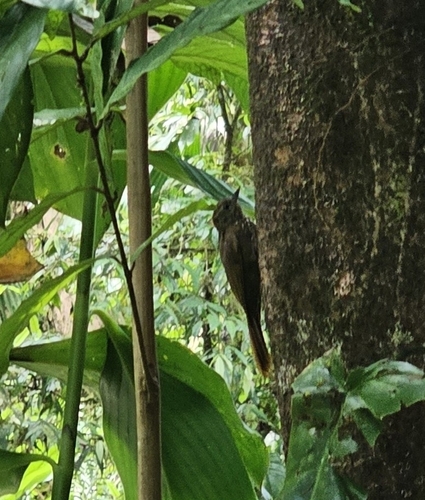 arapaçu-bico-de-cunha
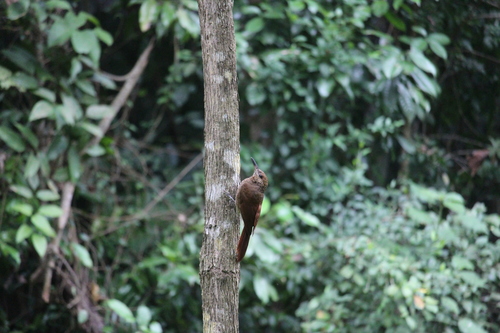 northern barred-woodcreeper
Em resumo
A marca de campo mais confiável entre o arapaçu-bico-de-cunha e o northern barred-woodcreeper é o tamanho geral e a forma do bico: o arapaçu-bico-de-cunha é minúsculo, com um bico curto, distintamente em forma de cunha e virado para cima, enquanto o northern barred é muito maior, com um bico longo e reto. Em voo, o arapaçu-bico-de-cunha frequentemente exibe uma faixa pálida de cor canela na parte inferior da asa, visível em todas as idades, enquanto o northern barred não possui esse recurso e, em vez disso, apresenta fortes barras pretas pelo corpo e asas, especialmente em adultos e juvenis. Empoleirado, o arapaçu-bico-de-cunha é compacto e de cauda curta, com manchas e listras sutis abaixo, enquanto o northern barred é magro, de cauda longa e com barras ousadas por toda parte. A confusão é mais provável com aves juvenis ou distantes, mas o tamanho e a forma do bico permanecem confiáveis em todas as idades.
Dicas de identificação
- O tamanho é a pista mais imediata: O arapaçu-bico-de-cunha é minúsculo (13–16 cm), o northern barred é grande (25–29 cm). Se a ave parecer pequena mesmo para um woodcreeper, é quase certamente um arapaçu-bico-de-cunha.
- A forma do bico é diagnóstica: O arapaçu-bico-de-cunha tem um bico curto, grosso, em forma de cunha e virado para cima (quase como um Xenops); o northern barred tem um bico longo e reto com espessura média. Isso é visível mesmo em luz fraca ou visões parciais.
- Vista de voo—faixa na parte inferior da asa: O arapaçu-bico-de-cunha de todas as idades mostra uma faixa de cor canela a branca na parte inferior das penas da asa, formando uma faixa pálida em voo. O northern barred não possui isso, mostrando em vez disso penas de voo uniformemente rufo-castanhas com pontas escuras e fortes barras pelo corpo e asas.
- Padrão das partes superiores: O arapaçu-bico-de-cunha é principalmente marrom liso a rufo acima, com uma testa acinzentada e supercílios sutis. O northern barred é fortemente barrado de preto na coroa, costas e asas, com uma coroa e nuca rufo-escurecidas.
- Partes inferiores—manchas vs barras: O arapaçu-bico-de-cunha tem grandes manchas redondas fulvas na parte superior do peito e listras estreitas abaixo; o northern barred é fortemente barrado de preto nas partes inferiores douradas a canela, com barras se estendendo da garganta até a barriga.
- Cor e comprimento da cauda: Ambos têm caudas rufo-castanhas, mas a cauda do arapaçu-bico-de-cunha é curta e quadrada, enquanto a do northern barred é longa e muitas vezes parece em forma de cunha quando espalhada.
- Supercílios e face: O arapaçu-bico-de-cunha tem um supercílios fino de cor canela a branca e um anel ocular canela; o northern barred tem um supercílios rufo fraco, lore preto e uma face castanho-canela com finas barras.
- Confusão juvenil: O juvenil northern barred tem barras mais difusas abaixo e um bico totalmente preto, mas ainda mostra o tamanho grande geral e o bico longo. O juvenil arapaçu-bico-de-cunha se parece com o adulto, mas é sempre muito menor e mostra a faixa na parte inferior da asa.
- Cor das pernas: Ambas as espécies têm cores de pernas variáveis, mas isso não é uma marca de campo confiável.
- Comportamento em enxames de formigas: Se o woodcreeper estiver seguindo um enxame de formigas, especialmente em pares ou pequenos grupos, suspeite do northern barred. O arapaçu-bico-de-cunha raramente segue enxames de formigas.
- Postura ao empoleirar: O arapaçu-bico-de-cunha é compacto, muitas vezes se agarrando a galhos finos ou cipós; o northern barred é ereto e magro, geralmente em troncos grossos.
- Contexto do habitat: Em habitats perturbados ou de borda, o arapaçu-bico-de-cunha é mais provável. Em florestas úmidas maduras e não perturbadas, ambos são possíveis, mas o northern barred é mais provável em enxames de formigas.
- Variação entre subespécies: O arapaçu-bico-de-cunha mostra alguma variação na cor da garganta e das partes inferiores entre subespécies, mas nunca é fortemente barrado. As subespécies do northern barred diferem principalmente na intensidade das barras e no tom das partes inferiores, mas sempre mostram barras.
- Cor do bico em juvenis: Apenas o juvenil northern barred tem um bico totalmente preto; o arapaçu-bico-de-cunha de todas as idades tem uma base cinza na mandíbula.
- **Quando em dúvida, use primeiro o tamanho e a forma do bico, depois verifique a faixa na parte inferior da asa em voo e as barras nas partes inferiores quando empoleirado. Essas marcas são confiáveis em todas as estações e idades.
Tamanho
O arapaçu-bico-de-cunha é o menor woodcreeper, medindo apenas 13–16 cm e pesando 10,5–21 g. Em contraste, o northern barred-woodcreeper é muito maior, com 25–29 cm e 53–83 g. Mesmo à distância ou em bandos mistos, a diferença de tamanho é dramática: o northern barred é quase duas vezes o comprimento e três a quatro vezes a massa do arapaçu-bico-de-cunha. Essa diferença é óbvia tanto empoleirado quanto em voo, e é o único ponto de separação mais confiável.
Plumagem
- Visões de voo juvenil/imaturo: O arapaçu-bico-de-cunha (todas as idades) mostra uma distinta faixa de cor canela a branca na parte inferior da maioria das penas da asa, formando uma faixa pálida visível em voo. O northern barred-woodcreeper não possui essa faixa; em vez disso, tanto adultos quanto juvenis mostram fortes barras pretas pelo corpo e asas, com juvenis apresentando barras mais difusas abaixo e coberturas de cauda subjacentes mais avermelhadas.
- Adultos empoleirados: O arapaçu-bico-de-cunha é principalmente marrom liso acima, com uma testa acinzentada, supercílios sutis e partes inferiores marcadas por grandes manchas redondas fulvas no peito superior e listras estreitas abaixo. A cauda e a parte inferior das costas são rufo-castanhas. O northern barred é fortemente padronizado: face castanho-canelada com finas barras, supercílios rufo, lore preto e rica coroa e nuca rufo-escurecidas. As costas, coroa e asas são fortemente barradas de preto; as partes inferiores são douradas a canela com estreitas e nítidas barras pretas por toda parte. A cauda também é rufo-castanha.
- Cor do bico: O arapaçu-bico-de-cunha tem um bico preto com uma base cinza na mandíbula; o bico do northern barred é principalmente escuro com bordas e base mais claras, mas juvenis têm um bico totalmente preto.
Comportamento
Ambas as espécies forrageiam em troncos e galhos de árvores, mas o northern barred-woodcreeper está fortemente associado a enxames de formigas, frequentemente visto seguindo-os sozinho ou em pares. O arapaçu-bico-de-cunha não se especializa em enxames de formigas e é mais frequentemente visto sozinho ou em bandos de espécies mistas, movendo-se rapidamente e acrobaticamente ao longo de galhos finos e cipós. O maior northern barred se move de forma mais deliberada, frequentemente parando ereto em troncos. Em voo, o arapaçu-bico-de-cunha parece rápido e agitado, enquanto o northern barred é mais pesado e direto.
Habitat
Ambas as espécies se sobrepõem na América Central e no norte da América do Sul, mas o arapaçu-bico-de-cunha é muito mais difundido, encontrado do México através de grande parte da América do Sul em uma variedade de tipos de floresta, incluindo bordas e áreas perturbadas. O northern barred-woodcreeper é mais restrito a florestas úmidas maduras, especialmente em planícies e encostas, e é menos provável em habitats fragmentados ou de borda. Em áreas de sobreposição, o northern barred é geralmente menos comum e mais sensível à perturbação.
arapaçu-bico-de-cunha · northern barred-woodcreeper · Minhas aves difíceis