

Motmot

チビオニキバシリ 対 キタヨコジマオニキバシリ

Glyphorynchus spirurus 対 Dendrocolaptes sanctithomae

チビオニキバシリとキタヨコジマオニキバシリのクイズ
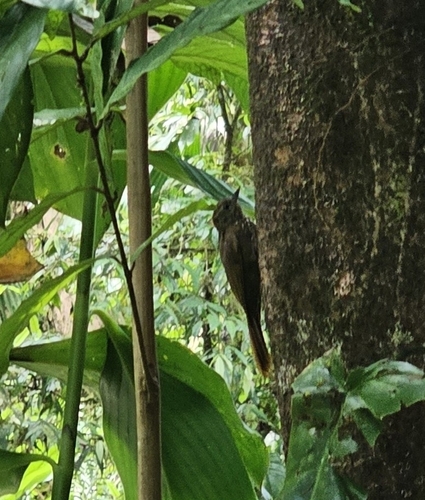
チビオニキバシリ (Glyphorynchus spirurus) チビオニキバシリ
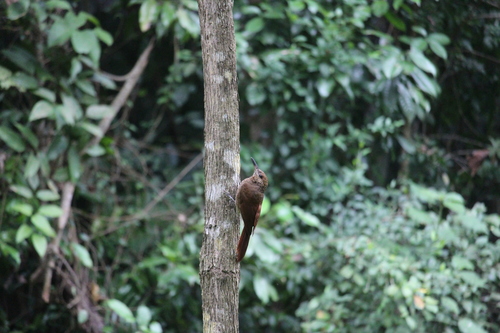
キタヨコジマオニキバシリ (Dendrocolaptes sanctithomae) キタヨコジマオニキバシリ

メディア

読み込み中…

要点

チビオニキバシリとキタヨコジマオニキバシリの最も信頼できるフィールドマークは、全体のサイズとくちばしの形です:Wedge-billedは小さく、短く、明確にくさび型で上向きのくちばしを持ち、Northern Barredははるかに大きく、長く、まっすぐなくちばしを持っています。飛行中、Wedge-billedはしばしば翼の裏側に淡いバフの帯を示し、すべての年齢で見られますが、Northern Barredはこの特徴がなく、代わりに体と翼全体に強い黒い縞模様を示します。特に成鳥と幼鳥においてです。止まっているとき、Wedge-billedはコンパクトで短い尾を持ち、下側には微妙な斑点と縞模様がありますが、Northern Barredは細長く、長い尾を持ち、全体に大胆に縞模様があります。混乱は主に幼鳥や遠くの鳥で起こりますが、サイズとくちばしの形はすべての年齢で信頼できます。

識別のコツ

  1. サイズは最も即座の手がかりです: Wedge-billedは小さい(13–16 cm)、Northern Barredは大きい(25–29 cm)。もしその鳥が木のくりの中でも小さく見えるなら、ほぼ確実にWedge-billedです。
  2. くちばしの形は診断的です: Wedge-billedは短く、太く、くさび型で上向きのくちばしを持ち(ほぼXenopsのよう)、Northern Barredは中程度の太さの長く、まっすぐなくちばしを持っています。これは悪い光や部分的な視界でも見えます。
  3. 飛行中の視界—翼の下の帯: すべての年齢のWedge-billedは、翼の羽毛の裏側にバフからバフホワイトのストライプを示し、飛行中に淡い帯を形成します。Northern Barredはこれがなく、代わりに均一なルーファス・チェスナットの飛行羽毛を持ち、鈍い先端と体と翼に強い縞模様を示します。
  4. 上面のパターン: Wedge-billedは主に平坦な茶色からルセットで、灰色がかった額と微妙なスーパシリウムを持っています。Northern Barredは頭頂、背中、翼に大胆に黒い縞模様があり、ルーフェセントの頭頂と後頭部を持っています。
  5. 下面—斑点対縞模様: Wedge-billedは上胸に大きな丸いフルバスの斑点を持ち、下には狭い縞模様があります;Northern Barredは金色からシナモンバフの下面に強く黒い縞模様があり、喉から腹部にかけて縞模様が広がっています。
  6. 尾の色と長さ: 両者ともルーファス・チェスナットの尾を持っていますが、Wedge-billedの尾は短くて四角いのに対し、Northern Barredの尾は長く、広げるとくさび型に見えることがよくあります。
  7. スーパシリウムと顔: Wedge-billedは薄いバフからバフホワイトのスーパシリウムとバフのアイリングを持ち、Northern Barredはかすかなルーファスのスーパシリウム、黒いロレス、細かい縞模様のあるシナモンブラウンの顔を持っています。
  8. 幼鳥の混乱: 幼鳥のNorthern Barredは下により拡散した縞模様を持ち、完全に黒いくちばしを持っていますが、全体的に大きなサイズと長いくちばしを示します。幼鳥のWedge-billedは成鳥に似ていますが、常にはるかに小さく、翼の下の帯を示します。
  9. 足の色: 両種とも足の色は変動しますが、これは信頼できるフィールドマークではありません。
  10. アリの群れでの行動: もし木のくりがアリの群れを追っているなら、特にペアや小さなグループで、Northern Barredを疑ってください。Wedge-billedはアリの群れを追うことはほとんどありません。
  11. 止まっている姿勢: Wedge-billedはコンパクトで、細い枝やつるにしがみつくことが多いですが、Northern Barredは直立して細長く、通常は太い幹の上にいます。
  12. 生息地の文脈: 乱されたりエッジのある生息地では、Wedge-billedの方が可能性が高いです。成熟した、乱されていない湿った森林では、両者が可能ですが、Northern Barredはアリの群れでの可能性が高いです。
  13. 亜種の変異: Wedge-billedは亜種間で喉と下面の色にいくつかの変異を示しますが、決して大胆に縞模様はありません。Northern Barredの亜種は主に縞模様の強さと下面のトーンが異なりますが、常に縞模様を示します。
  14. 幼鳥のくちばしの色: 幼鳥のNorthern Barredだけが完全に黒いくちばしを持っています;すべての年齢のWedge-billedは下顎に灰色の基部を持っています。
  15. **疑わしい場合は、まずサイズとくちばしの形を使用し、次に飛行中の翼の下の帯と止まっているときの下面の縞模様を確認してください。これらのマークはすべての季節と年齢で信頼できます。

大きさ

チビオニキバシリは最小の木のくりで、わずか13–16 cmで、体重は10.5–21 gです。それに対して、キタヨコジマオニキバシリは25–29 cmで、53–83 gと非常に大きいです。距離があったり混合した群れの中でも、サイズの差は劇的です:Northern BarredはWedge-billedのほぼ2倍の長さで、質量は3〜4倍です。この違いは、止まっているときも飛行中も明らかで、最も信頼できる分離点です。

羽色

行動

両種とも木の幹や枝で餌を探しますが、キタヨコジマオニキバシリはアリの群れと強く関連しており、しばしば単独またはペアでそれを追っているのが見られます。チビオニキバシリはアリの群れを専門としておらず、より頻繁に単独または混合種の群れで見られ、細い枝やつるに沿って迅速かつアクロバティックに移動します。より大きなNorthern Barredはより慎重に動き、しばしば幹に直立して止まります。飛行中、Wedge-billedは素早くひらひらとした印象を与えますが、Northern Barredは重く、より直接的です。

生息環境

両種は中部および南米北部で重なりますが、チビオニキバシリははるかに広範囲に分布し、メキシコから南米の多くの森林タイプ、エッジや乱された地域に見られます。キタヨコジマオニキバシリは成熟した湿った森林により制限されており、特に低地や丘陵地帯で見られ、断片化されたりエッジのある生息地では見られにくいです。重なりのある地域では、Northern Barredは一般的に少なく、乱れに対してより敏感です。

より良い説明を送る

比較と同じ項目を使ってください。文章はすぐに公開されます。

The most reliable field mark between Wedge-billed Woodcreeper and Northern Barred-Woodcreeper is overall size and bill shape: the Wedge-billed is tiny with a short, distinctly wedge-shaped, upturned bill, while the Northern Barred is much larger, with a long, straight bill. In flight, the Wedge-billed often shows a pale buff band on the underside of the wing, visible in all ages, while the Northern Barred lacks this feature and instead shows strong black barring across the body and wings, especially in adults and juveniles. Perched, the Wedge-billed is compact and short-tailed, with subtle spotting and streaking below, while the Northern Barred is lanky, long-tailed, and boldly barred throughout. Confusion is most likely with juvenile or distant birds, but size and bill shape remain reliable at all ages.

  1. Size is the most immediate clue: Wedge-billed is tiny (13–16 cm), Northern Barred is large (25–29 cm). If the bird looks small even for a woodcreeper, it's almost certainly Wedge-billed.
  2. Bill shape is diagnostic: Wedge-billed has a short, stubby, wedge-shaped, upturned bill (almost Xenops-like); Northern Barred has a long, straight bill with a medium thickness. This is visible even in poor light or partial views.
  3. Flight view—underwing band: Wedge-billed of all ages shows a buff to buff-white stripe on the underside of the wing feathers, forming a pale band in flight. Northern Barred lacks this, instead showing uniform rufous-chestnut flight feathers with dusky tips and strong barring on the body and wings.
  4. Upperparts pattern: Wedge-billed is mostly plain brown to russet above, with a grayish forehead and subtle supercilium. Northern Barred is boldly barred black across the crown, back, and wings, with a rufescent crown and nape.
  5. Underparts—spotting vs barring: Wedge-billed has large round fulvous spots on the upper breast and narrow streaks below; Northern Barred is heavily barred black on golden to cinnamon-buff underparts, with barring extending from throat to belly.
  6. Tail color and length: Both have rufous-chestnut tails, but Wedge-billed's tail is short and square, while Northern Barred's is long and often appears wedge-shaped when spread.
  7. Supercilium and face: Wedge-billed has a thin buff to buff-white supercilium and a buff eyering; Northern Barred has a faint rufous supercilium, black lores, and a cinnamon-brown face with fine barring.
  8. Juvenile confusion: Juvenile Northern Barred has more diffuse barring below and a fully black bill, but still shows the overall large size and long bill. Juvenile Wedge-billed looks like adult but is always much smaller and shows the underwing band.
  9. Leg color: Both species have variable leg colors, but this is not a reliable field mark.
  10. Behavior at ant swarms: If the woodcreeper is following an army ant swarm, especially in pairs or small groups, suspect Northern Barred. Wedge-billed rarely follows ant swarms.
  11. Perching posture: Wedge-billed is compact, often clinging to thin branches or vines; Northern Barred is upright and lanky, usually on thick trunks.
  12. Habitat context: In disturbed or edge habitats, Wedge-billed is more likely. In mature, undisturbed humid forest, both are possible, but Northern Barred is more likely at ant swarms.
  13. Subspecies variation: Wedge-billed shows some variation in throat and underpart color among subspecies, but is never boldly barred. Northern Barred subspecies differ mainly in barring strength and underpart tone, but always show barring.
  14. Bill color in juveniles: Only juvenile Northern Barred has a fully black bill; Wedge-billed of all ages has a gray base to the mandible.
  15. **When in doubt, use size and bill shape first, then check for underwing band in flight and barring on underparts when perched. These marks are reliable in all seasons and ages.

Wedge-billed Woodcreeper is the smallest woodcreeper, measuring only 13–16 cm and weighing 10.5–21 g. In contrast, Northern Barred-Woodcreeper is much larger at 25–29 cm and 53–83 g. Even at a distance or in mixed flocks, the size gap is dramatic: the Northern Barred is nearly twice the length and three to four times the mass of the Wedge-billed. This difference is obvious both perched and in flight, and is the single most reliable separation point.

  • Juvenile/immature flight views: Wedge-billed Woodcreeper (all ages) shows a distinct buff to buff-white stripe on the underside of most wing feathers, forming a pale band visible in flight. Northern Barred-Woodcreeper lacks this band; instead, both adults and juveniles show strong black barring across the body and wings, with juveniles having more diffuse barring below and redder undertail coverts.
  • Adults perched: Wedge-billed is mostly plain brown above with a grayish forehead, subtle supercilium, and underparts marked by large round fulvous spots on the upper breast and narrow streaks below. The tail and lower back are cinnamon-rufous. Northern Barred is boldly patterned: cinnamon-brown face with fine barring, rufous supercilium, black lores, and rich rufescent crown and nape. The back, crown, and wings are heavily barred black; underparts are golden to cinnamon-buff with narrow, crisp black barring throughout. The tail is also rufous-chestnut.
  • Bill color: Wedge-billed has a black bill with a gray base to the mandible; Northern Barred's bill is mostly blackish with paler edges and base, but juveniles have an entirely black bill.

Both species forage on tree trunks and branches, but Northern Barred-Woodcreeper is strongly associated with army ant swarms, often seen following them singly or in pairs. Wedge-billed Woodcreeper does not specialize on ant swarms and is more often seen alone or in mixed-species flocks, moving quickly and acrobatically along thin branches and vines. The larger Northern Barred moves more deliberately, often pausing upright on trunks. In flight, the Wedge-billed appears quick and fluttery, while the Northern Barred is heavier and more direct.

Both species overlap in Central and northern South America, but Wedge-billed Woodcreeper is much more widespread, found from Mexico through much of South America in a variety of forest types, including edges and disturbed areas. Northern Barred-Woodcreeper is more restricted to mature humid forests, especially in lowlands and foothills, and is less likely in fragmented or edge habitats. In areas of overlap, Northern Barred is generally less common and more sensitive to disturbance.

変更を破棄しますか?

保存していない編集があります。今離れると失われます。

チビオニキバシリ · キタヨコジマオニキバシリ · 苦手な鳥