

violet-backed starling vs somali starling
Cinnyricinclus leucogaster versus Onychognathus blythii
Jogue um quiz com violet-backed starling e somali starling
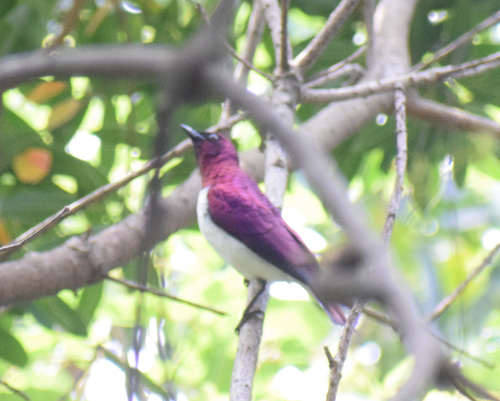 violet-backed starling
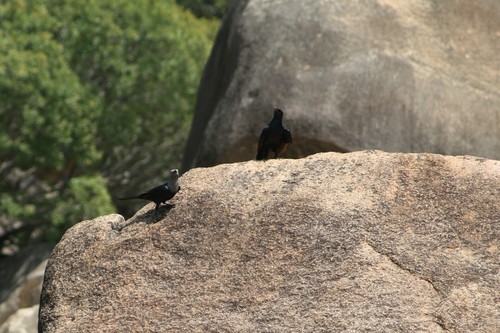 somali starling
Em resumo
A marca de campo mais confiável é o forte dimorfismo sexual do violet-backed starling: os machos adultos são strikingly iridescent violet acima e pure white abaixo, enquanto as fêmeas são marrons e fortemente estriadas, lembrando um thrush. O somali starling, em contraste, não possui esse dimorfismo e é, no geral, muito maior e mais robusto. Se você ver um starling pequeno, semelhante a um thrush, com estrias ousadas, é o violet-backed starling (fêmea ou imaturo); um starling muito mais robusto e uniforme no Chifre da África é o somali starling. Os violet-backed starlings imaturos e fêmeas são uma armadilha comum devido à sua aparência críptica e estriada, mas o tamanho e a estrutura são pistas chave.
Dicas de identificação
- Dimorfismo sexual: Apenas o violet-backed starling é fortemente dimórfico sexualmente. Os machos adultos são brilhantes e iridescentes violet acima e pure white abaixo; as fêmeas são marrons com estrias pesadas. O somali starling não apresenta tal contraste entre os sexos.
- Confusão fêmea/imaturo: As fêmeas e imaturos do violet-backed starling são marrons acima e fortemente estriados abaixo, lembrando um thrush. O somali starling não é estriado e parece mais uniforme.
- Tamanho: O somali starling é muito mais pesado e robusto (cerca de 100 g) do que o delicado violet-backed starling (cerca de 17–18 cm e muito mais leve). Se o pássaro parecer grande e pesado para um starling, o somali é mais provável.
- Bico e estrutura: O violet-backed starling é pequeno e de bico fino, com uma aparência delicada. O somali starling é robusto e de bico pesado.
- Iridescência: Apenas o macho adulto do violet-backed starling apresenta forte iridescência violet. O somali starling não possui isso e é mais sutil.
- Partes inferiores: Os machos do violet-backed starling têm partes inferiores pure white; as fêmeas e imaturos têm branco com estrias pesadas. O somali starling não apresenta esse contraste.
- Habitat: O violet-backed starling é encontrado em florestas e bordas de florestas; o somali starling é restrito ao Chifre da África e pode ser encontrado em habitats mais áridos ou abertos.
- Distribuição geográfica: Se você estiver fora de Djibuti, Eritreia, Etiópia, Somália ou Socotra, o somali starling não está presente.
- Comportamento: Se observado caçando insetos ou forrageando alto na copa, suspeite do violet-backed starling. O somali starling é provavelmente menos ágil e menos arbóreo.
- Cor dos olhos: Ambos têm íris amarelas, então isso não é um separador útil.
- Cor das pernas e bico: Ambos têm bicos e pernas pretas; não é diagnóstico.
- Forrageamento no chão: O violet-backed starling raramente forrageia no chão; os hábitos do somali starling são menos claros, mas provavelmente mais terrestres devido ao seu tamanho.
- Localização do ninho: O violet-backed starling faz ninhos em fendas de árvores a poucos metros do chão; não é uma marca de campo, mas pode ajudar no contexto.
- Padrão de asas juvenil/imaturo: Nenhuma marca de voo distintiva é descrita para nenhuma das espécies, então confie na plumagem e estrutura geral para jovens pássaros.
- Armadilha: A principal confusão surge com o violet-backed starling fêmea/imaturo, que pode parecer um pequeno thrush; verifique o tamanho, a estrutura e as estrias para evitar identificação errônea.
Tamanho
O violet-backed starling é um pequeno starling, cerca de 17–18 cm de comprimento, e é visivelmente mais leve e mais delicado do que o somali starling. O somali starling é muito mais pesado, com uma massa adulta em torno de 100 g [wikidata], tornando-o robusto e visivelmente mais volumoso em campo. Essa diferença de tamanho é frequentemente aparente mesmo à distância, especialmente quando ambas as espécies são vistas na mesma região (embora suas distribuições se sobreponham pouco).
Plumagem
Os machos adultos do violet-backed starling são inconfundíveis com sua cabeça e costas iridescentes violet e partes inferiores pure white. As fêmeas e imaturos são marrons acima com estrias ousadas, semelhantes a um thrush, tanto nas partes superiores quanto inferiores. O somali starling, em contraste, não apresenta esse forte dimorfismo sexual ou estrias ousadas; sua plumagem é mais uniforme e carece do contraste nítido das fêmeas/imaturos do violet-backed starling. Ambos os sexos do somali starling parecem semelhantes e são geralmente simples em comparação com as fêmeas/imaturos altamente padronizados do violet-backed starling. Nenhum padrão de asas juvenil ou imaturo distintivo é descrito para nenhuma das espécies nas fontes, então concentre-se na plumagem e estrutura geral.
Comportamento
O violet-backed starling geralmente forrageia alto na copa, raramente descendo ao chão, e às vezes captura insetos em voo como um flycatcher. O comportamento de forrageamento do somali starling não é detalhado nas fontes, mas seu tamanho maior e construção mais pesada sugerem que é menos provável que realize manobras aéreas ágeis ou se alimente alto na copa. Se você observar um starling ativamente caçando insetos ou permanecendo alto nas árvores, o violet-backed é mais provável.
Habitat
O violet-backed starling é encontrado amplamente na África subsaariana, especialmente em florestas e nas bordas de florestas de savana. O somali starling é restrito ao Chifre da África (Djibuti, Eritreia, Etiópia, Somália e Socotra) e não é encontrado na ampla faixa subsaariana. Se você estiver fora do Chifre da África, o somali starling pode ser descartado. Dentro do Chifre, verifique o habitat: o violet-backed prefere áreas arborizadas, enquanto o somali starling pode ocorrer em habitats mais áridos ou abertos.
violet-backed starling · somali starling · Minhas aves difíceis