

Motmot

シロハラムクドリ 対 ソマリーテリムク

Cinnyricinclus leucogaster 対 Onychognathus blythii

シロハラムクドリとソマリーテリムクのクイズ
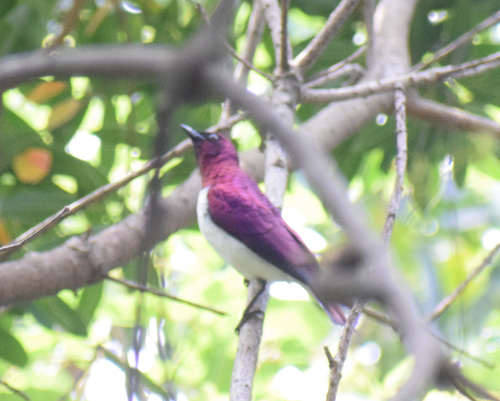
シロハラムクドリ (Cinnyricinclus leucogaster) シロハラムクドリ
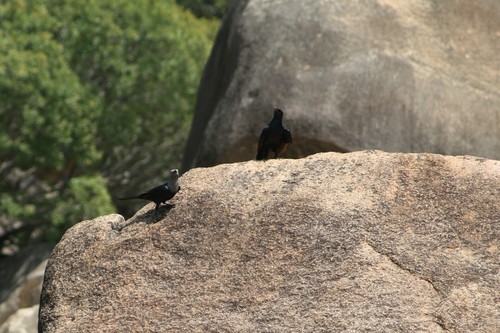
ソマリーテリムク (Onychognathus blythii) ソマリーテリムク

メディア

読み込み中…

要点

最も信頼できるフィールドマークは、シロハラムクドリの強い性的二形性です:成鳥のオスは上面が目を引く虹色の紫色で、下面は純白ですが、メスは茶色で重い縞模様があり、ツグミに似ています。対照的に、ソマリーテリムクはこの二形性がなく、全体的にずっと大きく、体重も重いです。もし小さく、ツグミのような大胆な縞模様のあるムクドリを見たら、それはシロハラムクドリ(メスまたは幼鳥)です;アフリカの角にいるのは、ずっとがっしりとした均一なムクドリであるソマリーテリムクです。幼鳥とメスのシロハラムクドリは、その隠れた縞模様の外見のために一般的な落とし穴ですが、サイズと構造が重要な手がかりです。

識別のコツ

  1. 性的二形性: シロハラムクドリだけが強い性的二形性を示します。成鳥のオスは明るい虹色の紫色で上面が覆われ、下面は純白です;メスは重い縞模様のある茶色です。ソマリーテリムクは性別間にそのような対比を示しません。
  2. メス/幼鳥の混同: メスと幼鳥のシロハラムクドリは上面が茶色で、下面に重い縞模様があり、ツグミに似ています。ソマリーテリムクは縞模様がなく、より均一に見えます。
  3. サイズ: ソマリーテリムクは繊細なシロハラムクドリ(約17〜18 cmでずっと軽い)よりもずっと重く、がっしりとしています(約100 g)。もしその鳥がムクドリにしては大きくて重いように見えるなら、ソマリーテリムクの可能性が高いです。
  4. くちばしと構造: シロハラムクドリは小さくて細いくちばしを持ち、繊細な外見です。ソマリーテリムクは頑丈で重いくちばしを持っています。
  5. 虹色の輝き: 成鳥のオスのシロハラムクドリだけが強い紫色の虹色の輝きを示します。ソマリーテリムクはこれを欠き、より控えめです。
  6. 下面: シロハラムクドリのオスは純白の下面を持ち;メスと幼鳥は重い縞模様のある白です。ソマリーテリムクはこの対比を示しません。
  7. 生息地: シロハラムクドリは森林や森林の端に見られます;ソマリーテリムクはアフリカの角に限定され、より乾燥したまたは開けた生息地に見られることがあります。
  8. 地理的範囲: ジブチ、エリトリア、エチオピア、ソマリア、またはソコトラの外にいる場合、ソマリーテリムクは存在しません。
  9. 行動: キャッチングや高い樹冠での採餌を観察した場合、シロハラムクドリを疑ってください。ソマリーテリムクはおそらく機敏さが少なく、樹上性が低いです。
  10. 目の色: 両者ともに黄色い虹彩を持っているため、これは有用な区別にはなりません。
  11. 足とくちばしの色: 両者ともに黒いくちばしと足を持っており、診断的ではありません。
  12. 地面での採餌: シロハラムクドリは地面で採餌することはまれです;ソマリーテリムクの習性は不明ですが、そのサイズからより陸生である可能性が高いです。
  13. 巣の位置: シロハラムクドリは地面から数メートル上の木の隙間に巣を作ります;フィールドマークではありませんが、文脈で役立つかもしれません。
  14. 幼鳥/未熟な翼のパターン: どちらの種についても特徴的な飛行マークは記載されていないため、若い鳥については全体的な羽毛と構造に依存してください。
  15. 落とし穴: 主な混乱は、メス/幼鳥のシロハラムクドリに起因し、小さなツグミのように見えることがあります;誤同定を避けるために、サイズ、構造、縞模様を確認してください。

大きさ

シロハラムクドリは小さなムクドリで、長さは約17〜18 cmで、ソマリーテリムクよりも明らかに軽く、繊細です。ソマリーテリムクはずっと重く、成鳥の質量は約100 g [wikidata]で、フィールドで頑丈で明らかにがっしりとしています。このサイズの違いは、特に両種が同じ地域で見られる場合、距離があってもしばしば明らかです(ただし、彼らの範囲はほとんど重なりません)。

羽色

成鳥のオスのシロハラムクドリは、虹色の紫色の頭と背中、純白の下面で間違いなく識別できます。メスと幼鳥は上面が茶色で、上面と下面の両方に大胆なツグミのような縞模様があります。対照的に、ソマリーテリムクはこの強い性的二形性や大胆な縞模様を示さず、その羽毛はより均一で、シロハラムクドリのメス/幼鳥の鮮明な対比が欠けています。ソマリーテリムクの両性は似ており、一般的にシロハラムクドリのメス/幼鳥に比べて地味です。情報源には、どちらの種についても特徴的な幼鳥や未熟な翼のパターンは記載されていないため、全体的な羽毛と構造に焦点を当ててください。

行動

シロハラムクドリは通常、高い樹冠で採餌し、地面に来ることはまれで、時にはフライキャッチャーのように飛行中に昆虫を捕まえます。ソマリーテリムクの採餌行動は情報源に詳細が記載されていませんが、その大きなサイズと重い体型は、機敏な空中機動を行ったり、高い樹冠で餌を取ったりする可能性が低いことを示唆しています。もしムクドリが積極的にフライキャッチングをしたり、木の高いところに留まっているのを観察したら、シロハラムクドリの可能性が高いです。

生息環境

シロハラムクドリはサハラ以南のアフリカで広く見られ、特に森林やサバンナの森林の端に生息しています。ソマリーテリムクはアフリカの角(ジブチ、エリトリア、エチオピア、ソマリア、ソコトラ)に限定され、広範なサハラ以南の範囲には見られません。もしアフリカの角の外にいる場合、ソマリーテリムクは除外できます。アフリカの角の中では、生息地を確認してください:シロハラムクは森林のある地域を好み、ソマリーテリムクはより乾燥したまたは開けた生息地に出現する可能性があります。

より良い説明を送る

比較と同じ項目を使ってください。文章はすぐに公開されます。

The most reliable field mark is the strong sexual dimorphism of Violet-backed Starling: adult males are strikingly iridescent violet above and pure white below, while females are brown and heavily streaked, resembling a thrush. Somali Starling, by contrast, lacks this dimorphism and is overall much larger and heavier-bodied. If you see a small, thrush-like starling with bold streaking, it is Violet-backed Starling (female or immature); a much bulkier, uniform starling in the Horn of Africa is Somali Starling. Immature and female Violet-backed Starlings are a common pitfall due to their cryptic, streaked appearance, but size and structure are key clues.

  1. Sexual dimorphism: Only Violet-backed Starling is strongly sexually dimorphic. Adult males are bright iridescent violet above and pure white below; females are brown with heavy streaking. Somali Starling shows no such contrast between sexes.
  2. Female/immature confusion: Female and immature Violet-backed Starlings are brown above and heavily streaked below, resembling a thrush. Somali Starling is not streaked and appears more uniform.
  3. Size: Somali Starling is much heavier and bulkier (about 100 g) than the delicate Violet-backed Starling (about 17–18 cm and much lighter). If the bird looks large and heavy for a starling, Somali is more likely.
  4. Bill and structure: Violet-backed Starling is small and fine-billed, with a delicate appearance. Somali Starling is robust and heavy-billed.
  5. Iridescence: Only adult male Violet-backed Starling shows strong violet iridescence. Somali Starling lacks this and is more subdued.
  6. Underparts: Violet-backed Starling males have pure white underparts; females and immatures have white with heavy streaking. Somali Starling does not show this contrast.
  7. Habitat: Violet-backed Starling is found in woodlands and forest edges; Somali Starling is restricted to the Horn of Africa and may be found in more arid or open habitats.
  8. Geographic range: If you are outside Djibouti, Eritrea, Ethiopia, Somalia, or Socotra, Somali Starling is not present.
  9. Behavior: If observed flycatching or foraging high in the canopy, suspect Violet-backed Starling. Somali Starling is likely less agile and less arboreal.
  10. Eye color: Both have yellow irises, so this is not a useful separator.
  11. Leg and bill color: Both have black bills and legs; not diagnostic.
  12. Ground foraging: Violet-backed Starling rarely forages on the ground; Somali Starling's habits are less clear but likely more terrestrial due to its size.
  13. Nest location: Violet-backed Starling nests in tree crevices a few meters above ground; not a field mark but may help in context.
  14. Juvenile/immature wing pattern: No distinctive flight marks are described for either species, so rely on overall plumage and structure for young birds.
  15. Pitfall: The main confusion arises with female/immature Violet-backed Starling, which can look like a small thrush; check for size, structure, and streaking to avoid misidentification.

Violet-backed Starling is a small starling, about 17–18 cm in length, and is noticeably lighter and more delicate than Somali Starling. Somali Starling is much heavier, with an adult mass around 100 g [wikidata], making it robust and noticeably bulkier in the field. This size difference is often apparent even at a distance, especially when both species are seen in the same region (though their ranges overlap little).

Adult male Violet-backed Starlings are unmistakable with their iridescent violet head and back and pure white underparts. Females and immatures are brown above with bold, thrush-like streaking on both upperparts and underparts. Somali Starling, by contrast, does not show this strong sexual dimorphism or bold streaking; its plumage is more uniform and lacks the crisp contrast of Violet-backed Starling females/immatures. Both sexes of Somali Starling appear similar and are generally plain compared to the highly patterned Violet-backed Starling females/immatures. No distinctive juvenile or immature wing pattern is described for either species in the sources, so focus on overall plumage and structure.

Violet-backed Starling typically forages high in the canopy, rarely coming to the ground, and sometimes hawks insects in flight like a flycatcher. Somali Starling's foraging behavior is not detailed in the sources, but its larger size and heavier build suggest it is less likely to perform agile aerial maneuvers or feed high in the canopy. If you observe a starling actively flycatching or staying high in trees, Violet-backed is more likely.

Violet-backed Starling is found widely in sub-Saharan Africa, especially in woodlands and at the edges of savannah forests. Somali Starling is restricted to the Horn of Africa (Djibouti, Eritrea, Ethiopia, Somalia, and Socotra) and is not found in the broader sub-Saharan range. If you are outside the Horn of Africa, Somali Starling can be ruled out. Within the Horn, check for habitat: Violet-backed prefers wooded areas, while Somali Starling may occur in more arid or open habitats.

変更を破棄しますか?

保存していない編集があります。今離れると失われます。

シロハラムクドリ · ソマリーテリムク · 苦手な鳥