

Estornino Amatista vs Estornino Somalí
Cinnyricinclus leucogaster frente a Onychognathus blythii
Juega un quiz con Estornino Amatista y Estornino Somalí
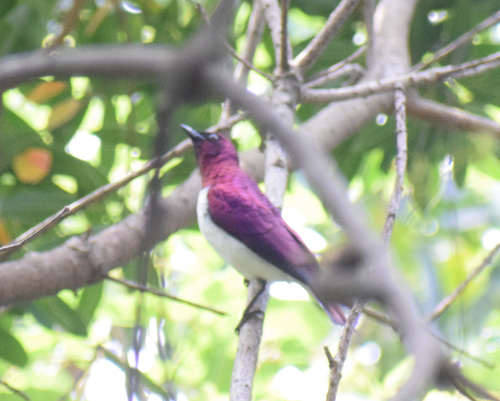 Estornino Amatista
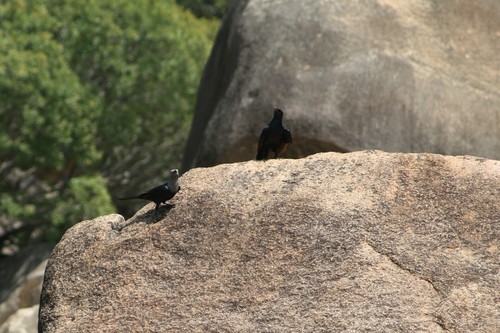 Estornino Somalí
En breve
La marca de campo más confiable es el fuerte dimorfismo sexual del Estornino Amatista: los machos adultos son strikingmente iridiscentes violetas por encima y completamente blancos por debajo, mientras que las hembras son marrones y fuertemente estriadas, pareciendo un zorzal. El Estornino Somalí, en contraste, carece de este dimorfismo y es en general mucho más grande y pesado. Si ves un estornino pequeño, parecido a un zorzal, con estrías audaces, es el Estornino Amatista (hembra o inmaduro); un estornino mucho más robusto y uniforme en el Cuerno de África es el Estornino Somalí. Los Estorninos Amatista inmaduros y hembras son una trampa común debido a su apariencia críptica y estriada, pero el tamaño y la estructura son pistas clave.
Consejos de identificación
- Dimorfismo sexual: Solo el Estornino Amatista es fuertemente dimórfico sexualmente. Los machos adultos son de un brillante color violeta iridiscente por encima y completamente blancos por debajo; las hembras son marrones con fuertes estrías. El Estornino Somalí no muestra tal contraste entre los sexos.
- Confusión hembra/inmaduro: Las hembras y los Estorninos Amatista inmaduros son marrones por encima y fuertemente estriados por debajo, pareciendo un zorzal. El Estornino Somalí no está estriado y parece más uniforme.
- Tamaño: El Estornino Somalí es mucho más pesado y robusto (alrededor de 100 g) que el delicado Estornino Amatista (alrededor de 17–18 cm y mucho más ligero). Si el ave parece grande y pesada para un estornino, es más probable que sea el Somalí.
- Pico y estructura: El Estornino Amatista es pequeño y de pico fino, con una apariencia delicada. El Estornino Somalí es robusto y de pico pesado.
- Iridescencia: Solo el macho adulto del Estornino Amatista muestra una fuerte iridiscencia violeta. El Estornino Somalí carece de esto y es más sobrio.
- Partes inferiores: Los machos del Estornino Amatista tienen partes inferiores completamente blancas; las hembras y los inmaduros tienen blanco con fuertes estrías. El Estornino Somalí no muestra este contraste.
- Hábitat: El Estornino Amatista se encuentra en bosques y bordes de bosques; el Estornino Somalí está restringido al Cuerno de África y puede encontrarse en hábitats más áridos o abiertos.
- Rango geográfico: Si estás fuera de Djibouti, Eritrea, Etiopía, Somalia o Socotra, el Estornino Somalí no está presente.
- Comportamiento: Si se observa cazando insectos o buscando alimento en lo alto del dosel, sospecha del Estornino Amatista. El Estornino Somalí es probable que sea menos ágil y menos arbóreo.
- Color de los ojos: Ambos tienen iris amarillos, por lo que esto no es un separador útil.
- Color de las patas y el pico: Ambos tienen picos y patas negras; no son diagnósticos.
- Forrajeo en el suelo: El Estornino Amatista rara vez forajea en el suelo; los hábitos del Estornino Somalí son menos claros pero probablemente más terrestres debido a su tamaño.
- Ubicación del nido: El Estornino Amatista anida en grietas de árboles a unos pocos metros sobre el suelo; no es una marca de campo pero puede ayudar en contexto.
- Patrón de alas juvenil/inmaduro: No se describen marcas de vuelo distintivas para ninguna de las especies, así que confía en el plumaje general y la estructura para las aves jóvenes.
- Trampa: La principal confusión surge con el Estornino Amatista hembra/inmaduro, que puede parecer un pequeño zorzal; verifica el tamaño, la estructura y las estrías para evitar una identificación errónea.
Tamaño
El Estornino Amatista es un pequeño estornino, de aproximadamente 17–18 cm de longitud, y es notablemente más ligero y delicado que el Estornino Somalí. El Estornino Somalí es mucho más pesado, con una masa adulta alrededor de 100 g [wikidata], lo que lo hace robusto y notablemente más voluminoso en el campo. Esta diferencia de tamaño es a menudo evidente incluso a distancia, especialmente cuando ambas especies se ven en la misma región (aunque sus rangos se superponen poco).
Plumaje
Los machos adultos del Estornino Amatista son inconfundibles con su cabeza y espalda iridiscentes violetas y partes inferiores completamente blancas. Las hembras y los inmaduros son marrones por encima con fuertes estrías, pareciendo un zorzal. El Estornino Somalí, en contraste, no muestra este fuerte dimorfismo sexual o estrías audaces; su plumaje es más uniforme y carece del contraste nítido de las hembras/inmaduros del Estornino Amatista. Ambos sexos del Estornino Somalí parecen similares y son generalmente simples en comparación con las hembras/inmaduros altamente patrones del Estornino Amatista. No se describe un patrón de alas juvenil o inmaduro distintivo para ninguna de las especies en las fuentes, así que enfócate en el plumaje general y la estructura.
Comportamiento
El Estornino Amatista típicamente forajea en lo alto del dosel, rara vez bajando al suelo, y a veces caza insectos en vuelo como un atrapamoscas. El comportamiento de forrajeo del Estornino Somalí no se detalla en las fuentes, pero su mayor tamaño y construcción más pesada sugieren que es menos probable que realice maniobras aéreas ágiles o se alimente en lo alto del dosel. Si observas un estornino cazando activamente o permaneciendo alto en los árboles, es más probable que sea el Amatista.
Hábitat
El Estornino Amatista se encuentra ampliamente en África subsahariana, especialmente en bosques y en los bordes de los bosques de sabana. El Estornino Somalí está restringido al Cuerno de África (Djibouti, Eritrea, Etiopía, Somalia y Socotra) y no se encuentra en el rango más amplio de África subsahariana. Si estás fuera del Cuerno de África, se puede descartar al Estornino Somalí. Dentro del Cuerno, verifica el hábitat: el Amatista prefiere áreas boscosas, mientras que el Estornino Somalí puede ocurrir en hábitats más áridos o abiertos.