

violet-backed starling vs pale-winged starling
Cinnyricinclus leucogaster versus Onychognathus nabouroup
Jogue um quiz com violet-backed starling e pale-winged starling
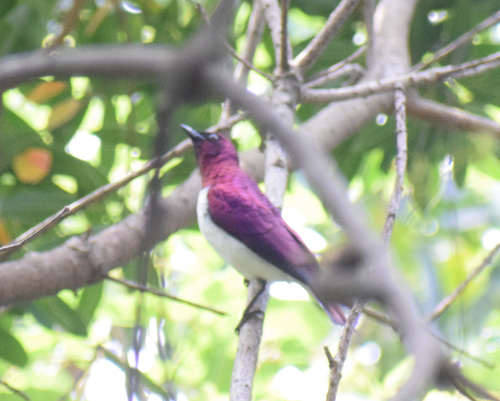 violet-backed starling
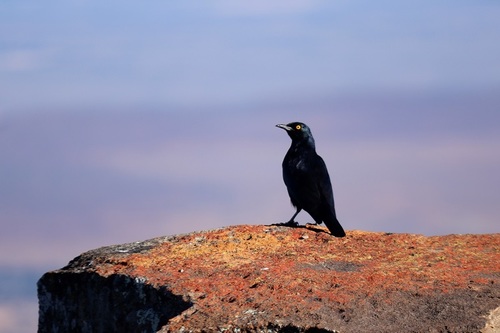 pale-winged starling
Em resumo
A marca de campo mais confiável para separar o violet-backed starling do pale-winged starling é o forte dimorfismo sexual do violet-backed: os machos adultos são strikingly iridescent violet acima com partes inferiores brancas puras, enquanto as fêmeas são marrons e fortemente estriadas, assemelhando-se a um thrush. Em contraste, o pale-winged starling não possui esse dimorfismo e é, em geral, muito maior e mais robusto. Os juvenis e fêmeas de violet-backed starling são facilmente confundidos com outros starlings estriados, mas o pale-winged nunca apresenta estrias tão fortes. Se você ver um starling com asas pálidas, verifique o tamanho do corpo e a coloração geral; se você ver um starling pequeno, semelhante a um thrush, e estriado, é quase certamente uma fêmea ou um juvenil de violet-backed. O habitat e o comportamento também podem ajudar: o violet-backed é mais arbóreo e raramente está no chão, enquanto o pale-winged é mais generalista.
Dicas de identificação
- O macho adulto de violet-backed starling é inconfundível: Procure por uma cabeça e costas iridescentes violetas com partes inferiores brancas puras. Nenhum outro starling na região, incluindo o pale-winged, apresenta essa combinação. Funciona apenas para machos adultos.
- Fêmeas e imaturos de violet-backed são semelhantes a thrushes: Marrons acima, fortemente estriados acima e abaixo. Se você ver um starling pequeno, estriado e semelhante a um thrush, é quase certamente uma fêmea ou um juvenil de violet-backed. O pale-winged nunca mostra esse padrão.
- O pale-winged starling não apresenta estrias fortes: Ambos os sexos são semelhantes e não mostram as estrias pesadas ou o padrão semelhante a thrush de fêmeas/imaturos de violet-backed. Se o pássaro for simples ou apenas levemente marcado, considere o pale-winged.
- Tamanho e estrutura: O pale-winged é muito mais pesado e robusto (~103 g) do que o relativamente pequeno violet-backed (17–18 cm, mas mais leve). Em bandos mistos ou com experiência, essa diferença de tamanho é óbvia.
- Cor da íris: O violet-backed tem íris amarelas (ambos os sexos); a cor da íris do pale-winged não é especificada, então use com cautela.
- Bico e pernas: Ambos têm bicos e pernas pretos; não é útil para separação.
- Dimorfismo sexual: Apenas o violet-backed apresenta forte dimorfismo sexual (machos e fêmeas parecem muito diferentes); os sexos do pale-winged são semelhantes.
- Preferência de habitat: O violet-backed é mais arbóreo, alimentando-se alto na copa e raramente no chão. O pale-winged é um generalista e pode ser visto em várias alturas, possivelmente mais frequentemente no chão.
- Distribuição geográfica: Se você estiver no sul da África (Angola, Botswana, Namíbia, África do Sul), ambos são possíveis, mas o pale-winged é mais provável em áreas áridas/abertas; o violet-backed é mais amplamente distribuído em florestas e bordas de florestas.
- Comportamento: Fique atento à captura de insetos em estilo de flycatcher no violet-backed; o pale-winged é um onívoro generalista.
- Padrão das asas: Nenhuma marca específica relacionada à idade nas asas superiores ou padrões de voo é descrita nas notas para nenhuma das espécies, então não confie nessa característica.
- Visões empoleiradas vs. em voo: Tamanho, plumagem e estrias são melhor avaliados quando empoleirados. Em voo, use tamanho e coloração geral, mas tenha cuidado, pois fêmeas/imaturos de violet-backed podem parecer simples à distância.
- Confundindo fêmeas/imaturos: A armadilha mais comum é confundir fêmeas/imaturos de violet-backed (estriados, semelhantes a thrushes) com outros starlings simples ou de asas pálidas. Sempre verifique se há estrias pesadas e tamanho pequeno.
- O macho de violet-backed nunca se assemelha ao pale-winged: Se o pássaro é violeta e branco, não é pale-winged.
- Se em dúvida, use uma combinação: Combine tamanho, plumagem (especialmente estrias e cor), habitat e comportamento para a identificação mais confiável, especialmente para fêmeas e imaturos.
Tamanho
O pale-winged starling é substancialmente mais pesado (massa corporal ~103 g) do que o violet-backed starling (sem massa precisa nas notas, mas descrito como 'relativamente pequeno' e 17–18 cm de comprimento) [wikipedia][wikidata]. O violet-backed é visivelmente menor e mais delicado, especialmente em comparação com o robusto e corpulento pale-winged. Essa diferença de tamanho é frequentemente aparente em comparação direta ou com experiência, especialmente em voo ou quando empoleirados lado a lado.
Plumagem
- Juvenil/Imaturo/Fêmea: As fêmeas e imaturos de violet-backed starling são marrons acima com estrias ousadas e partes inferiores brancas, fortemente estriadas, assemelhando-se a um pequeno thrush. O pale-winged starling nunca mostra estrias tão fortes ou padrões semelhantes a thrush em qualquer idade ou sexo.
- Macho Adulto: Os machos adultos de violet-backed são inconfundíveis: cabeça e costas iridescentes violetas, com partes inferiores brancas puras. Nenhuma plumagem semelhante no pale-winged.
- Pale-winged Adulto: Carece de forte dimorfismo sexual; ambos os sexos têm plumagem semelhante, sem menção de contraste violeta ou branco, e sem estrias pesadas. A característica chave (do nome e fontes) é a asa pálida, mas detalhes não são fornecidos nas notas.
- Íris e partes nuas: Ambos têm bicos e pernas escuros, mas o violet-backed tem íris amarelas em ambos os sexos; a cor da íris no pale-winged não é especificada nas notas.
Comportamento
O violet-backed starling é principalmente arbóreo, alimentando-se alto na copa e raramente indo ao chão. Às vezes, captura insetos em estilo de flycatcher. O pale-winged starling é um onívoro generalista, alimentando-se de frutas e insetos, mas nenhuma altura ou estilo de forrageamento específico é notado. O violet-backed é mais provável de ser visto em árvores, enquanto o pale-winged pode ser encontrado em várias alturas e possivelmente mais frequentemente no chão.
Habitat
O violet-backed starling é amplamente distribuído em florestas e bordas de savanas na África subsaariana, favorecendo habitats arbóreos. O pale-winged starling é encontrado em Angola, Botswana, Namíbia e África do Sul, sem detalhes precisos de habitat nas notas, mas sua distribuição é mais ao sul e possivelmente mais árida ou aberta. Se você estiver em uma floresta densa ou borda de floresta, o violet-backed é mais provável; em habitats abertos ou do sul, o pale-winged é mais provável.
violet-backed starling · pale-winged starling · Minhas aves difíceis