

violet-backed starling vs chestnut-winged starling
Cinnyricinclus leucogaster versus Onychognathus fulgidus
Jogue um quiz com violet-backed starling e chestnut-winged starling
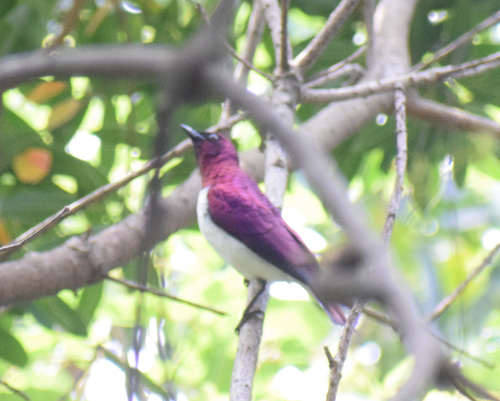 violet-backed starling
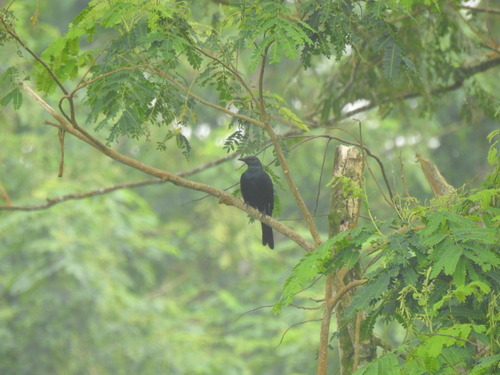 chestnut-winged starling
Em resumo
A marca de campo mais confiável para separar o violet-backed starling do chestnut-winged starling é o forte dimorfismo sexual e o contraste de plumagem no violet-backed: os machos adultos são strikingly iridescent violet acima com partes inferiores brancas puras, enquanto as fêmeas são marrons e fortemente estriadas, assemelhando-se a um tordo. O chestnut-winged starling, em contraste, não apresenta esse dimorfismo e é caracterizado por plumagem uniformemente escura com asas de cor castanha, sem as partes inferiores brancas ou estriadas. Se você ver um estorninho com costas violetas brilhantes e barriga branca limpa (macho) ou um pássaro marron e branco fortemente estriado (fêmea), é o violet-backed; um pássaro mais escuro com asas castanhas na floresta tropical é o chestnut-winged. Estorninhos imaturos e fêmeas de violet-backed são uma armadilha comum, pois seu padrão estriado pode ser confundido com outras espécies, mas o chestnut-winged nunca apresenta esse estriamento semelhante ao de um tordo.
Dicas de identificação
- O macho adulto do violet-backed starling é inconfundível: Procure um pequeno estorninho com cabeça e costas violetas brilhantes, e barriga e peito brancos puros. Nenhum outro estorninho na região apresenta essa combinação.
- A fêmea adulta do violet-backed starling é fortemente estriada: As fêmeas são marrons acima com listras marcantes e brancas abaixo com estrias pesadas, dando uma aparência semelhante à de um tordo. O chestnut-winged starling nunca apresenta esse padrão.
- O chestnut-winged starling tem asas castanhas: Em todas as plumagens, procure pela rica coloração castanha nas asas, especialmente visível em voo ou em boa luz. O restante da plumagem é escuro e carece de forte contraste.
- Sem partes inferiores brancas no chestnut-winged: Se você ver um estorninho com partes inferiores brancas limpas (macho) ou brancas com estrias pesadas (fêmea/imatura), não é o chestnut-winged.
- O dimorfismo sexual é fundamental: Apenas o violet-backed starling apresenta fortes diferenças entre macho e fêmea; o chestnut-winged é semelhante em ambos os sexos.
- A iridescência é diagnóstica para machos de violet-backed: O brilho violeta é único e não é igualado pela plumagem mais fosca e escura do chestnut-winged.
- Confusão juvenil/imatura: Estorninhos jovens de violet-backed se assemelham a fêmeas adultas e podem ser confundidos com outros pássaros estriados, mas os juvenis de chestnut-winged não são estriados.
- Contexto de habitat: Em florestas tropicais densas, o chestnut-winged é mais provável; na borda de florestas ou bosques, espere pelo violet-backed.
- Altura de alimentação: O violet-backed é frequentemente encontrado alto na copa, raramente no chão, o que pode ajudar se você ver um estorninho forrageando baixo.
- Bico, pernas e íris: Ambas as espécies têm bicos e pernas escuros, mas o violet-backed tem íris amarelas em ambos os sexos, que podem ser visíveis a curta distância.
- Visões empoleiradas vs. em voo: Em voo, procure por castanho nas asas (chestnut-winged) versus brilho violeta ou marron estriado (violet-backed). Empoleirado, as partes inferiores brancas ou o estriamento pesado do violet-backed são óbvios.
- Sem diferença de tamanho forte: Não confie no tamanho para separar esses dois.
- Sem diferenças vocais descritas: Vocalizações não são um separador confiável com base nas notas atuais.
- Armadilha: Fêmeas e imaturos de violet-backed starling são frequentemente mal identificados como outros pássaros estriados; sempre verifique a combinação de partes inferiores estriadas e habitat.
- Dicas contextuais: Considere o habitat circundante e a composição do bando, já que o violet-backed pode se juntar a bandos mistos em florestas abertas, enquanto o chestnut-winged é mais restrito à floresta tropical.
Tamanho
O violet-backed starling é um estorninho relativamente pequeno, medindo cerca de 17–18 cm de comprimento [wikipedia]. As medidas precisas do chestnut-winged starling não são fornecidas nas notas, mas ambos são estorninhos de tamanho médio-pequeno e provavelmente se sobrepõem em tamanho. O tamanho sozinho não é um separador confiável em campo entre essas duas espécies.
Plumagem
- Machos adultos (Violet-backed Starling): Cabeça e costas violetas iridescentes, partes inferiores brancas puras. Esse contraste ousado é único entre os estorninhos da região. Machos de chestnut-winged starling não apresentam essa coloração; em vez disso, são escuros no geral com asas de cor castanha, sem partes inferiores brancas ou brilho violeta.
- Fêmeas adultas (Violet-backed Starling): Partes superiores marrons com listras ousadas e partes inferiores brancas, fortemente estriadas, dando uma aparência semelhante à de um tordo. Fêmeas de chestnut-winged starling não têm esse padrão estriado; sua plumagem é mais uniforme e escura, com o único contraste sendo as asas castanhas.
- Imaturo/juvenil de Violet-backed Starling: Não descrito explicitamente, mas provavelmente semelhante à fêmea adulta com aparência estriada. Juvenis de chestnut-winged starling não são detalhados, mas não há evidências que sugiram que eles apresentem forte estriamento ou partes inferiores brancas.
- Padrão de asas em voo: Nenhuma nota específica para ambas as espécies, mas a coloração castanha no chestnut-winged provavelmente é visível em voo, enquanto o violet-backed mostra brilho violeta (macho) ou marron estriado (fêmea/imatura) sem tons castanhos.
Comportamento
O violet-backed starling tende a se alimentar alto na copa, raramente descendo ao chão, e pode sair em busca de insetos como um apanhador de moscas [wikipedia]. O comportamento de forrageamento do chestnut-winged starling não é descrito em detalhes, mas é geralmente típico de estorninhos. Ambos nidificam em cavidades ou fendas de árvores, mas isso não é uma marca de campo. O comportamento não é um separador forte, embora a preferência do violet-backed pela copa possa ser uma pista sutil.
Habitat
O violet-backed starling é encontrado nas bordas de florestas de savana e bosques em toda a África subsaariana [wikipedia]. O chestnut-winged starling é uma espécie da floresta tropical africana [wikipedia]. Assim, o violet-backed é mais provável em bordas de florestas abertas e secas, enquanto o chestnut-winged é esperado em florestas tropicais úmidas e densas. A sobreposição é possível nas margens da floresta, mas o habitat pode ser uma pista de apoio útil.
violet-backed starling · chestnut-winged starling · Minhas aves difíceis