

Motmot

シロハラムクドリ 対 チャバネテリムク

Cinnyricinclus leucogaster 対 Onychognathus fulgidus

シロハラムクドリとチャバネテリムクのクイズ
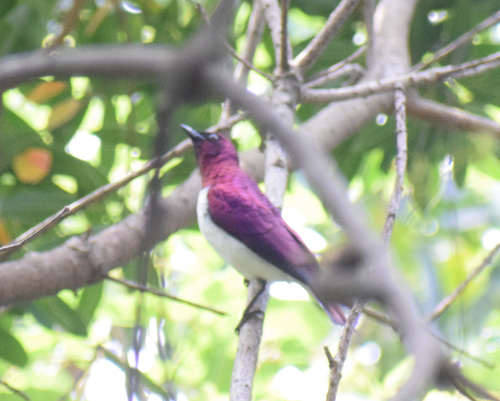
シロハラムクドリ (Cinnyricinclus leucogaster) シロハラムクドリ
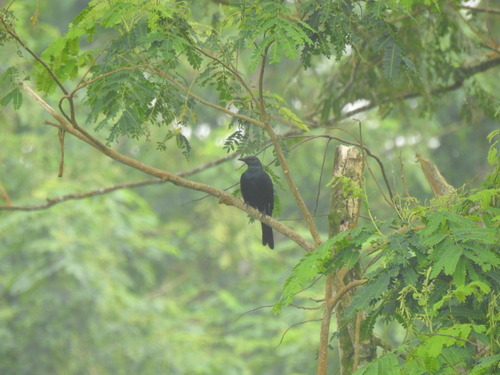
チャバネテリムク (Onychognathus fulgidus) チャバネテリムク

メディア

読み込み中…

要点

シロハラムクとチャバネテリムクを区別する最も信頼できるフィールドマークは、シロハラムクの強い性差と羽毛のコントラストです:成鳥のオスは、上面が鮮やかな紫色で、腹部が純白で目を引きますが、メスは茶色で重い縞模様があり、ツグミに似ています。対照的に、チャバネテリムクはこの性差を欠き、均一に暗い羽毛と栗色の翼を持ち、大胆な白や縞模様のない腹部が特徴です。明るい紫色の背中ときれいな白い腹部(オス)または重い縞模様の茶色と白の鳥(メス)を見たら、それはシロハラムクです;熱帯雨林で栗色の翼を持つ暗い鳥はチャバネテリムクです。未熟なシロハラムクとメスは一般的な落とし穴であり、彼らの縞模様は他の種と間違えられることがありますが、チャバネテリムクは決してツグミのような縞模様を示しません。

識別のコツ

  1. 成鳥のオスのシロハラムクは間違いなく識別可能です: 輝く紫色の頭と背中、純白の腹部と胸を持つ小さなムクドリを探してください。この組み合わせを示すムクドリは地域には他にありません。
  2. 成鳥のメスのシロハラムクは重い縞模様があります: メスは上面が茶色で大胆な縞模様があり、下面は白で重い縞模様があり、ツグミのような外観を持っています。チャバネテリムクはこのパターンを示しません。
  3. チャバネテリムクは栗色の翼を持っています: すべての羽毛で、特に飛行中や良い光の中で、翼の豊かな栗色を探してください。残りの羽毛は暗く、強いコントラストはありません。
  4. チャバネテリムクには白い腹部がありません: きれいな白い腹部(オス)や重い縞模様の白(メス/未熟)を持つムクドリを見たら、それはチャバネテリムクではありません。
  5. 性差は重要です: シロハラムクだけがオスとメスの間に強い違いを示し、チャバネテリムクは両性で似ています。
  6. 紫色の光沢はシロハラムクのオスの診断的特徴です: 紫色の光沢はユニークで、チャバネテリムクのよりマットで暗い羽毛とは一致しません。
  7. 幼鳥/未熟の混乱: 若いシロハラムクは成鳥のメスに似ており、他の縞模様のある鳥と間違えられることがありますが、チャバネテリムクの幼鳥は縞模様がありません。
  8. 生息地の文脈: 密な熱帯雨林ではチャバネテリムクがより可能性が高く、森林や森林の縁ではシロハラムクを期待してください。
  9. 採餌の高さ: シロハラムクはしばしば樹冠の高いところで採餌し、地面にはめったに降りません。これにより、低いところで採餌しているムクドリを見た場合の手助けになるかもしれません。
  10. くちばし、足、虹彩: 両種ともに暗いくちばしと足を持っていますが、シロハラムクは両性ともに黄色の虹彩を持ち、近距離で見えることがあります。
  11. 止まっている時と飛行中の視点: 飛行中は、翼の栗色(チャバネテリムク)と紫色の光沢または縞模様の茶色(シロハラムク)を探してください。止まっている時は、シロハラムクの白い腹部や重い縞模様が明らかです。
  12. 大きさの違いは強くありません: これら二つを区別するために大きさに頼らないでください。
  13. 声の違いは記述されていません: 現在のメモに基づいて、鳴き声は信頼できる区別要因ではありません。
  14. 落とし穴: メスと未熟なシロハラムクは他の縞模様のある鳥と誤認されることが多いです;常に縞模様のある腹部と生息地の組み合わせを確認してください。
  15. 文脈的手がかり: 周囲の生息地と群れの構成を考慮してください。シロハラムクは開けた森林で混合群れに加わることがありますが、チャバネテリムクは熱帯雨林により制限されています。

大きさ

シロハラムクは比較的小さなムクドリで、全長約17〜18 cmです [wikipedia]。チャバネテリムクの正確な測定値はメモには記載されていませんが、両者は中小型のムクドリであり、大きさが重なる可能性があります。大きさだけでは、これら二つの種をフィールドで区別する信頼できる方法ではありません。

羽色

行動

シロハラムクは樹冠の高いところで採餌する傾向があり、地面にはめったに降りず、フライキャッチャーのように昆虫を捕まえることがあります [wikipedia]。チャバネテリムクの採餌行動は詳細には記述されていませんが、一般的にはムクドリの典型的な行動です。両者は木の空洞や隙間に巣を作りますが、これはフィールドマークではありません。行動は強い区別要因ではありませんが、シロハラムクの樹冠の好みは微妙な手がかりかもしれません。

生息環境

シロハラムクはサハラ以南のアフリカの森林やサバンナの森林の縁に見られます [wikipedia]。チャバネテリムクはアフリカの熱帯雨林の種です [wikipedia]。したがって、シロハラムクは乾燥した開けた森林の縁で見られる可能性が高く、チャバネテリムクは湿った密な熱帯雨林で期待されます。森林の縁での重なりは可能ですが、生息地は有用な補助的手がかりとなることがあります。

より良い説明を送る

比較と同じ項目を使ってください。文章はすぐに公開されます。

The most reliable field mark to separate Violet-backed Starling from Chestnut-winged Starling is the strong sexual dimorphism and plumage contrast in Violet-backed: adult males are strikingly iridescent violet above with pure white underparts, while females are brown and heavily streaked, resembling a thrush. Chestnut-winged Starling, by contrast, lacks this dimorphism and is characterized by uniformly dark plumage with chestnut-colored wings, without the bold white or streaked underparts. If you see a starling with a bright violet back and clean white belly (male) or a heavily streaked brown-and-white bird (female), it is Violet-backed; a darker bird with chestnut wings in the rainforest is Chestnut-winged. Immature and female Violet-backed Starlings are a common pitfall, as their streaked pattern can be mistaken for other species, but Chestnut-winged never shows this thrush-like streaking.

  1. Adult male Violet-backed Starling is unmistakable: Look for a small starling with a shimmering violet head and back, and a pure white belly and breast. No other starling in the region shows this combination.
  2. Adult female Violet-backed Starling is heavily streaked: Females are brown above with bold streaks and white below with heavy streaking, giving a thrush-like appearance. Chestnut-winged Starling never shows this pattern.
  3. Chestnut-winged Starling has chestnut wings: In all plumages, look for the rich chestnut coloration on the wings, especially visible in flight or good light. The rest of the plumage is dark and lacks strong contrast.
  4. No white underparts in Chestnut-winged: If you see a starling with clean white underparts (male) or white with heavy streaking (female/immature), it is not Chestnut-winged.
  5. Sexual dimorphism is key: Only Violet-backed Starling shows strong differences between male and female; Chestnut-winged is similar in both sexes.
  6. Iridescence is diagnostic for Violet-backed males: The violet gloss is unique and not matched by the more matte, dark plumage of Chestnut-winged.
  7. Juvenile/immature confusion: Young Violet-backed Starlings resemble adult females and can be mistaken for other streaked birds, but Chestnut-winged juveniles are not streaked.
  8. Habitat context: In dense rainforest, Chestnut-winged is more likely; at woodland or forest edge, expect Violet-backed.
  9. Feeding height: Violet-backed is often high in the canopy, rarely on the ground, which may help if you see a starling foraging low.
  10. Bill, legs, and iris: Both species have dark bills and legs, but Violet-backed has yellow irises in both sexes, which may be visible at close range.
  11. Perched vs. flight views: In flight, look for chestnut in the wings (Chestnut-winged) versus violet gloss or streaked brown (Violet-backed). Perched, the white underparts or heavy streaking of Violet-backed are obvious.
  12. No strong size difference: Do not rely on size to separate these two.
  13. No voice differences described: Vocalizations are not a reliable separator based on current notes.
  14. Pitfall: Female and immature Violet-backed Starlings are often misidentified as other streaked birds; always check for the combination of streaked underparts and habitat.
  15. Contextual clues: Consider the surrounding habitat and flock composition, as Violet-backed may join mixed flocks in open woodland, while Chestnut-winged is more restricted to rainforest.

Violet-backed Starling is a relatively small starling, measuring about 17–18 cm in length [wikipedia]. Chestnut-winged Starling's precise measurements are not given in the notes, but both are medium-small starlings and likely overlap in size. Size alone is not a reliable separator in the field between these two species.

  • Adult males (Violet-backed Starling): Iridescent violet head and back, pure white underparts. This bold contrast is unique among starlings in the region. Chestnut-winged Starling males do not show this coloration; instead, they are dark overall with chestnut-colored wings, lacking any white underparts or violet gloss.
  • Adult females (Violet-backed Starling): Brown upperparts with bold streaks and white, heavily streaked underparts, giving a thrush-like look. Chestnut-winged Starling females do not have this streaked pattern; their plumage is more uniform and dark, with the only contrast being the chestnut wings.
  • Immature/juvenile Violet-backed Starling: Not explicitly described, but likely similar to adult female with streaked appearance. Chestnut-winged Starling juveniles are not detailed, but no evidence suggests they show strong streaking or white underparts.
  • Wing pattern in flight: No specific notes for either species, but the chestnut coloration in Chestnut-winged is likely visible in flight, while Violet-backed shows either violet gloss (male) or streaked brown (female/immature) without chestnut tones.

Violet-backed Starling tends to feed high in the canopy, rarely coming to the ground, and may sally out for insects like a flycatcher [wikipedia]. Chestnut-winged Starling's foraging behavior is not described in detail, but it is generally typical of starlings. Both nest in tree cavities or crevices, but this is not a field mark. Behavior is not a strong separator, though Violet-backed's canopy preference may be a subtle clue.

Violet-backed Starling is found at woodland and savannah forest edges across sub-Saharan Africa [wikipedia]. Chestnut-winged Starling is a species of the African tropical rainforest [wikipedia]. Thus, Violet-backed is more likely at drier, open woodland edges, while Chestnut-winged is expected in humid, dense rainforest. Overlap is possible at forest margins, but habitat can be a useful supporting clue.

変更を破棄しますか?

保存していない編集があります。今離れると失われます。

シロハラムクドリ · チャバネテリムク · 苦手な鳥