

tufted flycatcher vs ochraceous pewee
Mitrephanes phaeocercus versus Contopus ochraceus
Jogue um quiz com tufted flycatcher e ochraceous pewee
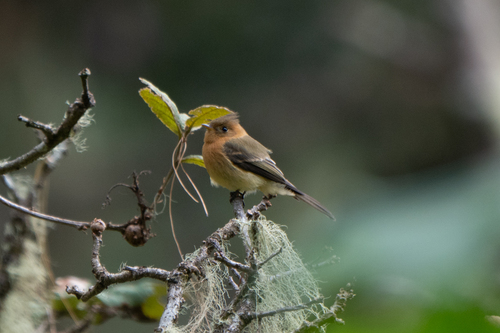 tufted flycatcher
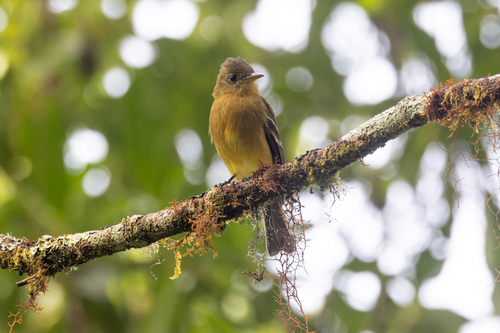 ochraceous pewee
Em resumo
A marca de campo mais confiável entre o Tufted Flycatcher e o Ochraceous Pewee é o tamanho: Ochraceous Pewee é muito maior e mais robusto, com um corpo visivelmente mais longo e um bico mais pesado. Ambas as espécies têm cristas e comportamento semelhante de ataque vertical, mas o Tufted Flycatcher é compacto e ricamente colorido, especialmente embaixo, enquanto o Ochraceous Pewee é mais esguio, com plumagem mais opaca e mais oliva. Os padrões das asas juvenis não são fortemente distintivos, então concentre-se na estrutura geral, no padrão do rosto e na cor das partes inferiores. Em vistas de empoleiramento ou em voo, as partes inferiores brilhantes em ocre-canelado do Tufted Flycatcher e seu pequeno tamanho se destacam em relação aos tons opacos de oliva e buff do Pewee.
Dicas de identificação
- O tamanho é o separador mais rápido: O Ochraceous Pewee é muito maior e mais pesado que o Tufted Flycatcher. Se o pássaro parecer pequeno e delicado, prefira o Tufted; se parecer grande e robusto para um flycatcher, suspeite do Pewee. Isso funciona para todas as idades e estações.
- Forma e proeminência da crista: Ambos têm cristas, mas a do Tufted Flycatcher é mais pontuda e ereta, dando uma aparência espinhosa. A crista do Ochraceous Pewee é espinhosa, mas menos acentuadamente pontuda.
- Cor das partes inferiores: O Tufted Flycatcher tem garganta e peito em rico ocre a canela, com barriga amarelo-ocre—muito quente e saturada. As partes inferiores do Ochraceous Pewee são mais opacas: garganta amarelo-pálido, peito/flancos lavados de oliva e barriga amarelo-buff. O Pewee nunca parece tão brilhante ou com tons de canela embaixo.
- Padrão do rosto: O Tufted Flycatcher apresenta um fino anel ocular branco-buff e uma mancha pálida acima das lore, em um rosto canela. O rosto do Ochraceous Pewee é mais uniforme em oliva, sem o forte anel ocular e tons de canela.
- Partes superiores: As partes superiores do Tufted Flycatcher são acastanhadas com um tom oliva; o Ochraceous Pewee é mais uniformemente oliva acima, com uma coroa e crista oliva mais escuras.
- Barras das asas: Ambas as espécies têm duas barras de asas pálidas, mas as do Tufted Flycatcher são buff e mais contrastantes, enquanto as do Ochraceous Pewee são mais finas, em ocre ou buff-oliva, e menos distintas. Juvenis do Pewee têm barras de asas em ocre mais brilhantes, mas isso é sutil em campo.
- Cauda: Ambas têm caudas escuras, mas a do Ochraceous Pewee é ligeiramente entalhada; a do Tufted Flycatcher é reta.
- Bico: Ambos têm maxila preta e mandíbula laranja-amarela, mas o bico do Pewee é mais largo e pesado, combinando com sua robustez geral.
- Altura e contexto do empoleiramento: O Tufted Flycatcher é geralmente visto em níveis médios dentro da floresta, raramente no topo ou na borda. O Ochraceous Pewee prefere empoleiramentos altos e expostos na borda da floresta ou na copa.
- Comportamento com bandos: O Tufted Flycatcher é solitário ou em pares, raramente com bandos mistos. O Ochraceous Pewee pode se juntar a bandos de espécies mistas que passam.
- Postura: O Tufted Flycatcher é compacto e ereto, muitas vezes parecendo ter pescoço curto. O Ochraceous Pewee é mais alongado e ereto, às vezes parecendo esguio.
- Marcas juvenis: Ambos os juvenis têm barras de asas mais brilhantes, mas isso não é um separador forte. Concentre-se na estrutura e na cor das partes inferiores para os jovens pássaros.
- Desgaste do plumagem sazonal: A plumagem do Ochraceous Pewee torna-se mais opaca e desbotada com o desgaste, tornando-a ainda menos contrastante que a do Tufted Flycatcher.
- Distribuição (se fora da Costa Rica/Panamá): Apenas o Tufted Flycatcher ocorre ao norte da Costa Rica ou ao sul do Equador; o Ochraceous Pewee é limitado à Costa Rica e Panamá.
- O sexo não é útil: Ambas as espécies são sexualmente monomórficas—machos e fêmeas se parecem.
Tamanho
O Ochraceous Pewee é substancialmente maior: 16,5–18 cm de comprimento e cerca de 23 g, em comparação com os 12–13,5 cm e 8,5 g do Tufted Flycatcher. O tamanho do Pewee é óbvio em campo—seu corpo é mais longo, robusto, e seu bico é mais largo e robusto. O Tufted Flycatcher parece pequeno e compacto, frequentemente descrito como 'delicado' em comparação. Quando vistos juntos ou com espécies familiares, essa diferença de tamanho é um separador rápido.
Plumagem
A plumagem juvenil não é fortemente diagnóstica entre esses dois: ambos têm barras de asas mais brilhantes como imaturos, mas as barras de asas juvenis do Pewee são em ocre e mais proeminentes, enquanto as do Tufted Flycatcher são com bordas em canela-buff. Para todas as idades, o Tufted Flycatcher apresenta uma coroa marrom-oliva com uma crista pontuda, um fino anel ocular branco-buff, e uma rica garganta e peito em ocre a canela, com barriga amarelo-ocre. Seu rosto é distintamente canela, e as barras das asas são buff. O Ochraceous Pewee, em contraste, tem uma coroa e crista marrom-oliva mais escuras, uma cabeça e partes superiores mais uniformemente oliva, e uma garganta amarelo-pálido com peito e flancos lavados de oliva, e uma barriga amarelo-buff. Suas barras de asas são mais finas e mais em ocre ou buff-oliva, e o efeito geral é muito mais opaco e menos contrastante. Ambos têm caudas escuras, mas a do Pewee é ligeiramente entalhada. A cor do bico é semelhante: maxila preta e mandíbula laranja-amarela.
Comportamento
Ambas as espécies atacam insetos de empoleiramentos expostos e retornam ao mesmo local, frequentemente tremendo suas caudas ou asas ao pousar. No entanto, o Tufted Flycatcher geralmente forrageia em níveis médios dentro da floresta e é geralmente solitário ou em pares, raramente se juntando a bandos mistos. O Ochraceous Pewee prefere empoleiramentos mais altos e expostos perto das copas das árvores ou bordas da floresta e pode se juntar a bandos de espécies mistas enquanto passam. O tamanho maior do Pewee e sua postura mais ereta e alongada podem ser notáveis, especialmente quando empoleirado alto.
Habitat
O Tufted Flycatcher varia do México ao Equador, mas na Costa Rica e Panamá (onde ambas ocorrem), é mais frequentemente encontrado dentro da floresta em níveis médios. O Ochraceous Pewee é restrito à Costa Rica e Panamá e é mais provável de ser encontrado na borda da floresta ou em árvores altas perto de clareiras, muitas vezes mais alto. Se você ver um pequeno flycatcher no interior da floresta, no meio da vegetação, é mais provável que seja o Tufted Flycatcher; um flycatcher maior alto na borda ou na copa pode ser o Ochraceous Pewee.