

stripe-throated hermit vs purple-crowned fairy
Phaethornis striigularis versus Heliothryx barroti
Jogue um quiz com stripe-throated hermit e purple-crowned fairy
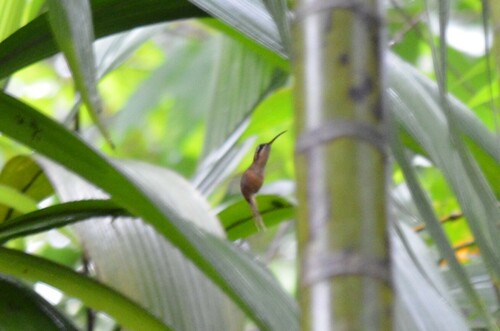 stripe-throated hermit
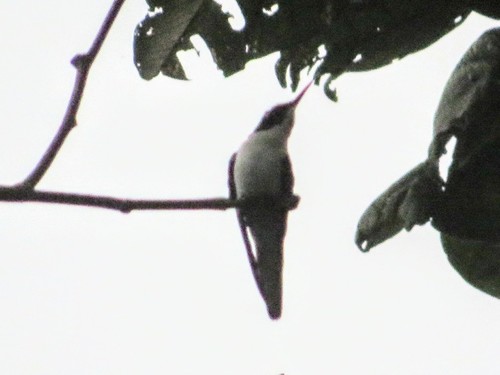 purple-crowned fairy
Em resumo
A marca de campo mais confiável para separar o stripe-throated hermit do purple-crowned fairy é a estrutura geral e o padrão facial: o hermit é um beija-flor pequeno, sem graça, de bico longo, com uma forte máscara facial preta e branca e garganta levemente estriada, enquanto o fairy é uma espécie maior, esbelta e de bico curto, com uma barriga branca impressionante, partes superiores esmeralda e (nos machos) uma coroa metálica violeta. Os juvenis de purple-crowned fairies apresentam partes superiores com bordas canela e manchas escuras esparsas abaixo, ao contrário de qualquer hermit. Em voo ou empoleirado, a cauda longa, pontuda e com bordas brancas do fairy e as partes inferiores brancas puras se destacam, enquanto a cauda do hermit é mais curta, mais arredondada e com a ponta ocre ou esbranquiçada. A forma do bico (longo, curvado no hermit vs curto, reto no fairy) é um separador chave em todas as idades. Ambas as espécies têm uma faixa ocular escura, mas apenas o hermit tem um malar e supercílio fortes. Os sexos são semelhantes no hermit, mas os machos do fairy têm uma coroa violeta vívida.
Dicas de identificação
- Forma e comprimento do bico: O stripe-throated hermit tem um bico longo e fortemente curvado com uma base amarelada na mandíbula inferior; o purple-crowned fairy tem um bico curto, reto e totalmente preto. Este é o separador estrutural mais consistente em todas as idades e sexos.
- Forma e padrão da cauda: A cauda do fairy é longa, pontuda e com padrão nítido de penas centrais azul-negras e penas externas brancas; a cauda do hermit é mais curta, mais arredondada e com a ponta esbranquiçada a ocre (nunca com penas externas brancas ousadas). O padrão da cauda é especialmente claro em voo ou quando o pássaro abre a cauda.
- Cor das partes inferiores: O stripe-throated hermit tem flancos cor de buff e uma garganta e barriga pálido marrom-acinzentado, frequentemente com estrias escuras fracas na garganta; o purple-crowned fairy tem partes inferiores brancas puras sem lavagem de buff ou marrom em adultos. Os fairies imaturos podem mostrar manchas escuras esparsas na garganta e peito brancos, mas nunca a aparência estriada ou marronada do hermit.
- Padrão facial: O hermit apresenta uma máscara preta forte, contornada acima por um supercílio cor de buff esbranquiçado e abaixo por uma faixa malar cor de buff esbranquiçada, formando um rosto em três partes; o fairy tem uma faixa ocular preta, mas não possui o supercílio e malar ousados, e o rosto é mais limpo e branco abaixo do olho.
- Cor da coroa (machos): O macho do purple-crowned fairy tem uma coroa metálica violeta na frente e uma mancha violeta atrás do olho; o stripe-throated hermit nunca apresenta violeta na cabeça. A fêmea do fairy tem uma coroa verde, sem violeta, mas ainda difere da coroa verde sem graça do hermit.
- Partes superiores: O hermit é verde iridescente sem graça acima, com um rabo pálido ruivo; o fairy é verde esmeralda brilhante acima, sem rabo ruivo. Os hermits juvenis têm um dorso pálido ruivo, enquanto os fairies imaturos têm partes superiores com bordas canela.
- Tamanho e aparência: O fairy é maior, mais esbelto e com cauda mais longa, frequentemente parecendo mais alongado em voo ou empoleirado. O hermit é menor, compacto e tem uma postura mais curvada.
- Estilo de voo: Os hermits tendem a voar baixo e direto, frequentemente perto da vegetação; os fairies podem forragear mais alto e parecer mais flutuantes ou ágeis na parte média e na copa.
- Marcas juvenis/imaturas: Os hermits juvenis têm um dorso pálido ruivo; os fairies imaturos têm bordas canela nas partes superiores e manchas escuras esparsas na garganta e peito brancos. Essas marcas específicas de idade são diagnósticas se vistas bem.
- Padrão da garganta: A garganta do hermit é pálido marrom-acinzentado com estrias escuras fracas (às vezes difíceis de ver); a garganta do fairy é branca pura em adultos, com apenas manchas escuras esparsas em imaturos.
- Cor da base do bico: O hermit apresenta amarelo na base da mandíbula inferior; o bico do fairy é totalmente preto.
- Cor da ponta da cauda: A cauda do hermit é pontuada de esbranquiçada a ocre (nunca com penas externas brancas puras); a cauda do fairy tem penas externas brancas e penas centrais azul-negras.
- Vocalizações: Se você ouvir uma canção aguda, estridente e monótona de um lek, suspeite do stripe-throated hermit. A canção do fairy não é descrita aqui.
- Contexto do habitat: Em sub-bosques densos ou florestas baixas, o hermit é mais provável; na parte média ou na copa, especialmente na borda da floresta, o fairy é mais provável.
- Diferenças sexuais: Os sexos do hermit são virtualmente idênticos; os machos do fairy têm uma coroa violeta, as fêmeas têm uma coroa verde e menos preto facial, mas ambos diferem do padrão facial do hermit.
Tamanho
O stripe-throated hermit é significativamente menor e mais leve (9–10 cm, 2–3 g) do que o purple-crowned fairy (9–13 cm, cerca de 5,5 g). Embora seus comprimentos mínimos se sobreponham, o fairy é geralmente visivelmente mais longo e quase duas vezes mais pesado. O fairy também é mais esbelto e alongado em aparência, com uma cauda mais longa e pontuda. O hermit é compacto, com uma cauda mais curta e arredondada e um bico proporcionalmente mais longo e curvado.
Plumagem
Os pássaros juvenis e imaturos são melhor separados pelo padrão das partes superiores e inferiores: os jovens stripe-throated hermits têm um dorso pálido ruivo, enquanto os purple-crowned fairies imaturos mostram bordas canela nas partes superiores e manchas escuras esparsas na garganta e peito brancos. Em adultos, o hermit é verde sem graça acima, com um rabo pálido ruivo, flancos cor de buff e uma garganta marrom-acinzentada pálida com estrias escuras fracas; o fairy é verde esmeralda brilhante acima, branco puro abaixo e tem uma cauda longa e pontuda com penas centrais azul-negras e externas brancas. O rosto do hermit tem uma máscara preta contornada por um supercílio e malar esbranquiçados, enquanto o rosto do fairy tem uma faixa ocular preta, mas carece do malar e supercílio fortes. Os machos do purple-crowned fairy têm uma coroa metálica violeta e uma mancha violeta atrás do olho, ausente nos hermits. A cauda do hermit é pontuada de esbranquiçada a ocre, enquanto a cauda do fairy é nitidamente padronizada com penas externas brancas.
Comportamento
O stripe-throated hermit é tipicamente solitário, mas os machos podem se reunir em leks para cantar. Ele forrageia em níveis baixos a médios, frequentemente no sub-bosque. O purple-crowned fairy é mais provável de ser visto na parte média e na copa, às vezes descendo mais nas bordas da floresta. O fairy não é altamente territorial, mas é notavelmente agressivo, frequentemente confrontando outros beija-flores. Ele forrageia pairando e coletando néctar, e pode roubar néctar perfurando flores. A forrageação do hermit é mais típica de hermits, com menos agressão e mais comportamento solitário.
Habitat
Ambas as espécies ocorrem na América Central e no noroeste da América do Sul, mas suas preferências de microhabitat diferem. O stripe-throated hermit prefere o sub-bosque e as bordas da floresta em níveis baixos a médios, enquanto o purple-crowned fairy é mais frequentemente encontrado na parte média e na copa, especialmente nas bordas da floresta. O fairy pode ser visto mais alto nas camadas da floresta do que o hermit. Ambas podem ocorrer em regiões semelhantes, mas o hermit está mais ligado à vegetação densa e baixa.
Voz
Os machos do stripe-throated hermit cantam uma canção aguda, estridente e monótona, facilmente ouvida em leks. As vocalizações do purple-crowned fairy não são descritas nas notas fornecidas. Assim, uma canção persistente, alta e estridente na área pode indicar um hermit, especialmente se ouvida de um lek.
stripe-throated hermit · purple-crowned fairy · Minhas aves difíceis