

streaky-breasted flufftail vs somali courser
Sarothrura boehmi versus Cursorius somalensis
Jogue um quiz com streaky-breasted flufftail e somali courser
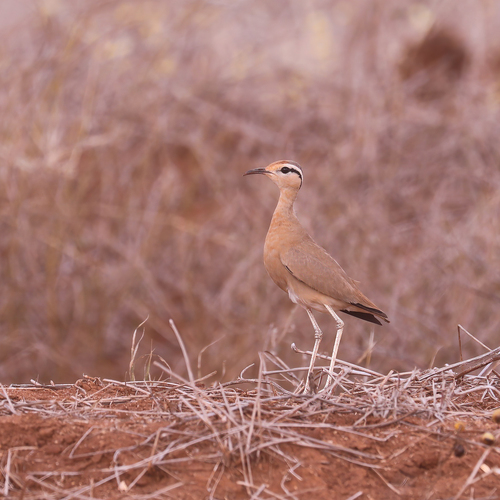 somali courser
Em resumo
A marca de campo mais confiável para separar o somali courser do streaky-breasted flufftail é vista em voo: o somali courser apresenta um padrão distinto na parte inferior da asa, com apenas a metade externa da asa preta por baixo, enquanto a parte interna da asa é marrom-areia—isso é diagnóstico para todas as idades. O streaky-breasted flufftail, em contraste, é um pássaro pequeno e secreto, semelhante a uma ralinha, de campos úmidos, raramente visto em voo aberto e sem qualquer contraste na parte inferior da asa. No chão, o somali courser é um courser de pernas longas e postura ereta, com um padrão facial ousado, sempre em áreas abertas e secas, enquanto o streaky-breasted flufftail é muito menor, mais arredondado e listrado, restrito a gramados densos e úmidos. Essas duas espécies diferem dramaticamente em estrutura, habitat e comportamento, portanto, a confusão é mais provável de ocorrer a partir de visões fugazes ou falta de familiaridade com um dos grupos.
Dicas de identificação
- Padrão da parte inferior da asa em voo (todas as idades): O somali courser mostra apenas a metade externa da parte inferior da asa preta, com a metade interna marrom-areia; o streaky-breasted flufftail não possui qualquer contraste e é raramente visto em voo aberto.
- Tamanho e forma: O somali courser é muito maior, com pernas longas e postura ereta, enquanto o streaky-breasted flufftail é pequeno, arredondado e atarracado, com pernas curtas.
- Padrão facial: O somali courser tem uma faixa ocular preta ousada e uma sobrancelha branca formando um 'V' atrás da cabeça, visível de trás; o flufftail não possui marcas faciais semelhantes e é, em geral, mais críptico.
- Plumagem do peito e do corpo: O streaky-breasted flufftail é fortemente listrado no peito, enquanto o somali courser é liso, marrom-areia ou cinza-escuro por cima e por baixo, sem listras.
- Forma do bico: O somali courser tem um bico reto e esguio, adequado para pegar insetos; o flufftail tem um bico mais curto e grosso.
- Comprimento das pernas: As longas pernas do somali courser são óbvias em campo aberto; as pernas do flufftail são curtas e geralmente escondidas na grama.
- Comportamento: O courser corre abertamente e faz pausas, raramente se assusta; o flufftail se move furtivamente pela grama densa e só voa quando forçado, caindo rapidamente de volta para a cobertura.
- Habitat: O courser em gramados secos, abertos ou queimados; o flufftail em gramados úmidos e pantanosos—nunca se sobrepõem em condições típicas.
- Estilo de voo: O voo do courser é forte e direto sobre o solo aberto; o voo do flufftail é fraco, baixo e breve.
- Associação em grupo: O courser pode ser visto em pequenos grupos ou pares em campo aberto; o flufftail é solitário ou em pares, sempre em cobertura densa.
- Armadilha—visões distantes: A grandes distâncias, um courser correndo pode ser confundido com uma pequena ralinha, mas note a postura ereta e o habitat aberto.
- Armadilha—pássaros assustados: Um flufftail assustado da grama úmida pode ser vislumbrado em voo, mas não terá qualquer contraste na parte inferior da asa e cairá rapidamente.
- Armadilha—pássaros imaturos: Não há evidências de confundir a plumagem juvenil em qualquer uma das espécies; o padrão da parte inferior da asa do courser é consistente em todas as idades.
- Voz: Não é diagnóstico a partir das fontes disponíveis; confie nas marcas visuais.
- Contexto sazonal: Ambas as espécies são residentes em suas respectivas áreas, mas nunca compartilham o mesmo habitat ao mesmo tempo.
Tamanho
O somali courser é notavelmente maior, com 19–22 cm de comprimento, pernas longas e uma postura esguia e ereta. O streaky-breasted flufftail é muito menor e mais compacto, típico dos flufftails, com um corpo arredondado e atarracado e pernas curtas. Essa diferença de tamanho e forma é óbvia se ambos forem vistos bem, mas pode ser difícil de julgar à distância ou em cobertura densa.
Plumagem
O padrão de asa específico para a idade é diagnóstico para o somali courser: em todas as plumagens, a parte inferior da asa em voo mostra apenas a metade externa preta, com a metade interna marrom-areia, ao contrário do similar corredeira (e totalmente ausente nos flufftails). O streaky-breasted flufftail não possui qualquer padrão de parte inferior da asa contrastante e é raramente visto em voo. No chão, o somali courser tem um corpo superior marrom-acinzentado, uma faixa ocular preta marcante com um supercílios branco formando um 'V' atrás da cabeça, e tons de areia abaixo. O streaky-breasted flufftail é listrado no peito e geralmente muito mais críptico, sem marcas faciais ousadas. Essas diferenças se aplicam a adultos e imaturos. Não há informações disponíveis sobre marcas específicas de asa superior em flufftails juvenis, mas o padrão da parte inferior da asa do courser é confiável em todas as idades.
Comportamento
O somali courser é um pássaro terrestre, corredor rápido de campo aberto, frequentemente visto correndo atrás de insetos em campo aberto, e raramente se assusta, a menos que se aproxime muito. Ele se mantém ereto e se move com um galope característico de correr e parar. O streaky-breasted flufftail é extremamente secreto, esgueirando-se na grama densa e úmida, e raramente é visto em campo aberto; ele geralmente se move ou corre pela cobertura e só voa curtas distâncias se assustado, geralmente caindo rapidamente de volta para a vegetação.
Habitat
O habitat é um forte separador: o somali courser é encontrado em áreas abertas, secas, semi-desérticas ou gramados curtos, frequentemente em áreas queimadas ou com vegetação esparsa. O streaky-breasted flufftail é restrito a gramados úmidos e áreas pantanosas na África central, nunca se aventurando em terrenos abertos e secos. Se você vê um pássaro em um país aberto e árido, quase certamente não é um flufftail.
streaky-breasted flufftail · somali courser · Minhas aves difíceis