

Streaky-breasted Flufftail vs Somali Courser
Sarothrura boehmi contro Cursorius somalensis
Fai un quiz con Streaky-breasted Flufftail e Somali Courser
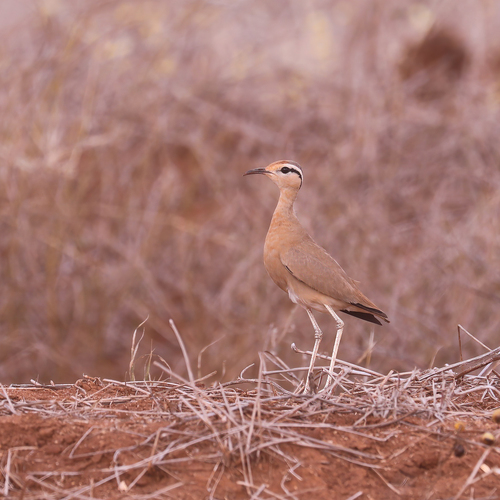 Somali Courser
In breve
Il segno distintivo più affidabile per separare il Somali Courser dallo Streaky-breasted Flufftail si osserva in volo: il Somali Courser mostra un modello distintivo di sottoala con solo la metà esterna dell'ala nera sotto, mentre la parte interna della sottoala è sabbiosa-marrone—questo è diagnostico per tutte le età. Lo Streaky-breasted Flufftail, al contrario, è un uccello segreto, piccolo e simile a un rallide delle terre umide, raramente visto in volo aperto e privo di qualsiasi contrasto nella sottoala. A terra, il Somali Courser è un courser lungo e dritto con un audace motivo facciale, sempre in paesaggi aperti e asciutti, mentre lo Streaky-breasted Flufftail è molto più piccolo, rotondo e striato, e limitato a erba densa e umida. Queste due specie differiscono drammaticamente in struttura, habitat e comportamento, quindi la confusione è più probabile da visioni fugaci o da una scarsa familiarità con uno dei gruppi.
Consigli di identificazione
- Modello della sottoala in volo (tutte le età): Il Somali Courser mostra solo la metà esterna della sottoala nera, con la metà interna sabbiosa-marrone; lo Streaky-breasted Flufftail non presenta alcun contrasto simile ed è raramente visto in volo aperto.
- Dimensione e forma: Il Somali Courser è molto più grande, con gambe più lunghe e si erge dritto, mentre lo Streaky-breasted Flufftail è piccolo, rotondo e tozzo con gambe corte.
- Motivo facciale: Il Somali Courser ha una audace striscia nera sopra l'occhio e un sopracciglio bianco che forma una 'V' dietro la testa, visibile da dietro; il flufftail non presenta alcuna marcatura facciale simile ed è generalmente più criptico.
- Piumaggio del petto e del corpo: Lo Streaky-breasted Flufftail è fortemente striato sul petto, mentre il Somali Courser è semplice sabbioso o marrone-grigiastro sopra e sotto, senza striature.
- Forma del becco: Il Somali Courser ha un becco dritto e snello adatto per raccogliere insetti; il flufftail ha un becco più corto e tozzo.
- Lunghezza delle gambe: Le lunghe gambe del Somali Courser sono evidenti in aperto; le gambe del flufftail sono corte e di solito nascoste nell'erba.
- Comportamento: Il Courser corre apertamente e si ferma, raramente si alza in volo; il flufftail si muove attraverso l'erba densa e vola solo quando costretto, ricadendo rapidamente nel riparo.
- Habitat: Il Courser si trova in terreni asciutti, aperti o bruciati; il flufftail in erba umida e paludosa—non si sovrappongono mai in condizioni tipiche.
- Stile di volo: Il volo del Courser è forte e diretto sopra il terreno aperto; il volo del flufftail è debole, basso e breve.
- Associazione di gruppo: Il Courser può essere visto in piccoli gruppi o coppie in aperto; il flufftail è solitario o in coppie, sempre in copertura densa.
- Trappola—visioni distanti: A grande distanza, un courser in corsa potrebbe essere scambiato per un piccolo rallide, ma nota la postura eretta e l'habitat aperto.
- Trappola—uccelli spaventati: Un flufftail spaventato dall'erba umida può essere intravisto in volo, ma mancherà di qualsiasi contrasto nella sottoala e ricadrà rapidamente.
- Trappola—uccelli immaturi: Nessuna prova di confusione con il piumaggio giovanile in entrambe le specie; il modello della sottoala del courser è coerente tra le età.
- Voce: Non diagnostico dalle fonti disponibili; fare riferimento ai segni visivi.
- Contesto stagionale: Entrambe le specie sono residenti nei rispettivi territori, ma non condividono mai lo stesso habitat nello stesso momento.
Taglia
Il Somali Courser è notevolmente più grande, con una lunghezza di 19–22 cm, gambe lunghe e una postura snella e diritta. Lo Streaky-breasted Flufftail è molto più piccolo e compatto, tipico dei flufftail, con un corpo tozzo e arrotondato e gambe corte. Questa differenza di dimensione e forma è ovvia se entrambi sono visti bene, ma può essere difficile da giudicare a distanza o in copertura densa.
Piumaggio
Il modello di ala specifico per età è diagnostico per il Somali Courser: in tutte le piumature, la sottoala in volo mostra solo la metà esterna nera, con la metà interna sabbiosa-marrone, a differenza del simile corrione biondo (e completamente assente nei flufftail). Lo Streaky-breasted Flufftail non ha alcun modello di sottoala contrastante ed è raramente visto in volo. A terra, il Somali Courser ha un corpo superiore marrone-grigiastro, una striscia nera sopra l'occhio molto evidente con un supercilium bianco che forma una 'V' dietro la testa, e toni sabbiosi sotto. Lo Streaky-breasted Flufftail è striato sul petto e generalmente molto più criptico, senza marcature facciali audaci. Queste differenze si applicano a adulti e immaturi. Non sono disponibili informazioni per segni specifici delle ali superiori nei flufftail, ma il modello della sottoala del courser è affidabile tra le età.
Comportamento
Il Somali Courser è un uccello terrestre, veloce e corridore di paesaggi aperti, spesso visto correre dopo insetti in aperto, e raramente si alza in volo a meno che non venga avvicinato. Si erge dritto e si muove con una caratteristica andatura di corsa e pausa. Lo Streaky-breasted Flufftail è estremamente segreto, si nasconde nell'erba densa e umida, ed è raramente visto in aperto; tipicamente si muove o corre attraverso la copertura e vola solo brevi distanze se spaventato, di solito ricadendo rapidamente nella vegetazione.
Habitat
L'habitat è un forte separatore: il Somali Courser si trova in terreni aperti, asciutti, semi-desertici o in praterie corte, spesso in aree bruciate o scarsamente vegetate. Lo Streaky-breasted Flufftail è limitato a praterie umide e aree paludose nell'Africa centrale, senza mai avventurarsi in terreni aperti e asciutti. Se vedi un uccello in un paese aperto e arido, è quasi certamente non un flufftail.
Streaky-breasted Flufftail · Somali Courser · I miei uccelli difficili