

pomba-do-orvalho vs anu-branco
Patagioenas maculosa versus Guira guira
Jogue um quiz com pomba-do-orvalho e anu-branco
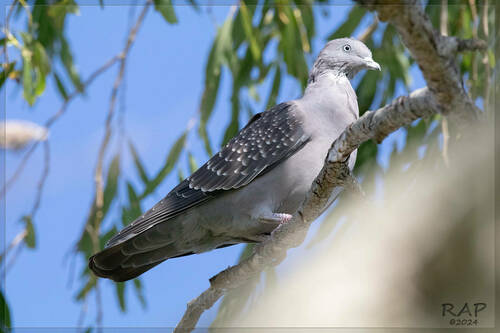 pomba-do-orvalho
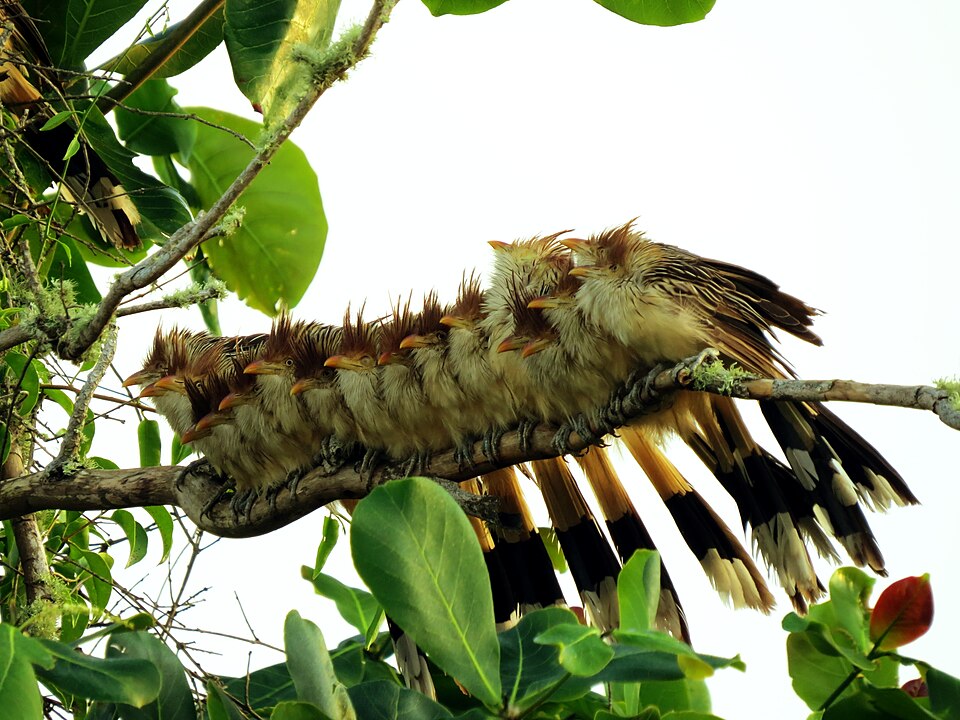 anu-branco
Em resumo
A marca de campo mais confiável para separar a pomba-do-orvalho do anu-branco é as ousadas manchas brancas cremosas da pomba nas coberturas das asas escuras e uma faixa branca conspícua na asa (especialmente em P. m. albipennis), visíveis tanto empoleiradas quanto em voo, em contraste com as partes superiores marrons escuras e listradas do anu e a longa cauda com ponta branca. As plumagens juvenis não são dramaticamente diferentes das adultas em nenhuma das espécies, mas as manchas nas asas da pomba e a estrutura geral permanecem distintas em todas as idades. O anu-branco é muito mais leve, com uma crista laranja-rúfio proeminente, bico e anel ocular amarelos, e uma cauda longa e larga, dando-lhe uma aparência muito diferente da pomba compacta e pesada. No campo, a pomba é geralmente vista se alimentando no chão em bandos, enquanto o anu é frequentemente barulhento, arbóreo e se move em grupos soltos.
Dicas de identificação
- Procure as ousadas manchas brancas e/ou faixa branca na asa dobrada da pomba-do-orvalho (todas as idades, especialmente P. m. albipennis). O anu-branco nunca mostra essas marcas; sua asa superior é listrada de marrom sem manchas ou faixas claras.
- Verifique a estrutura geral: A pomba-do-orvalho é robusta e pesada, com um pescoço curto e asas largas. O anu-branco é esbelto, com uma cauda longa e larga e uma aparência mais alongada.
- Forma e padrão da cauda: A pomba tem uma cauda cinza escura, relativamente curta, enquanto a cauda do anu é longa, larga, marrom escuro com uma ponta branca conspícua (todas as idades).
- Cabeça e crista: O anu-branco tem uma crista laranja-rúfio proeminente, frequentemente erguida, e um bico e anel ocular amarelos a laranja. A pomba-do-orvalho não tem crista e possui uma cabeça cinza simples (rosada em machos nominativos).
- Cor do bico: O bico da pomba é escuro, enquanto o do anu é amarelo a laranja.
- Anel ocular: O anu-branco tem um anel ocular amarelo fino e sem penas; a pomba-do-orvalho não tem.
- Cor da plumagem: A pomba-do-orvalho tem uma combinação de rosa-pálido (nominativa) ou azul-cinza (albipennis) na cabeça e partes inferiores, com manchas brancas cremosas nas asas. O anu-branco é listrado de marrom acima e branco-amarelado abaixo, sem tons rosados ou azul-cinzas.
- Confusão juvenil: Os juvenis de ambas as espécies são mais apagados que os adultos, mas as manchas nas asas da pomba persistem (embora menos nítidas), enquanto as listras e o padrão da cauda do anu estão presentes desde uma idade jovem.
- Estilo de voo: A pomba-do-orvalho voa de forma forte e direta, frequentemente em bandos; o voo do anu-branco é fraco, tremulante e cobre distâncias curtas.
- Comportamento: A pomba é geralmente vista no chão em áreas abertas, se alimentando em grupos. O anu é mais arbóreo, empoleirando-se em árvores ou arbustos, e frequentemente é barulhento e social.
- Vocalizações: Um chamado alto, estridente, lamentoso ou assobiando indica o anu-branco. Os chamados da pomba são mais baixos e mais contidos.
- Contexto de habitat: Em parques urbanos ou jardins, especialmente no leste da América do Sul, o anu-branco é mais provável. Em campos abertos ou terras agrícolas, especialmente no sul da América do Sul, a pomba-do-orvalho é mais provável.
- Diferenças sexuais: Ambas as espécies mostram pouco dimorfismo sexual no campo, embora a fêmea do anu-branco seja ligeiramente maior e a fêmea da pomba-do-orvalho tenha uma cabeça mais apagada.
- Composição do grupo: Ambas podem ser vistas em bandos, mas os bandos da pomba são frequentemente compactos e se alimentando no chão, enquanto os grupos do anu são mais soltos, mais arbóreos e altamente vocais.
- Odor: O anu-branco é notado por um odor forte e pungente (não uma marca de campo para a maioria dos observadores, mas único entre esses dois).
Tamanho
A pomba-do-orvalho é uma ave muito mais pesada, com adultos pesando 308–347 g (subespécie nominativa) em comparação com os 134 g do anu-branco. Ambas as espécies são semelhantes em comprimento (32–34 cm), mas a pomba é mais robusta e robusta, enquanto o anu é esbelto com uma cauda proporcionalmente mais longa. O volume da pomba é especialmente aparente quando empoleirada ou andando no chão, enquanto o anu parece mais esguio e leve.
Plumagem
-
Plumagem juvenil e imatura: Os juvenis de ambas as espécies se assemelham aos adultos, mas são mais apagados. Os juvenis da pomba-do-orvalho têm cabeças e peitos cinzas apagados, mas ainda mostram as manchas claras nas asas (embora menos nítidas), enquanto os juvenis do anu-branco são apenas ligeiramente mais apagados que os adultos e mantêm as partes superiores listradas e a longa cauda com ponta branca.
-
Plumagem adulta: A pomba-do-orvalho (nominativa) tem uma cabeça e peito rosa-pálido apagados, partes inferiores cinzas, costas superiores marrons escuras e coberturas das asas com manchas brancas cremosas, e um rabo azul-cinza. A asa dobrada mostra uma faixa branca ousada em P. m. albipennis. O anu-branco tem partes superiores marrons escuras listradas de branco, uma garganta e partes inferiores branco-amareladas, uma cauda longa marrom escura com uma ponta branca, e uma crista laranja-rúfio proeminente. O padrão da asa da pomba é diagnóstico: procure as manchas claras e/ou a faixa branca, que nunca estão presentes no anu.
-
Em voo: As asas da pomba são principalmente pretas acima com manchas claras e uma faixa branca (especialmente em P. m. albipennis), contrastando com a asa superior listrada de marrom do anu-branco e a longa cauda larga com ponta branca.
Comportamento
A pomba-do-orvalho é tipicamente vista se alimentando em bandos no chão, movendo-se com um andar pesado e deliberado. Em voo, é forte e direta, com asas largas e um voo constante e intencional. O anu-branco é gregário, frequentemente em bandos barulhentos, e é mais arbóreo, pulando ou deslizandose entre os poleiros e às vezes forrageando no chão. Seu voo é fraco e tremulante, geralmente cobrindo apenas distâncias curtas. O anu também é conhecido por suas vocalizações estridentes e frequentes elevações de crista.
Habitat
Ambas as espécies ocorrem em habitats abertos ou semi-abertos na América do Sul, mas a pomba-do-orvalho é mais provável em campos agrícolas, pastagens e áreas abertas, especialmente no sul da América do Sul. O anu-branco prefere áreas abertas e semi-abertas, incluindo parques e jardins suburbanos, e seu alcance se expandiu com o desmatamento. O anu é mais provável de ser visto em árvores ou arbustos, enquanto a pomba é geralmente no chão ou empoleirada em áreas abertas.
Voz
O anu-branco tem um chamado alto, longo e estridente descrito como uma mistura entre um assobio e um lamento, frequentemente dado em coro por grupos. As vocalizações da pomba-do-orvalho não são descritas nas notas fornecidas, mas as pombas geralmente têm chamados baixos e arrulhos, que são muito diferentes dos sons ruidosos e agudos do anu. No campo, ouvir um chamado estridente e lamentoso é um forte indicador do anu-branco.