

southern bald ibis vs singanga
Geronticus calvus versus Bostrychia hagedash
Jogue um quiz com southern bald ibis e singanga
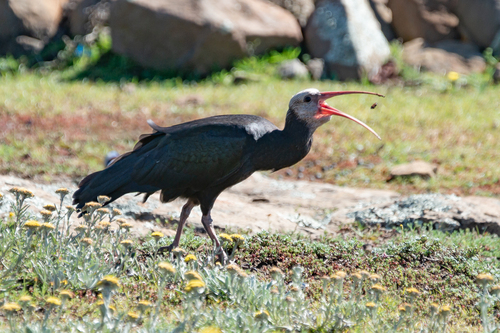 southern bald ibis
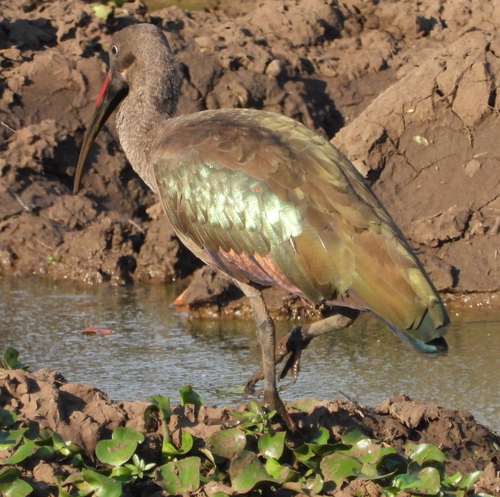 singanga
Em resumo
A única marca de campo mais confiável é a cabeça nua e esbranquiçada com uma coroa vermelha do southern bald ibis, que nunca é mostrada pela singanga. Os juvenis de southern bald ibis são cinza opaco, mas ainda mostram a cabeça careca, enquanto a singanga de todas as idades tem cabeças plumosas com uma faixa branca estreita na bochecha. Em voo, ambos são grandes íbis escuros com algum brilho nas asas, mas o southern bald ibis é mais iridescente no geral e não possui a marca facial branca distinta da singanga. Os habitats se sobrepõem em áreas abertas, mas o southern bald ibis é um especialista em terras altas, geralmente visto em campos de grama remotos ou em penhascos, enquanto a singanga é comum em jardins e áreas urbanas. Os chamados também são muito diferentes: a singanga é famosa por ser barulhenta e estridente, enquanto o southern bald ibis é muito mais silencioso.
Dicas de identificação
- Cabeça nua e esbranquiçada com coroa vermelha (Southern Bald Ibis): Apenas o southern bald ibis tem uma cabeça careca, enrugada e esbranquiçada com uma coroa vermelha em forma de cúpula. Isso é visível em todas as idades e é a marca de campo mais confiável. A singanga sempre tem uma cabeça plumosa.
- Faixa branca na bochecha (Singanga): A singanga tem uma faixa estreita, branca e horizontal na bochecha (às vezes chamada de 'bigode'), que não chega aos cantos da boca. O southern bald ibis nunca mostra essa característica.
- Penas na cabeça (todas as idades): O juvenil de southern bald ibis é cinza opaco, mas ainda tem a cabeça careca; a singanga de todas as idades tem uma cabeça plumosa.
- Cor do bico: O southern bald ibis tem um bico longo e curvado para baixo, vermelho, em todos os momentos. A singanga tem um bico cinza a preto, com uma base vermelha apenas durante a época de reprodução (e mesmo assim, apenas na mandíbula superior).
- Cor das pernas: O southern bald ibis tem pernas vermelhas; a singanga tem pernas escuras, com a superfície superior dos dedos se tornando vermelha apenas no início da reprodução.
- Brilho geral da plumagem: O southern bald ibis é mais iridescente no geral (verde, violeta, bronze, cobre nos ombros), especialmente em boa luz. A singanga tem um brilho púrpura limitado às asas.
- Cor do corpo: O southern bald ibis é verde-escuro com pescoço azul-esverdeado; a singanga é cinza-marrom no geral.
- Confusão juvenil: O jovem southern bald ibis é cinza opaco, mas ainda tem a cabeça careca; o jovem singanga se parece com um adulto mais opaco, mas sempre tem uma cabeça plumosa e faixa branca na bochecha.
- Perfil de voo: Ambos são grandes íbis de asas largas, mas o southern bald ibis é mais uniformemente escuro e iridescente, enquanto a singanga pode mostrar a faixa branca na bochecha mesmo em voo a curta distância.
- Vocalização: A singanga é extremamente barulhenta, com chamados altos e estridentes frequentemente ouvidos antes que o pássaro seja visto. O southern bald ibis é muito mais silencioso.
- Contexto do habitat: O southern bald ibis é encontrado em campos de grama remotos e altos e em penhascos, raramente perto de humanos. A singanga é comum em jardins, parques e áreas urbanas, frequentemente ao redor de pessoas.
- Comportamento de forrageio: O southern bald ibis forrageia em grama curta e aberta ou em campos arados, evitando grama alta e áreas úmidas. A singanga forrageia em solo macio, gramados e até em canteiros de flores.
- Tamanho do grupo: O southern bald ibis é frequentemente visto em pequenos bandos ou colônias, especialmente perto de penhascos. A singanga é frequentemente vista sozinha ou em pequenos grupos, especialmente em ambientes urbanos.
- Marcas sazonais: A singanga mostra mais vermelho no bico e nos dedos apenas na época de reprodução; o southern bald ibis sempre tem bico e pernas vermelhas.
- Distribuição: O southern bald ibis é um endêmico local do sul da África, enquanto a singanga é amplamente distribuída pela África subsaariana. Se visto em uma cidade ou em uma área úmida de planície, a singanga é muito mais provável de ser encontrada.
Tamanho
Ambas as espécies são grandes íbis, mas a singanga é ligeiramente mais longa (cerca de 76 cm) e mais pesada (massa média do adulto 1,2 kg) [wikipedia]. O southern bald ibis também é grande, mas medidas específicas não são fornecidas nas notas; ambas são comparáveis em volume. No campo, o tamanho sozinho não é um separador confiável, especialmente à distância ou em voo.
Plumagem
- Pássaros juvenis/imaturos: Os juvenis de southern bald ibis são principalmente cinza opaco com uma cabeça nua e esbranquiçada e coroa vermelha, sem o brilho iridescente dos adultos. Os imaturos da singanga se parecem com adultos: cinza-marrom no geral, cabeça plumosa e uma faixa branca estreita na bochecha, com algum brilho púrpura nas asas.
- Adultos: O southern bald ibis é verde-escuro com forte iridescência (verde, violeta, bronze), pescoço azul-esverdeado e ombros cobreados. A cabeça é careca, esbranquiçada e coberta com uma coroa vermelha. Os adultos da singanga são cinza-marrom com um brilho púrpura nas asas, cabeça plumosa e uma faixa branca horizontal estreita na bochecha (não alcançando o bico), sem pele nua. O bico da singanga é principalmente escuro, com uma base vermelha apenas na época de reprodução.
- Em voo: Ambos mostram asas escuras com algum brilho, mas o southern bald ibis é mais uniformemente iridescente e não possui a marca facial branca da singanga. Nenhum painel distintivo na asa superior ou borda traseira é descrito para nenhuma das espécies nas notas.
Comportamento
O southern bald ibis é mais frequentemente visto em campos de grama altos e abertos ou em penhascos, forrageando em grupos ou colônias, e é geralmente cauteloso. A singanga é altamente tolerante a humanos, frequentemente vista forrageando em jardins, gramados e parques urbanos, e é muito mais abordável. Ambas as espécies forrageiam sondando o solo em busca de invertebrados, mas a singanga é especialmente conhecida por se alimentar em solo macio e até mesmo em áreas residenciais. O southern bald ibis forrageia mais em grama curta e aberta ou em campos arados, evitando grama alta.
Habitat
O southern bald ibis é um especialista em campos de grama de montanha e terras altas, nidificando em penhascos e forrageando em áreas abertas, muitas vezes remotas, do sul da África. Ele evita áreas pantanosas ou densamente vegetadas. A singanga é amplamente distribuída pela África subsaariana, encontrada em uma ampla gama de habitats, incluindo áreas úmidas, terras cultivadas, jardins e parques urbanos. É muito mais provável ser vista perto de habitações humanas e em áreas de planície.
Voz
A singanga é extremamente vocal, emitindo um chamado alto e distinto "haa-haa-haa-de-dah", especialmente em voo ao amanhecer e ao anoitecer, e um único "haaaa" alto ao pousar. Esses chamados são inconfundíveis e frequentemente o primeiro sinal da espécie. O southern bald ibis é muito mais silencioso e não produz os altos e estridentes chamados da singanga; suas vocalizações não são descritas como diagnósticas nas notas.